SAM Inhibits OXCT1 to Treat Cerebral Vascular Malformations
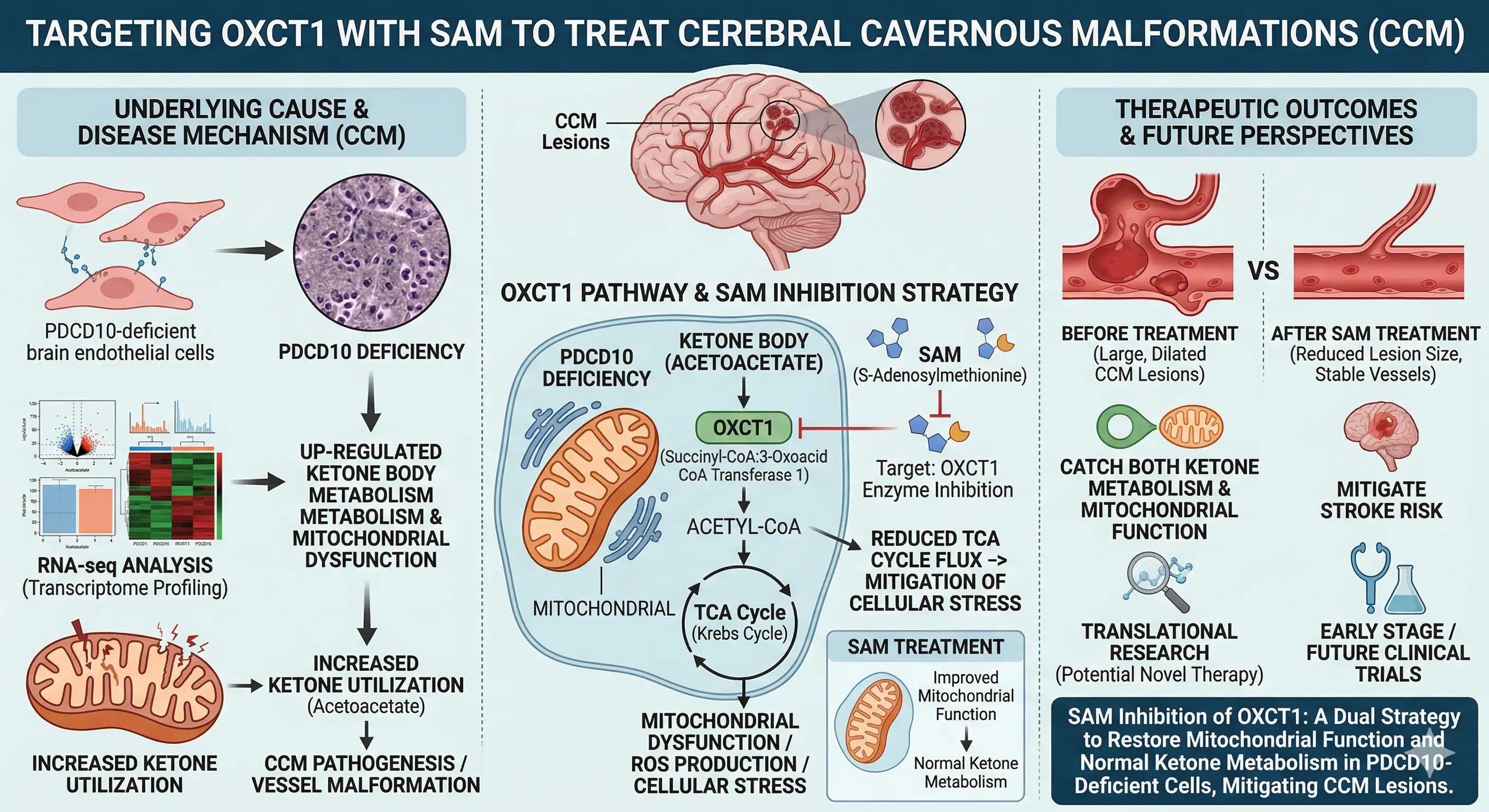
Researchers have found that cerebral cavernous malformations (CCM), a brain vascular disease, involve mitochondrial problems. By inhibiting the OXCT1 enzyme with SAM, the disease can be alleviated. This discovery was made using RNA-seq data from PDCD10-deficient cells. The study proposes a new strategy that targets both ketone metabolism and mitochondrial function in the laboratory. Although still in its early stages, this approach may lead to a new treatment for stroke-causing diseases.
Cerebral cavernous malformations (CCMs) are low-flow, thin-walled vascular conglomerates that arise within the central nervous system and constitute a significant cause of stroke. Experimental evidence indicates that mitochondrial dysfunction contributes to the pathogenesis of CCM, a disease that can be caused by PDCD10 deficiency. However, the specific mechanisms underlying mitochondrial homeostatic imbalance remain unclear. 3-oxoacid CoA-transferase 1 (OXCT1), localized in the mitochondrial matrix, serves as the rate-limiting enzyme of ketone body metabolism. Additionally, it also modulates diverse mitochondrial functions. Although the function of OXCT1 has been implicated in various diseases, its role in the progression of CCM awaits elucidation. Utilizing RNA-seq data from the CRISPR/Cas9-generated PDCD10-knockout endothelial cell line, primary endothelial cells from Pdcd10
The significance of this study lies in its exploration of an entirely different metabolic pathway for treating cerebral vascular malformations