AAV Gene Therapy: New Evidence that the ECM Acts as a Barrier
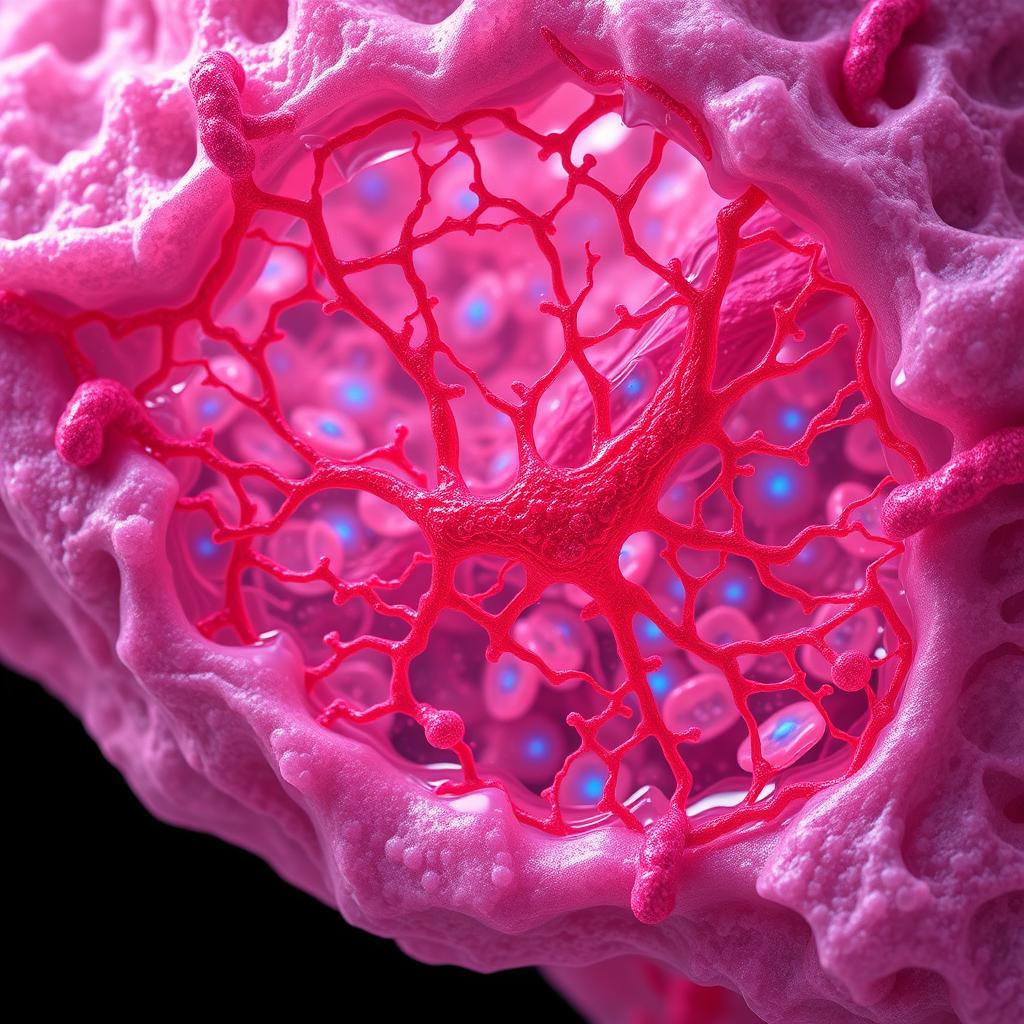
ECM, the Hidden Barrier to Gene Therapy
Expectations are high that AAV‑based gene therapy must reach deep within the body. However, the extracellular matrix (ECM) can act like a shield that blocks viral particles, a fact that has not been fully appreciated. The research team presented this barrier as a challenge that can reduce actual therapeutic efficiency.
Innovative Experiments Elucidating AAV–ECM Interactions
AAV2, AAV6, and AAV8 were fluorescently labeled and introduced into lung, liver, and small‑intestinal submucosal (dECM) hydrogels, and their diffusion was tracked in real time by video microscopy. Compared with similarly sized nanoparticles, all AAV serotypes traversed the ECM markedly more slowly, with AAV6 and AAV8 showing the greatest diffusion inhibition. In both 2D and 3D spheroid models, incorporation of dECM also resulted in lower transduction rates.
Serotype‑Dependent Diffusion Differences and Therapeutic Efficacy
AAV2 moved relatively freely through the ECM compared with the other serotypes. In contrast, AAV6 and AAV8 bound more extensively to ECM components, severely restricting diffusion and consequently lowering gene‑delivery efficiency for those serotypes. The study concluded that binding of AAV to the ECM can diminish therapeutic outcomes.
Implications and Future Directions
These findings suggest that next‑generation AAV design must account for interactions with the ECM. Engineering viral capsids or adjunctive agents that can overcome the ECM barrier may become key to successful gene‑therapy applications.
PURPOSE: The extracellular matrix (ECM) is a major component of the tissue microenvironment which may pose a barrier to the distribution of AAV in target organs, preventing delivery of therapeutic cargo. We sought to address this potential barrier to AAV gene therapy by furthering our understanding of AAV-ECM interactions. We hypothesized that both the AAV serotype and ECM composition will impact AAV transport and gene delivery. METHODS: AAV2, AAV6, and AAV8 viral vectors were fluorescently labeled to allow for visualization of their diffusion through the ECM. Lung, liver, and small intestinal submucosal dECM hydrogels were formulated as models of the ECM with tissue-specific biomolecular content. We then characterized AAV and nanoparticle diffusion within decellularized ECM using fluorescent video microscopy and multiple particle tracking. Additionally, we evaluated AAV transduction in dECM-incorporated 2D and 3D spheroid tissue culture models. RESULTS: All AAV displayed reduced diffusivity through ECM as compared to similarly sized nanoparticles. AAV2 diffusion was least affected by the presence of ECM across tissue types as compared to AAV6 and AAV8. AAV transduction in dECM incorporated CONCLUSIONS: These results suggest binding of AAV to the ECM may decrease their therapeutic effect in target tissues throughout the body. The barrier function of the ECM should be considered in development of AAV for gene therapy applications.
We tackled the critical issue that gene therapy fails when AAV vectors cannot reach the intended tissue. Successful translation of this work could enable a larger patient population to benefit from effective gene‑therapy treatments.