Restoration of GAS6 via mRNA Promotes Scarless Wound Healing
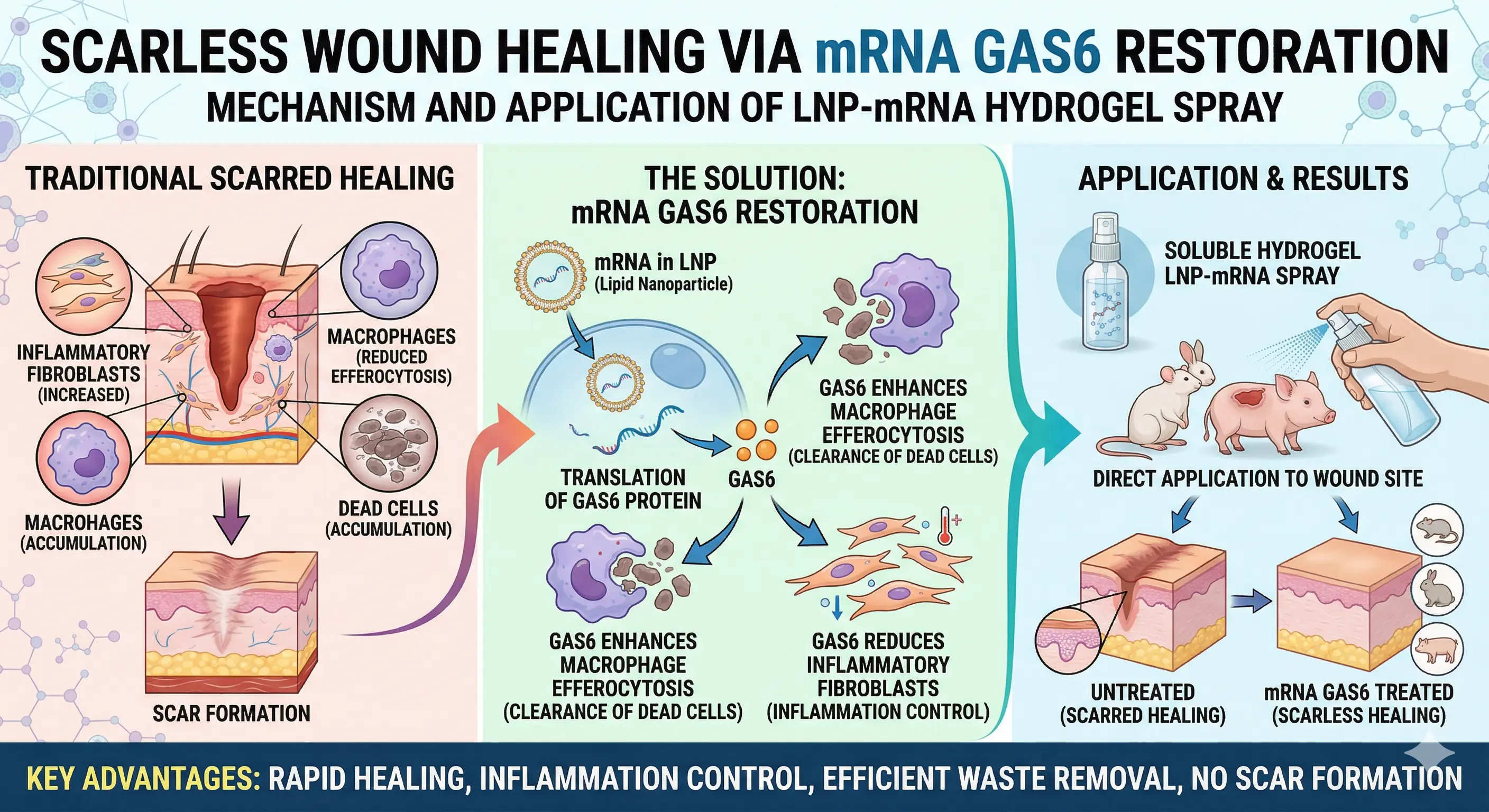
Significant skin injuries often result in scarring, characterized by excessive inflammatory fibroblasts that hinder healing. By reintroducing GAS6, a critical protein, through mRNA encapsulated in a lipid nanoparticle (LNP) hydrogel specifically applied to the wound site, inflammation decreases and macrophages efficiently clear dead cells. This approach yielded rapid healing in rodent, rabbit, and mini-pig models with minimal scarring, heralding a novel scarless healing method.
Deep lacerations in adult mammals frequently result in fibrotic scarring, a process intensified by inflammatory fibroblasts that amplify immune responses. Early intervention targeting the interaction between immune cells and fibroblasts shows therapeutic promise. This study highlights GAS6 as a pivotal regulator in this interaction and demonstrates its therapeutic modulation using a precisely timed lipid nanoparticle (LNP)-mRNA hydrogel system. Specifically engineered LNP-GAS6 mRNA enhances macrophage phagocytosis and suppresses inflammatory fibroblasts, encapsulated within a thermally sensitive hydrogel for targeted application. Across murine, rabbit ear, and Bama minipig wound models, this treatment markedly accelerated wound closure while significantly reducing fibrotic scarring. These findings indicate that restoring GAS6 signaling through mRNA delivery facilitates scarless healing, presenting a promising therapeutic strategy for fibrotic skin conditions.
This breakthrough could revolutionize skin regeneration treatments by enabling scarless wound healing.