Light-Mediated Prime Editing Delivery to Cardiomyocytes via Non-Viral Method
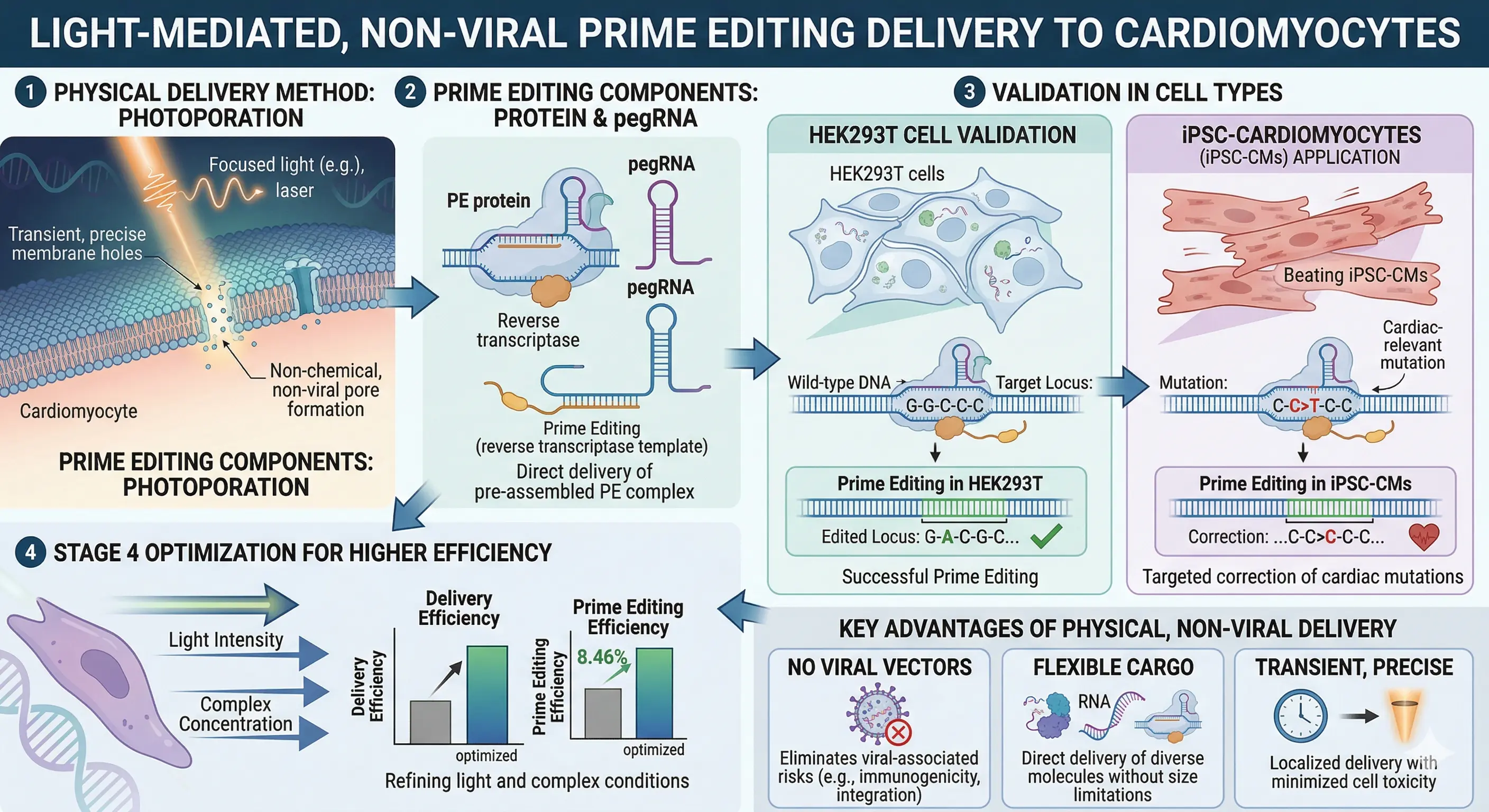
We used light to create cell openings and delivered prime editing proteins. We validated this in HEK293T cells and also succeeded in iPSC-cardiomyocytes. With optimization, the editing efficiency reached up to 8.46%. A major advantage is that it can be delivered physically without a virus.
Prime editing (PE) offers precise genome modification without inducing double-strand breaks; however, its application in cardiomyocytes remains constrained by the lack of efficient and non-integrative delivery strategies. Here, we report a tunable photoporation-based approach for the non-viral delivery of PE ribonucleoprotein (RNP) complexes into human induced pluripotent stem cell-derived cardiomyocytes (iPSC-CMs), a clinically relevant model for cardiac disease. Using LumiSense nanosensitizers, we first validated cytosolic delivery and editing feasibility in HEK293T cells, and subsequently achieved efficient photoporation in hard-to-transfect iPSC-CMs. Fluorescence imaging confirmed intracellular uptake of PE RNPs, and droplet digital PCR revealed prime-editing frequencies of up to 8.46% under optimized conditions. This study demonstrates a non-integrative and controllable physical strategy for PE RNP delivery into human cardiomyocytes, providing a promising foundation for the development of genome editing-based therapeutic interventions for cardiac disorders.
Securing a safe and efficient delivery method for gene correction in cardiac diseases