The path to mRNA vaccine independence in Africa lies in building a sustainable, self-reliant ecosystem.
Background
MRNA vaccine technology has emerged as a critical tool for saving lives during the COVID-19 pandemic. However, the African continent has suffered from a lack of access to vaccines. At the time, the majority of vaccines supplied globally were concentrated in high-income countries, and Africa's vaccination rate remained in the single digits. Currently, Africa relies on imports for more than 99% of the vaccines it consumes. This inequality has presented African countries with the challenge of securing health sovereignty. In response, the African Union (AU) and the Africa Centres for Disease Control and Prevention (Africa CDC) have proposed a plan to increase the continent's vaccine production capacity to 60% by 2040. mRNA technology is considered the most suitable candidate to achieve this ambitious goal.
Key Findings
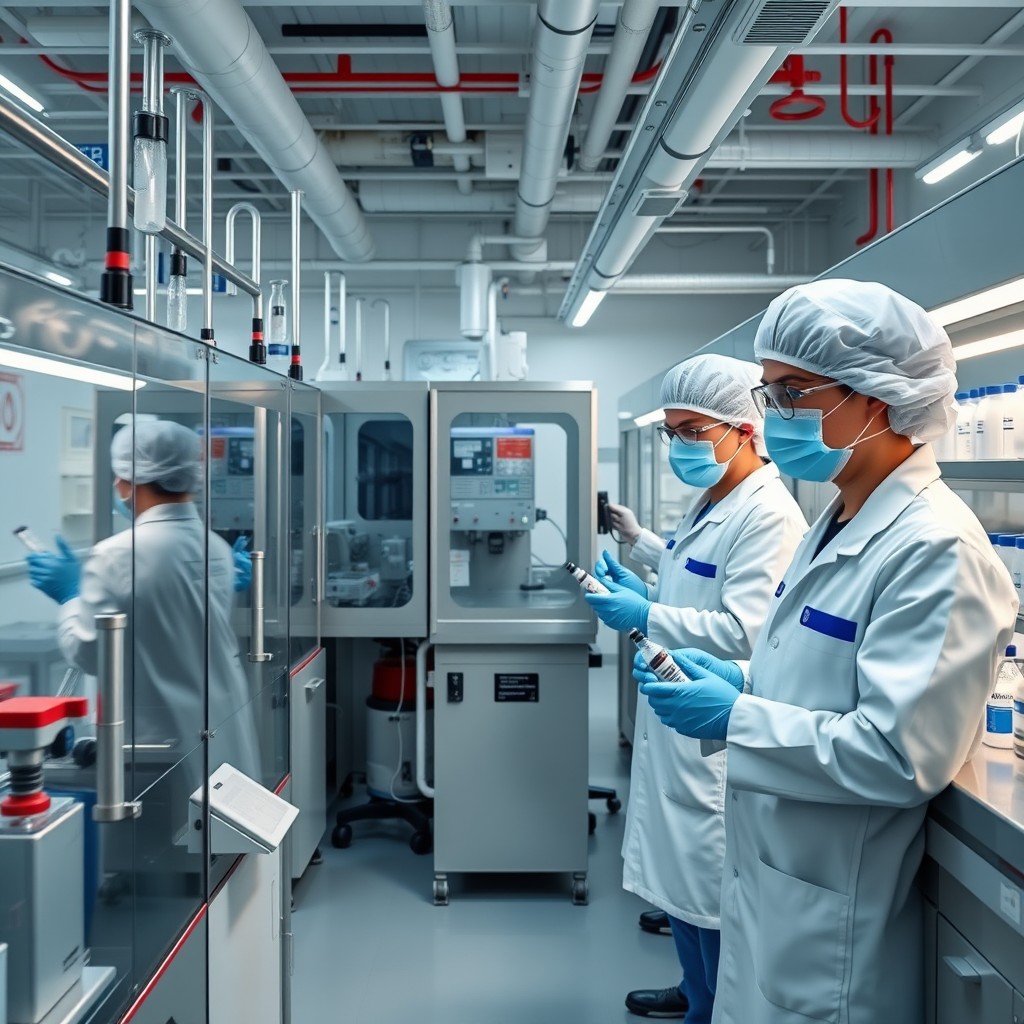
A research team led by Professor Patrick Arbuthnot of the University of the Witwatersrand in South Africa comprehensively assessed the process of building mRNA vaccine manufacturing capacity in Africa. The team found that progress has been made in all areas of the ecosystem, including scientific research, factory infrastructure, and workforce development. For example, Afrigen Biologics in South Africa, supported by the World Health Organization (WHO), has obtained Good Manufacturing Practice (GMP) certification, demonstrating its independent production capabilities. BioNTech's establishment of a containerized production facility, the 'BioNTainer,' in Kigali, Rwanda, is also cited as an example of building a flexible production environment. Professor Arbuthnot's research team proposed a sustainable raw material supply plan that utilizes local resources in Africa. Lipid nanoparticles (LNPs), which are essential for delivering mRNA into cells, have been entirely dependent on imports due to patent barriers and high costs. The researchers chemically converted cashew nutshell liquid (CSL), an agricultural waste product abundant in Africa, to synthesize an environmentally friendly ionizable lipid. This alternative raw material is considered a viable option to circumvent foreign patent barriers and significantly reduce manufacturing costs.
Significance and Prospects
The researchers identified three key challenges that must be addressed to ensure the long-term sustainability of a self-reliant ecosystem, beyond the initial stages of factory construction and technology transfer. First, commercial viability must be ensured. To survive in competition with large global pharmaceutical companies, a procurement system that guarantees demand within the continent is required. Gavi, the Vaccine Alliance, has launched the $1 billion African Vaccine Manufacturing Accelerator (AVMA), but it is still unclear whether this will ensure stable market penetration. Second, independent intellectual property (IP) development is needed. A structure that relies solely on patent licenses or external technology transfer is likely to face limitations. Local research institutes and universities should be linked to secure their own IP. Finally, regulatory capacity must be strengthened, and investment must be attracted. It is essential to establish institutional safeguards to reduce regulatory barriers between countries and attract private investment, centered on the African Medicines Agency (AMA). For Africa to fully realize health sovereignty after taking the first step of technology transfer, the two pillars of commercialization and research and development (R&D) investment must be organically integrated.
To build mRNA vaccine manufacturing capacity in Africa, significant progress has been made with human, technical and regulatory capacity development. Here we highlight these developments and summarise hurdles that need to be overcome before a self-sustaining mRNA vaccine production ecosystem is established in the continent. Arbuthnot et al. examine efforts to establish mRNA vaccine manufacturing capacity in Africa. They conclude that although major progress has been made in building scientific, manufacturing and regulatory capabilities, long-term sustainability will depend on successful commercialisation, intellectual property development and investment.
This research demonstrates the potential for Africa to move beyond being a mere vaccine 'packaging plant' and become a full-cycle manufacturing base, responsible for everything from raw material synthesis to final product. In particular, the localization of lipid components using agricultural by-products such as cashew nutshells is a practical solution that will significantly reduce vaccine costs and ease the financial burden on local communities. This is expected to contribute to reducing health disparities by leading to the development of low-cost mRNA vaccines tailored to African endemic diseases such as tuberculosis and malaria. Furthermore, the development of local workforce and African regulatory agencies will serve as a catalyst for attracting investment from global bio-companies.