Successful Treatment of Newborn Mice with MPS I-H using LNP mRNA
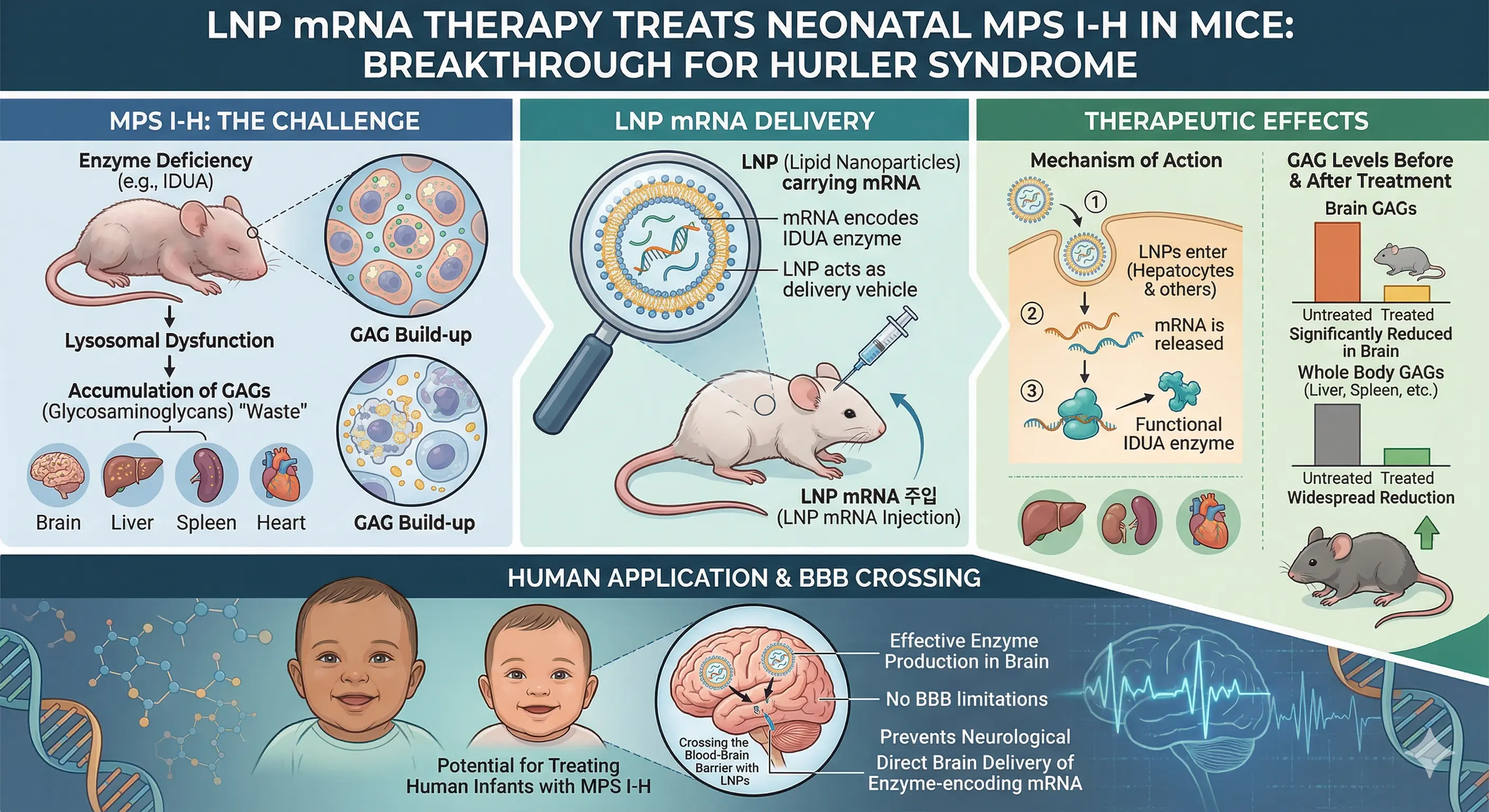
MPS I-H is a disease caused by enzyme deficiency, leading to accumulation of waste in the body. The research team injected lipid nanoparticles carrying mRNA into newborn mice, resulting in proper enzyme production. Consequently, the accumulated substances in the brain and body significantly decreased. This approach may be applicable to human infants, potentially overcoming the blood-brain barrier issue.
Mucopolysaccharidosis type I-Hurler (MPS I-H) is a severe lysosomal storage disorder caused by α-L-iduronidase (IDUA) deficiency, leading to glycosaminoglycan (GAG) accumulation and progressive multisystem dysfunction, including the central nervous system (CNS). Early hematopoietic stem cell transplantation remains the primary disease-modifying intervention for MPS I-H despite its clinical challenges. Conventional enzyme replacement therapy (ERT), which has limited CNS efficacy due to blood-brain barrier (BBB) restrictions, is being addressed by the development of novel BBB-penetrating ERT platforms. Recently, mRNA therapy has become a promising treatment option for rare genetic diseases by enabling the production of functional enzymes, such as IDUA, in vivo, using lipid nanoparticles (LNPs) as a delivery system.
Gene and mRNA therapies that reach the brain may become a reality