Wnt Signaling Pathway Regulating Stereotyped Neurite Retraction Identified as Key to Neural Circuit Refinement
Background
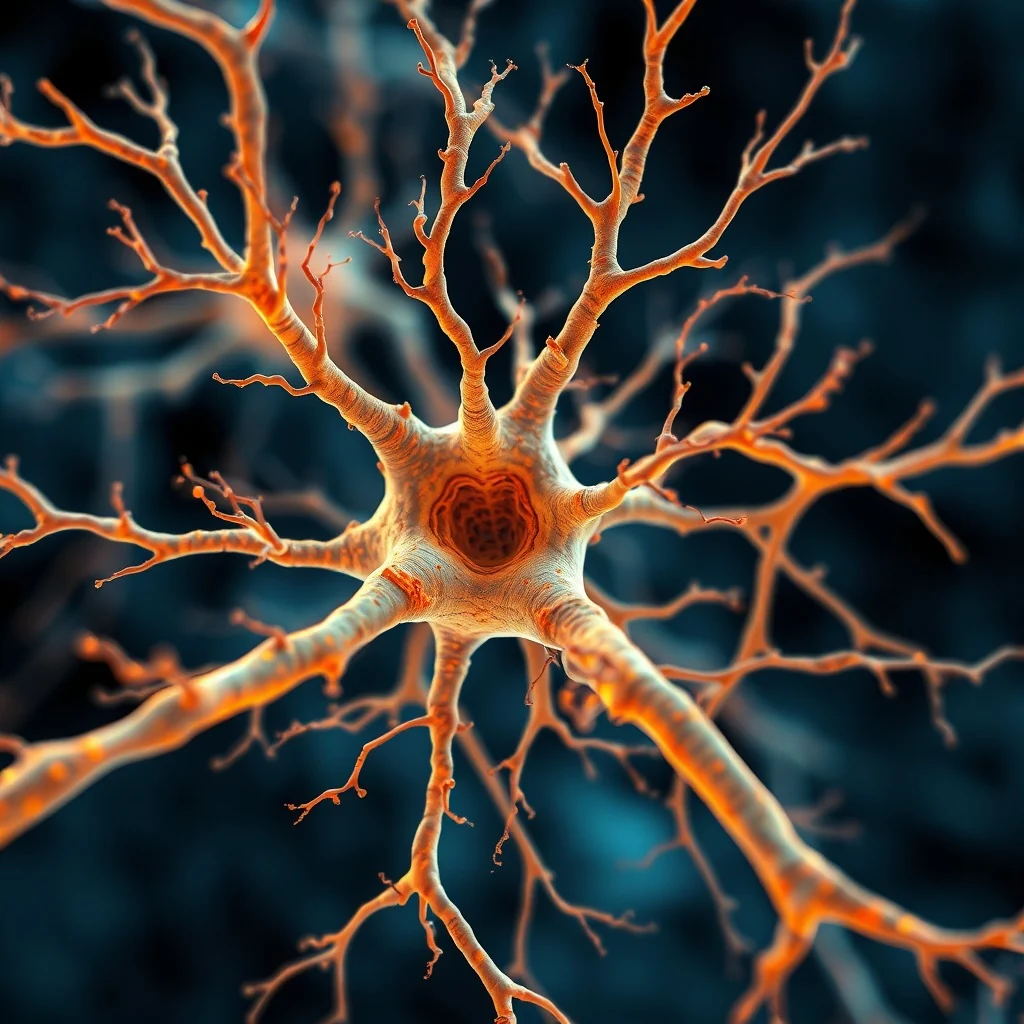
In the early stages of brain development, neurons extend numerous neurites in all directions. This is an embryological strategy to maximize contact with target areas before completing accurate neural networks. These extensively formed preliminary circuits undergo pruning at a specific time to enhance signal transmission efficiency. If unnecessary neurites are not precisely retracted, interference between neural circuits occurs, hindering normal brain function.
Existing neurodevelopmental research has primarily focused on axon guidance and the identification of growth factors that help axons find the correct targets. A significant amount of information regarding the signaling systems that explain where neurites grow has been accumulated. Conversely, research on 'stereotyped neurite retraction'—the process of selectively retracting only specific neurites among those already extended—has been relatively slow. The molecular switch that shrinks specific branches at the precise timing while preserving the neuron cell body and core axon has remained a mystery for a long time.
Key Findings
To uncover the process of selective neurite removal, the research team utilized a model organism capable of single-neuron tracking. Changes in cell morphology according to developmental stages were observed using high-resolution confocal microscopy, capturing the real-time process of local cytoskeleton reorganization. This observation revealed that the Wnt signaling pathway, well-known as a factor in cell differentiation and polarity determination, directly directs neurite retraction.
Wnt ligands secreted around the target site bind to Frizzled (Fzd) receptors located at the tips of the neurites targeted for removal. Immediately following binding, actin filament depolymerization and microtubule disassembly were sequentially triggered within the cell. A clear phenomenon was observed where the specific neurite retracted as if shrinking, as the supporting structure that maintained the cytoskeleton disassembled. In gene-deficient experimental groups where the Wnt signaling pathway was blocked, it was confirmed that neurite retraction was inhibited and excessive branching persisted into adulthood.
The precision of spatial control is also noteworthy. Even for branches extending from the same neuron, signal activation did not appear in the main axonal trunk. The principle is that Wnt signaling action is locally restricted only to the terminal branches targeted for removal. This clearly identifies a local control system that precisely prunes unnecessary neurites while avoiding the atrophy of the entire cell.
Significance and Outlook
This study holds significant academic value as it reveals that Wnt signaling, known as a factor driving neural network formation, also leads the elimination and refinement of circuits. It re-examines at the molecular level that neural development is not merely an expansion but a balanced regulatory process involving sophisticated pruning.
These findings provide a new turning point in the study of the mechanisms underlying neurodevelopmental disorders. This is because failure in pruning during brain development has consistently been identified as a primary cause of Autism Spectrum Disorder (ASD) and schizophrenia. The fact that excessively remaining neurites can cause signal interference and lead to impaired brain circuit function has been a long-standing concern among clinical researchers. Tracking abnormalities in the Wnt-mediated neurite retraction pathway is expected to enable the establishment of much more precise molecular diagnostic criteria for developmental disorders.
However, there are also practical limitations to its use as a therapeutic target. This is because Wnt signaling is deeply involved in systemic cell division and the maintenance of tissue homeostasis. Developing localized drug delivery technologies that suppress toxicity potentially arising from systemic administration and induce action only on specific branches of the brain's neural network is identified as a key future challenge.
Proceedings of the National Academy of Sciences, Volume 123, Issue 39, September 2026. Significance During nervous system development, some neurons retract their neurites in a stereotyped manner to refine neurocircuits. The molecular and genetic mechanisms underlying this process are understudied. Here, we found that Wnt signaling regulates ...
It provides a practical foundation for precise molecular diagnosis and the establishment of customized treatment strategies for developmental brain diseases. This could lead to the development of diagnostic panels that early differentiate circuit maturation defects by screening for mutations in the Wnt signaling pathway and receptors in genomic data from patients at risk for Autism Spectrum Disorder or schizophrenia. Additionally, it holds important application potential in the field of neural circuit reconstruction following stroke or traumatic brain injury. A representative scenario is the development of precision therapeutics for controlling neural circuits, which help restore only normal synaptic connections by appropriately pruning the indiscriminate branches that extend when damaged neurons regenerate.