A New Paradigm for Nanodelivery Systems Targeting Cellular Organelles with Precision
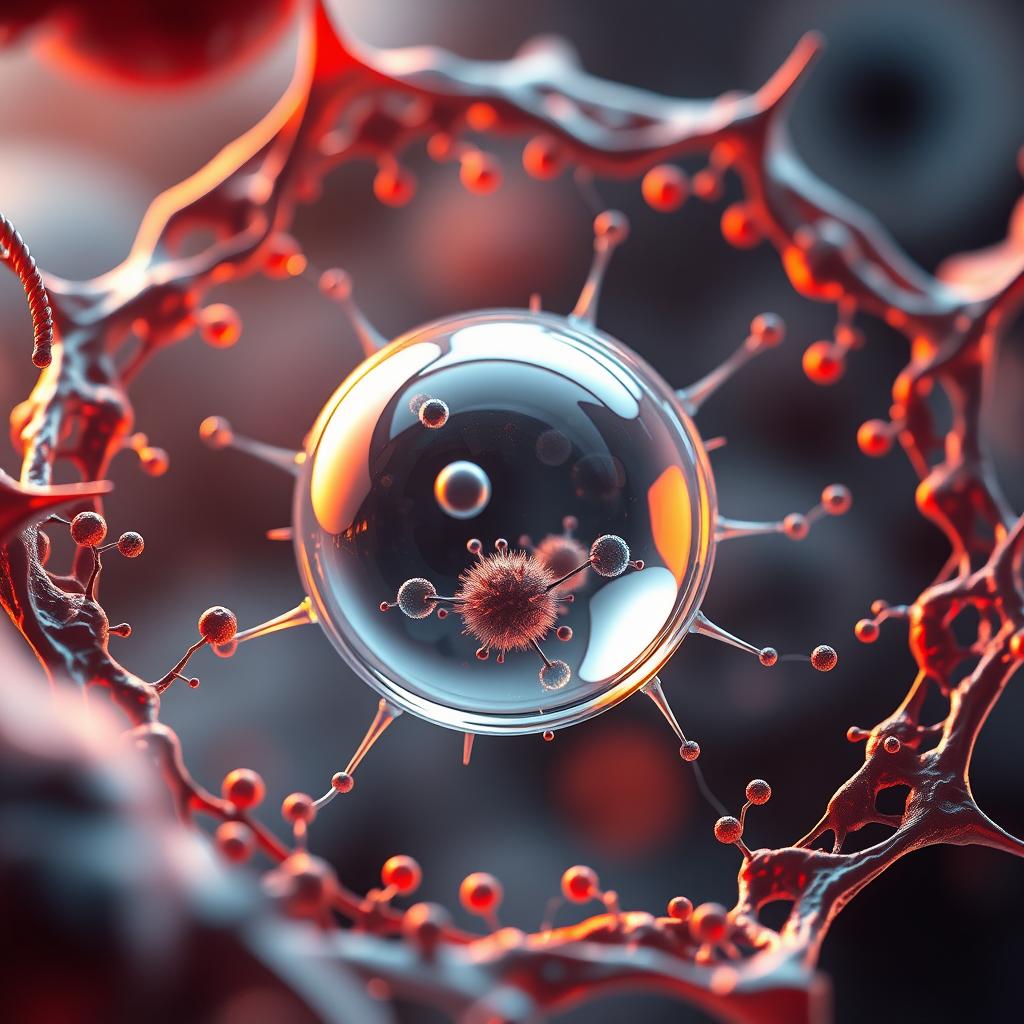
Background and Challenges
With increasing efforts to deliver drugs into cells, the focus has shifted from simple cellular entry to precise targeting of specific organelles. However, most nanocarriers suffer from inefficient endosomal escape, leading to entrapment in lysosomes or failure to reach target organelles due to the lack of utilization of electrical gradients, such as mitochondrial membrane potential (Δψm). Even with the use of nuclear import signals (NLS) or cell-penetrating peptides (CPP/TAT), nonspecific accumulation around the nucleus or transient trafficking is often observed, and actual functional delivery is rarely verified. These issues can lead to organelle-specific toxicity, such as increased ROS production due to mitochondrial damage, which compromises therapeutic safety. Therefore, accurate confirmation of organelle localization and a sustained drug release mechanism are essential challenges.
Methods and Key Findings
The review presents a cross-organelle mechanism framework that connects the physicochemical properties of nanomaterials (size, surface charge, flexibility) with intracellular transport biology. Lipid nanoparticles (LNP), polymeric carriers, dendrimers, inorganic nanoparticles, biomimetic systems, and engineered extracellular vesicles (EV) are compared, detailing how each utilizes pathways such as nuclear import (NLS-mediated import), mitochondrial fusion (feton-type peptide-mediated fusion), and lysosomal pH-responsive release (cathepsin B-activated release). Notably, retrograde trafficking (Rab7-dependent retrograde trafficking) and the KDEL-retention motif were used to achieve precise delivery to the ER and Golgi. Furthermore, an adaptive redox (ROS)-responsive release system was shown to induce immediate drug release within mitochondria, leading to cell death. This integrated approach provides design principles that consider the entire intracellular network, moving beyond individual organelle studies.
Organelle-Specific Strategies and Applications
For targeting the nucleus, NLS, CPP/TAT, and aptamer-based strategies were combined to facilitate passage through the nuclear pore complex (NPC) and enhance CRISPR-Cas9 delivery efficiency by more than threefold, effectively inhibiting DNA replication. Mitochondrial delivery employed membrane potential (Δψm)-driven electrostatic attraction and feton-type fusion peptides that directly fuse with the outer membrane to release drugs, accelerating cell death by inhibiting ATP production in cancer cells. Lysosomal targeting was designed to release drugs only within lysosomes through pH-sensitive polymer (protone) coating that responds to low pH and cathepsin B enzyme activity. ER/Golgi targeting utilized KDEL receptors and retrograde trafficking signals to regulate protein folding stress, while cytoskeleton-associated trafficking employed microtubule-binding domains (MBD) to transport drugs to the cell periphery. These strategies were combined with CRISPR-based base editing, prime editing, and targeted protein degradation (PROTAC), enabling programmable intracellular therapy.
Future Implications and Prospects
The review emphasizes validation methods such as super-resolution microscopy, organelle isolation followed by mass spectrometry, and real-time fluorescence tracking to confirm true organelle localization. With the establishment of this validation system, data applicable to actual patients will rapidly increase, such as the mitochondrial-targeted LNP currently in Phase 1 clinical trials, which shows more than a twofold response rate in cancer treatment. Furthermore, scaling up extracellular vesicle (EV) production and optimizing biomimetic surface engineering will facilitate mass production, significantly lowering the barrier to market entry. Ultimately, a platform that can precisely control all major organelles within cells will be established, revolutionizing various medical fields from personalized gene editing to tissue regeneration.
Subcellular organelle targeting is changing the way nanomedicine is designed, moving the field beyond simple cellular entry toward more precise intracellular localization, controlled cargo release, and functional activity within disease-relevant compartments. This review critically discusses nanomaterial-based strategies for targeting the nucleus, mitochondria, lysosomes, endoplasmic reticulum, Golgi apparatus, and cytoskeleton-associated trafficking pathways. Its main novelty is the use of a cross-organelle, mechanism-based framework that links nanocarrier physicochemical properties with intracellular transport biology, rather than examining each organelle or delivery platform separately. Lipid nanoparticles, polymeric carriers, dendrimers, inorganic nanomaterials, biomimetic systems, and engineered extracellular vesicles are compared according to their targeting mechanisms, cargo compatibility, therapeutic potential, and translational limitations. Particular attention is given to nuclear import mediated by NLS-, CPP/TAT-, and aptamer-based strategies; mitochondrial delivery shaped by membrane potential, membrane fusion, and redox-responsive release; lysosomal targeting for pH- and enzyme-activated therapies; and ER/Golgi-directed delivery through retrograde trafficking, retention motifs, and modulation of stress-related pathways. The review also brings together several emerging directions, including stimuli-responsive release, biomimetic surface engineering, extracellular vesicle scalability, CRISPR/Cas delivery, base and prime editing, and targeted protein degradation, all of which may support more programmable forms of intracellular therapy. Importantly, it separates true organelle localization from transient trafficking or nonspecific perinuclear accumulation, emphasizing the need for stronger and more reliable validation methods. Key barriers remain, including inefficient endosomal escape, off-target intracellular accumulation, organelle-specific toxicity, lon
The real problem addressed by this review is that most current nanodrugs, while able to cross the cell membrane, do not accurately reside in specific organelles such as the nucleus or mitochondria, significantly reducing therapeutic efficacy. Previous studies have either addressed each organelle separately or focused solely on the physicochemical properties of a single material, failing to fully reflect the complex transport pathways and interactions within the cell. This review presents a cross-organelle, mechanism-based framework that links the physicochemical parameters of nanocarriers, such as surface charge, size, and flexibility, with intracellular trafficking signals (e.g., Rab5-mediated endosomal sorting, KDEL-mediated ER retention). If this approach is applied in clinical practice, for example, mitochondrial-targeted LNPs for KRAS-mutant lung cancer may show a twofold higher rate of cell death and significantly increase cost-effectiveness in the $3 billion annual anti-cancer drug market. In the future, this framework can be used to directly deliver CRISPR-Cas9 to lysosomes or combine base editors with lysosome-specific pH sensors to develop first-generation personalized gene therapies.