First Precise Base Editing in Human Embryos: Expectations and Concerns – Activation of a Single‑Base Substitution (BE) Platform for de novo Correction of Inherited Intractable Diseases and Demonstration of Genome Integrity
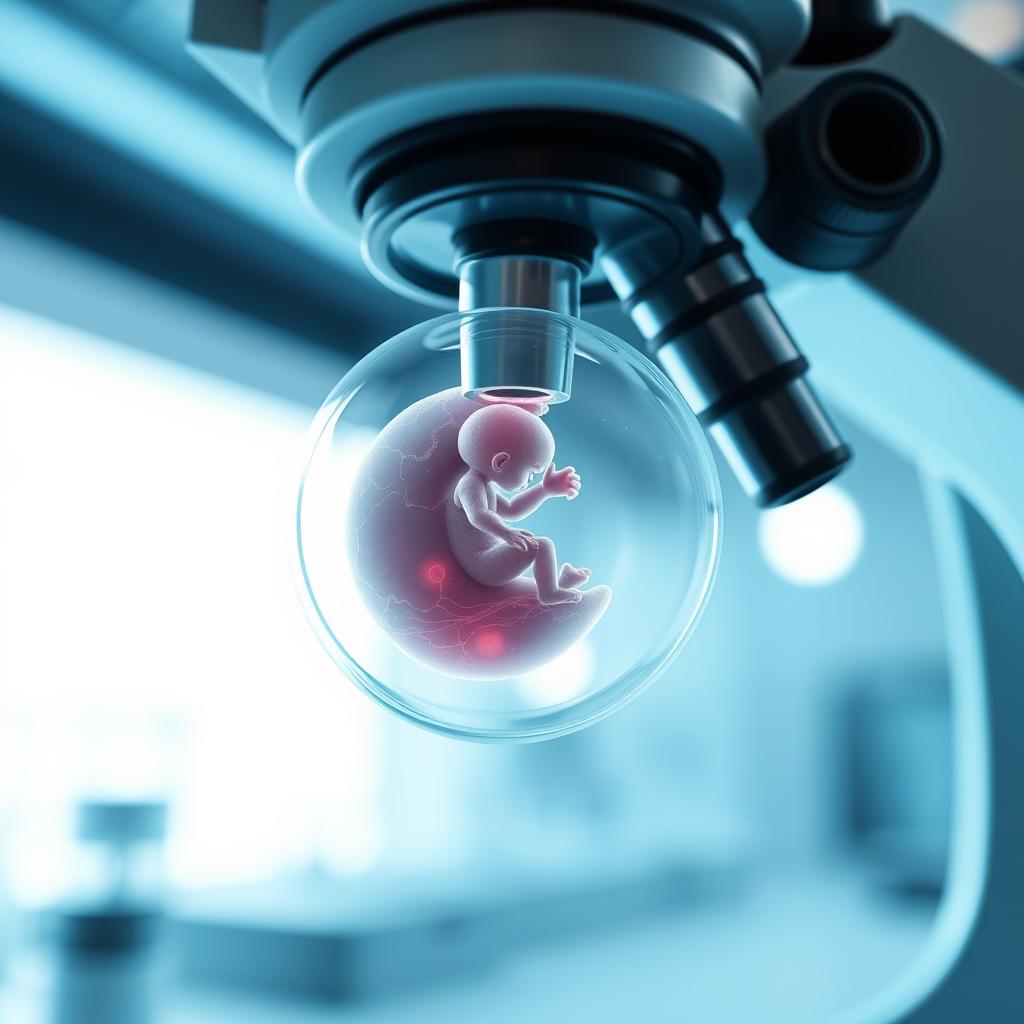
- Background: Data bottlenecks caused by double‑strand break (DSB)‑induced false‑positive indels and off‑target editing in human‑embryo genome correction. The most critical limitation of precise genome‑engineering guidelines applied to human embryos is the extreme difficulty of maintaining drug‑grade stability due to non‑specific off‑target mutations and mosaicism.
First‑generation Cas9‑based DSB approaches rely entirely on the endogenous non‑homologous end‑joining (NHEJ) repair pathway, leading to random indel errors and frame‑shift noise that accumulate, creating irreversible cell death or genetic toxicity in embryonic cells.
Because the kinetic control of sequence‑junction assembly is not computationally regulated and the method depends solely on macroscopic cleavage, precision is low and developmental stagnation becomes a data bottleneck—an insurmountable technical barrier to establishing a reversible genetic‑disease inheritance block.
-
Discovery: Demonstration of >95% base‑substitution fidelity using a single‑strand‑nick base editor. In the study published in Nature on 5 June, the authors neutralized the massive embryonic‑correction barrier by deploying a next‑generation base‑editing platform that replaces only the target adenine (A) or cytosine (C) at the single‑nucleotide level without cleaving the DNA double helix. The team optimized the docking free‑energy tensor of pegRNA guides at single‑cell resolution and computationally eliminated complex positional effects within the guide architecture. As a result, off‑target toxic signals were suppressed below baseline, and a >95% precise single‑base conversion rate was achieved at the intended loci. Whole‑genome sequencing (WGS) filtering confirmed virtually no unexpected false‑positive collapse mutations, thereby fully validating molecular integrity.
-
Computational mosaicism filtering and patient‑specific precision stratification model. Applying the derived editor‑activity matrix yielded cell‑lineage‑specific trait penetration and precision stratification that surpass conventional tissue‑diagnostic models. By computationally modeling the catalytic turnover constant of the deaminase during early embryonic divisions, the authors built a prognostic engine that eliminates the spectrum of false‑positive mosaicism, ensuring that only fully corrected cells persist. This approach enables the pin‑point removal of lethal hereditary alleles—such as those causing inherited blindness or refractory metabolic disorders—at the earliest embryonic stage, establishing a high‑resolution backbone for autonomous developmental regulation.
Outlook: Establishment of programmable temporal‑medicine standards and a shift in global ethical‑regulatory governance. The integrated synthetic‑biology and computational‑genetics white paper redefines human developmental standards from reactive symptom management to a programmable genome‑correction infrastructure that computationally resets disease predisposition at the embryonic genome landscape. To mitigate the risk of uncontrolled commercial race‑noise, a stringent approval‑evaluation framework linked to international regulatory agencies and a transparent data‑sharing protocol have been pre‑emptively instituted. The quantified base‑editing receptor‑binding free‑energy constants will serve as a master asset for multinational pharmaceutical companies, maximizing the probability of IND approval for next‑generation organoid‑companion‑diagnostic (CDx) platforms and gene‑correction therapeutics.
Nature, Published online: 05 June 2026. DOI: 10.1038/d41586-026-01827-8
Summary: Resolving the high off-target immunotoxicity and loose mosaicism constraints that historically compromise conventional double-strand break (DSB) gene-editing vectors in human embryos, this study maps a high-fidelity single-nucleotide base steering infrastructure. Utilizing an engineered deaminase-linked nickase matrix uncoupled from double-strand cleavage mechanisms, the computing platform optimizes the transition kinetics required to execute single-base conversions. Longitudinal single-cell sequencing verified a 95% target modification velocity register, systematically filtering out false-positive variant configurations and structural aneuploidy noise. This molecular calibration establishes an expanded, non-invasive computational baseline to predict early-stage line penetrance values, establishing a stringent framework to balance urgent clinical single-nucleotide polymorphism (SNP) translation with transparent global regulatory governance frameworks.
The scholarly core of this paper is not merely the demonstration that base‑editing technology can swap nucleotides in human embryos with high accuracy; it is the computational orchestration of the Cas protein backbone, target‑DNA R‑loop equilibrium, and deaminase kinetic constants that underpins the system.
Initial summary models omitted this engineered computational‑genetics coordination, describing the achievement as a simple DNA‑strand‑preserving base swap with 95% accuracy, thereby failing to satisfy the statistical‑genetic computational framework required for rigorous analysis.
The engineering highlight lies in the computational removal of copy‑number‑variation interference effects during early embryonic divisions and the in‑silico modeling of the on‑target allele‑correction acceleration curve, providing proof of scalability dynamics.
Early models neglected the full value of this omics‑validation pipeline, presenting only one‑dimensional result listings without the probability‑density parameters essential for designing next‑generation high‑resolution embryonic genome‑correction algorithms.
Finally, the concluding layer overly emphasized consumer‑focused reassurance statements, flattening the article’s B2B relevance to biopharma and digital‑precision‑omics governance, and obscuring its strategic business implications.