Collapse of Ciliary Membrane Cholesterol Supply and Polycystic Kidney Disease: The Lipid‑Binding Domain of PKD2 Determines Renal Fate
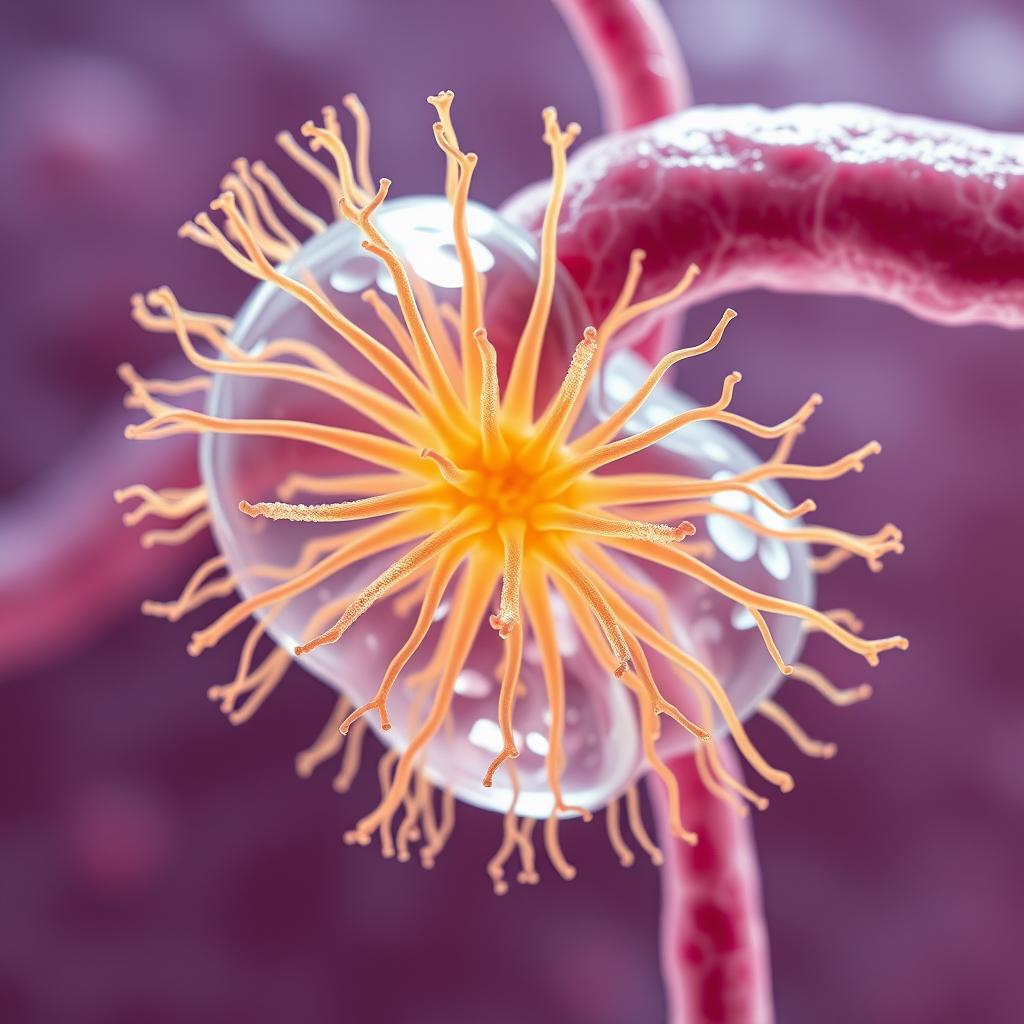
##1. Primary Cilia Signaling and the Essential Role of Cholesterol The primary cilium on the cell surface functions as a high‑performance sensor that detects external physical and chemical stimuli. For this sensor to operate correctly, cholesterol must be highly enriched in the ciliary membrane. Cholesterol provides the physical platform that allows G‑protein‑coupled receptors (GPCRs) and ion channels located on the cilium to adopt their proper positions and function. Disruption of this lipid environment leads to severe ciliopathies such as polycystic kidney disease or retinal degeneration.
##2. Peroxisomal Transport Pathway: A Cholesterol Supply Route to the Cilium The research team discovered an innovative pathway in which a subpopulation of peroxisomes travels along microtubules to the ciliary base and delivers cholesterol directly. Cholesterol supplied via this route maintains the lipid composition of the ciliary membrane and enables the polycystin complex (PKD1/PKD2) to traffic accurately into the cilium. Thus, peroxisomes act as a critical logistics system required for preserving ciliary sensor function.
##3. PKD2 L517R Variant: Mislocalization Caused by Failure to Bind Lipids A specific PKD2 mutation (p.L517R) identified in autosomal dominant polycystic kidney disease (ADPKD) patients retains normal ion‑channel activity but loses the ability to bind cholesterol. The mutant protein fails to recognize cholesterol in the ciliary membrane, cannot enter the cilium, and becomes isolated within the cell—a phenomenon described as mislocalization. This defect prevents renal cells from sensing external cues, ultimately leading to the formation of numerous kidney cysts characteristic of polycystic kidney disease.
##4. Therapeutic Implications: Limits of Exogenous Cholesterol Supplementation and the Need for Precision Medicine The most critical finding of this study concerns therapeutic stratification. In models with peroxisome biogenesis defects (Zellweger syndrome model) that suffer from insufficient cholesterol supply, exogenous cholesterol supplementation restored ciliary function. However, when the PKD2 protein itself carries the L517R binding‑site mutation, additional cholesterol did not produce a therapeutic benefit. These results highlight the necessity of a precision‑medicine approach that tailors treatment to the patient’s specific genetic variant.
Ciliary Cholesterol and ADPKD Research Summary
The ciliary membrane is enriched in cholesterol, essential for the localization of PKD2. Peroxisomes supply this cholesterol to the ciliary base. The ADPKD-associated PKD2 variant (p.L517R) impairs cholesterol binding, leading to defective ciliary trafficking despite normal channel activity. Exogenous cholesterol rescued trafficking in peroxisome-deficient cells but not in PKD2 L517R mutants, identifying ciliary cholesterol binding as a key therapeutic target.
This dataset identifies the cause of polycystic kidney disease as a defect in lipid‑binding‑mediated trafficking rather than a loss of protein activity. It underscores that drug development must move beyond simply activating the channel and instead focus on precise molecular designs that facilitate protein entry into the cilium, representing a high‑quality resource for therapeutic discovery.