Mutant RNA-Sensing, Apoptosis-Inducing Cancer Cell Targeting: The Emergence of CRISPR-Cas12a2-Based Anti-Cancer Technology
Background
Conventional gene therapy has focused on precisely excising and correcting mutated deoxyribonucleic acid (DNA) sequences. However, this approach, which aims to correct individual cells with numerous, widespread mutations, such as those found in cancer cells, has been criticized for its limited therapeutic efficacy. In particular, intractable mutations in tumor suppressor genes like TP53 or KRAS, which are central to cancer development, are difficult to control with existing chemotherapeutic drugs or gene-editing technologies, classifying them as untreatable targets. Rather than insisting on restoring genes to their normal state, a new approach has emerged: identifying and completely eliminating cells carrying disease-causing genes. This can be interpreted as a strategy to enhance therapeutic efficacy by fundamentally blocking the survival of cells that cause the disease. Finally, an attempt to apply a bacterial self-destruct defense system, which bacteria use to eliminate themselves in response to external invaders, to human disease treatment has yielded results. The scientific community anticipates that this new technology will be the key to overcoming the limitations of existing therapies.
Key Findings
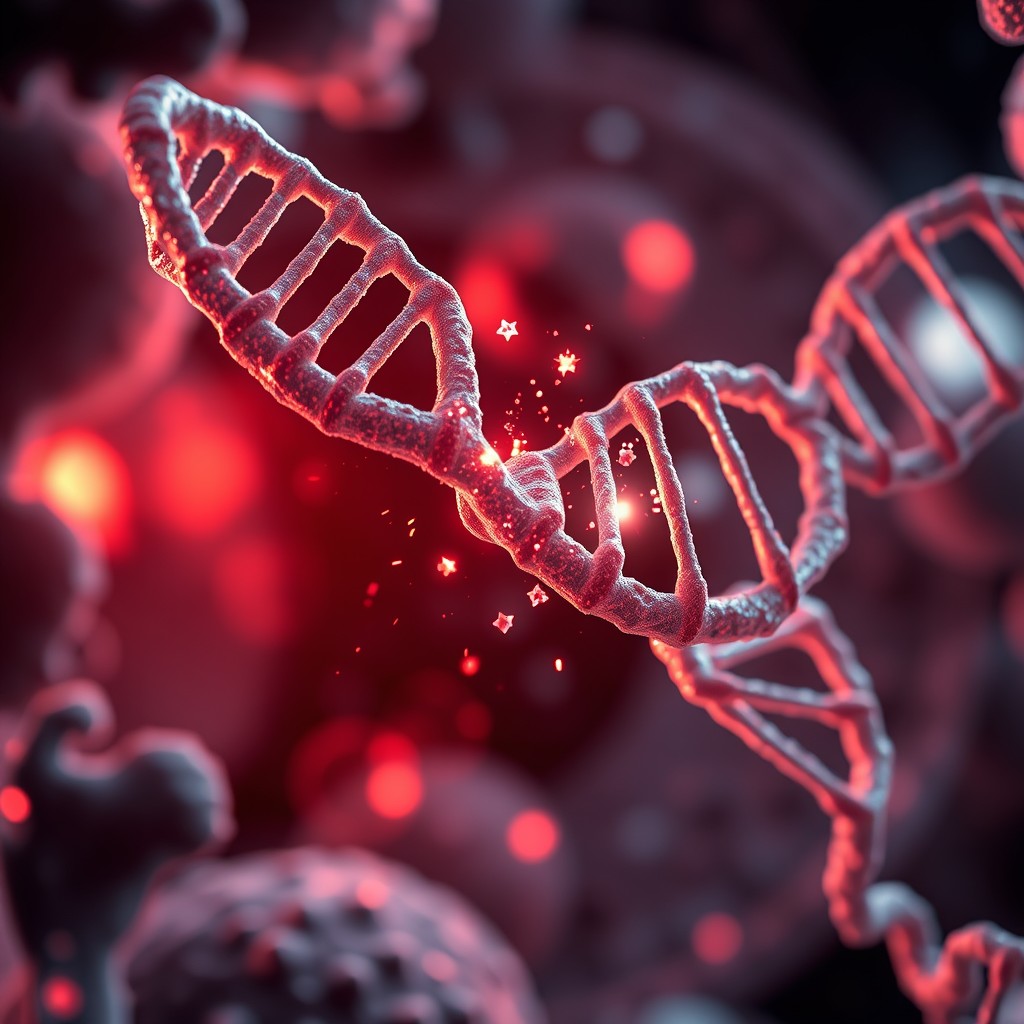
Two studies published in the international journal Nature in 2026 elucidated the unique apoptotic mechanism of the CRISPR-Cas12a2 enzyme and implemented it as a therapeutic technology. The research teams were led by Dr. Paul Scholz at the University of Utah and Professor Jennifer Doudna at the University of California, Berkeley, and the Innovative Genomics Institute (IGI). Cas12a2, used by the research team, differs from conventional CRISPR-Cas9, which precisely edits genes. It has been confirmed that Cas12a2 possesses a unique property: it detects specific genetic information transcripts, such as ribonucleic acid (RNA), and then destroys all genetic material within the cell. The mechanism of action of the therapeutic technology is also highly sophisticated. The principle involves programming guide RNA to identify mutant RNA produced by cancer cells and injecting it into cells. When Cas12a2 binds to the target mutant RNA with this guide RNA, the enzyme's structure changes, converting it into a non-specific active state. The activated enzyme exhibits the characteristic of indiscriminately cleaving single-stranded DNA, double-stranded DNA, and RNA within cancer cells. This destructive phenomenon, referred to as "chromatin shredding," renders the cell's genome irreversibly damaged. As a result, the fragmented genes in cancer cells can only cease their life activities and undergo apoptosis.
Significance and Prospects
The most notable strength of this system is its high precision in distinguishing between cancer cells and normal cells. It is possible to perfectly differentiate between mutant RNA and normal RNA, even with a single nucleotide difference. Accordingly, normal cells expressing normal genes are safely protected, while only target cancer cells with mutant genes are precisely targeted and eliminated. In fact, the research team conducted in vivo experiments using mouse tumor models implanted with human papillomavirus (HPV)-infected cells and KRAS-mutated cells, and confirmed that tumor cells are selectively eliminated.
This discovery represents a new paradigm that overcomes the limitations of existing therapies that have attempted to inhibit disease-causing proteins or repair damaged genes. By utilizing the mutant RNA produced by cancer cells as an apoptosis signal, it is expected to provide a critical breakthrough in the treatment of various intractable diseases for which drug development has been difficult due to complex target protein structures. In the field of new drug development, the flexibility of target selection has been dramatically expanded.
However, there are still technical hurdles to overcome before it reaches the commercialization stage. The most urgent task is to secure a delivery system that can safely and efficiently deliver the Cas12a2 system to the patient's target tumor site. This is because unwanted immune responses or minor malfunctions in normal tissues during the delivery process can lead to unexpected side effects. The research team has begun follow-up studies to improve the in vivo delivery efficiency of the system and to supplement safety measures that can control transient expression.
Nature, Published online: 14 July 2026; doi:10.1038/d41586-026-02122-2A bacterial self-destruct mechanism has been repurposed as a potential therapy, selectively eliminating diseased cells — including tumour cells in mouse models of cancer.
This technology can be a decisive key to providing personalized, precision treatment for patients with advanced or metastatic cancers who have limited treatment options in the clinical setting. A representative application scenario is the treatment of pancreatic cancer. Pancreatic cancer is characterized by KRAS gene mutations in more than 90% of patients, but it has been a difficult disease to treat effectively because the protein surface structure to which drugs can bind is flat, making it difficult to develop effective targeted anticancer drugs. If this patient is administered a Cas12a2-based therapeutic agent, the treatment outcome will be completely different. The treatment involves administering a guide RNA targeting the KRAS mutant RNA sequence detected in the patient's tumor tissue and the Cas12a2 gene encapsulated in a fine nanoparticle to the patient. This therapeutic drug circulates throughout the body and is characterized by activating only within pancreatic cancer cells, where it binds to KRAS mutant RNA. As a result, the genome of pancreatic cancer cells is indiscriminately fragmented, leading to the death of cancer cells, while normal pancreatic cells and surrounding organs are safely preserved, which is expected to realize a highly efficient targeted therapy. Furthermore, by simply changing the base sequence of the guide RNA, it will be possible to industrially design and supply a "personalized, one-shot apoptosis therapeutic agent" tailored to the patient's individual cancer genome analysis.