Overcoming mTOR Inhibitor Resistance through PIKfyve Inhibition
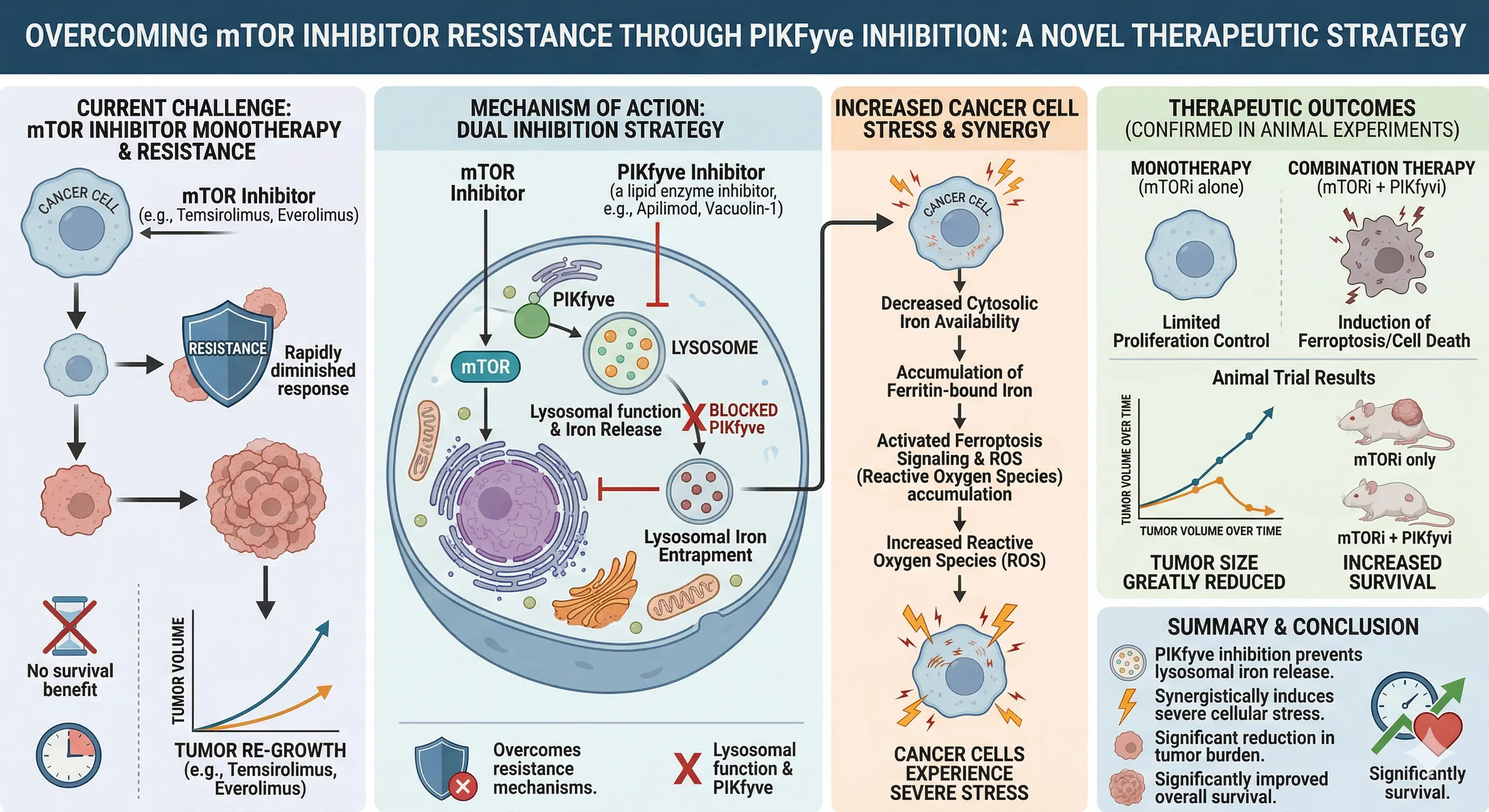
When using mTOR inhibitors alone, the response is often short-lived. However, by also inhibiting PIKfyve, a lipid kinase, the release of iron from lysosomes is impaired, resulting in increased stress on cancer cells. Consequently, combining the two treatments leads to significantly reduced tumor size and improved survival. This effect was consistently observed in animal experiments.
mTOR inhibitors (mTORis) are Food and Drug Administration (FDA)-approved therapies for advanced gastroenteropancreatic neuroendocrine tumors (GEP-NETs), yet their clinical efficacy is often limited by transient responses and acquired resistance. To uncover sensitizing co-targets, we conduct a kinome-wide CRISPR-Cas9 screen, identifying the lipid kinase PIKfyve as a key vulnerability in GEP-NETs. PIKfyve is overexpressed and functionally linked to the regulation of lipid biosynthesis through the mTOR-SREBP1 axis. Mechanistically, PIKfyve inhibition impairs lysosome-mediated ferritin degradation, amplifying metabolic stress triggered by mTORi-induced ferritinophagy. Co-inhibition of mTOR and PIKfyve synergistically disrupts lipid and iron metabolism, leading to enhanced tumor suppression and improved survival in preclinical GEP-NET models. These findings nominate PIKfyve as a metabolic co-target to overcome mTORi resistance, offering a rationale for combination therapies in mTOR-driven malignancies, as reported in Nature Medicine.
Providing a new combination strategy for treating mTOR-resistant GEP-NETs