mRNA Therapy Offers New Hope for Degenerative Eye Diseases
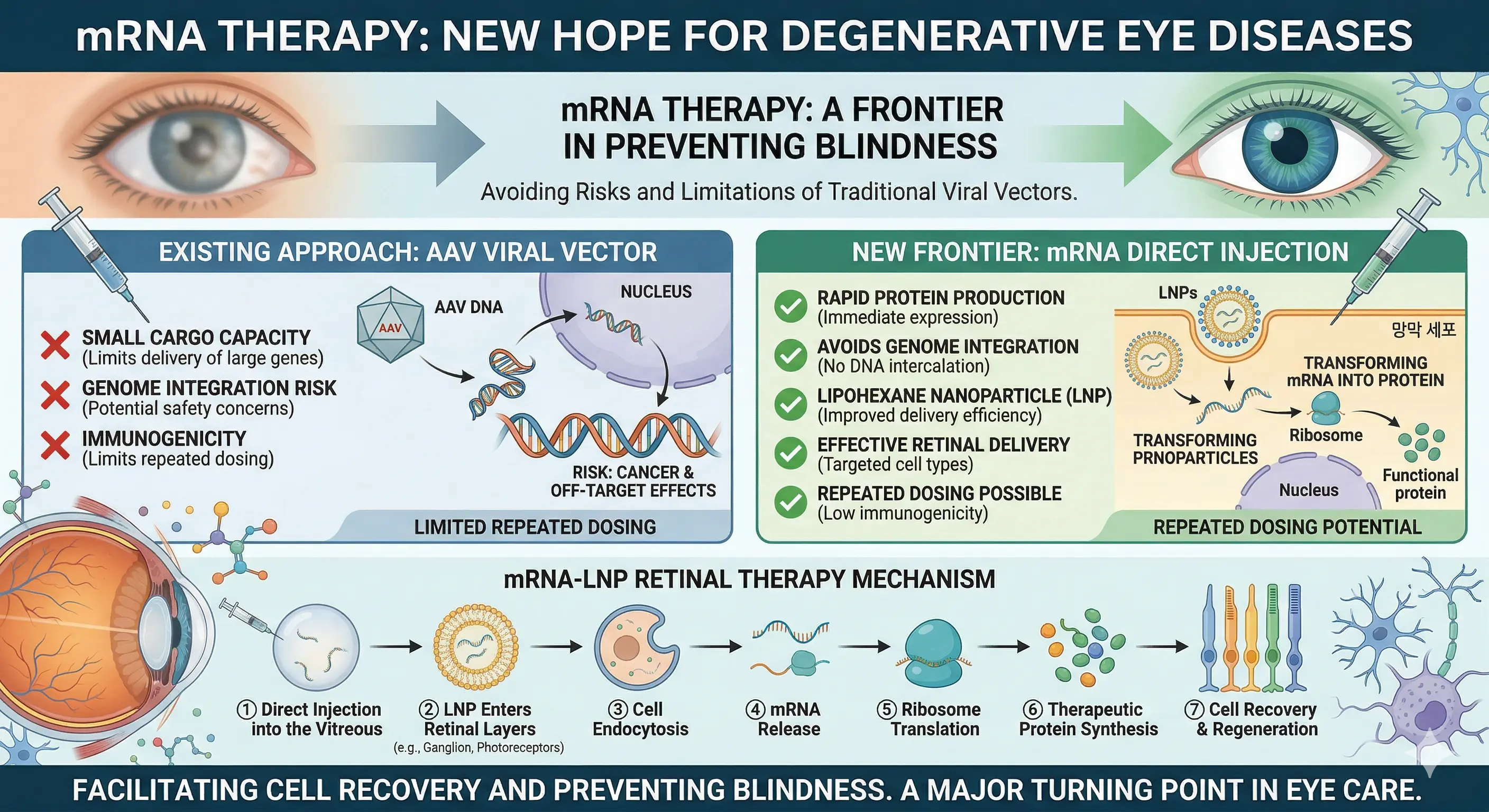
When the eye is damaged, vision can be permanently impaired. Existing AAV viruses have size limitations and safety concerns, but injecting mRNA directly into the eye can rapidly produce proteins without the risk of genomic integration. Thanks to the latest ribonucleic acid nanoparticles, it can enter retinal cells well and allow for repeated administration. If realized, this could be a major turning point in preventing blindness.
Retinal neurodegeneration remains a major cause of irreversible vision loss, yet current therapeutic options are limited in effectiveness. Although gene therapies have shown clinical potential, the overexpression platforms they rely on, such as adeno-associated virus DNA, are constrained by safety concerns, limited efficacy, and cargo size restrictions. In contrast, mRNA therapy has gained recognition as a compelling alternative, enabling rapid and efficient protein expression without the risk of genomic integration. This review synthesizes recent advances in mRNA engineering, delivery systems, and administration routes for retinal applications, and highlights strategies to enhance targeting, penetration, and controlled release through interdisciplinary collaboration between ophthalmology and bioengineering. In recent years, engineered mRNA formats, including chemically modified linear, circular, and self-amplifying RNA, can achieve higher translation efficiency within a tunable expression window. The transient nature and relatively low immunogenicity of in vitro transcribed mRNA support repeat dosing without insertional mutagenesis. Advances in nanocarriers, particularly lipid nanoparticles, have enabled preferential delivery to retinal neurons, Müller glia, and pigment epithelium via intraocular administration, while improving mRNA stability and transfection efficiency. In preclinical studies, mRNA has been widely used to deliver gene-editing tools, transcription factors, and supplementary functional proteins. In disease models such as optic nerve crush and laser-induced choroidal neovascularization, mRNA-based therapies enhance neuroprotection and suppress pathological angiogenesis in the injured retina, with favorable ocular safety profiles. However, it remains largely unexplored how the intrinsic advantages of mRNA therapy can be leveraged to develop tailored strategies for complex retinal disorders. Consistent with this gap, mRNA platforms have not yet been widely
The paradigm for treating blindness could change significantly