mRNA Therapeutic Technology Elicits Programmed Cell Death in Infected Cells by Reversing the Function of Viral Proteases
Background
Lack of Therapeutics Targeting Only Infected Cells
Conventional antiviral drugs primarily target specific surface proteins or replication enzymes of viruses, directly inhibiting their function. This approach has limitations, as the emergence of mutant viruses leads to drug resistance and a rapid decline in therapeutic efficacy. There has been a long-standing need for a therapeutic technology that can selectively kill virus-infected cells without damaging the patient's normal cells.
Untapped Potential of Cell Death Mechanisms
The human immune system possesses gasdermin D (GSDMD), an immune protein that forms pores in the membranes of infected cells, inducing cell lysis. GSDMD exhibits potent immune-inducing function, but its indiscriminate activation carries the risk of causing systemic inflammatory responses. Therefore, researchers have explored the fusion of GSDMD molecular structure with messenger ribonucleic acid (mRNA) vaccine delivery technology to develop an antiviral therapeutic strategy that selectively functions within infected cells.
Key Findings
Design of a Lysis Switch Activated by Viral Enzymes
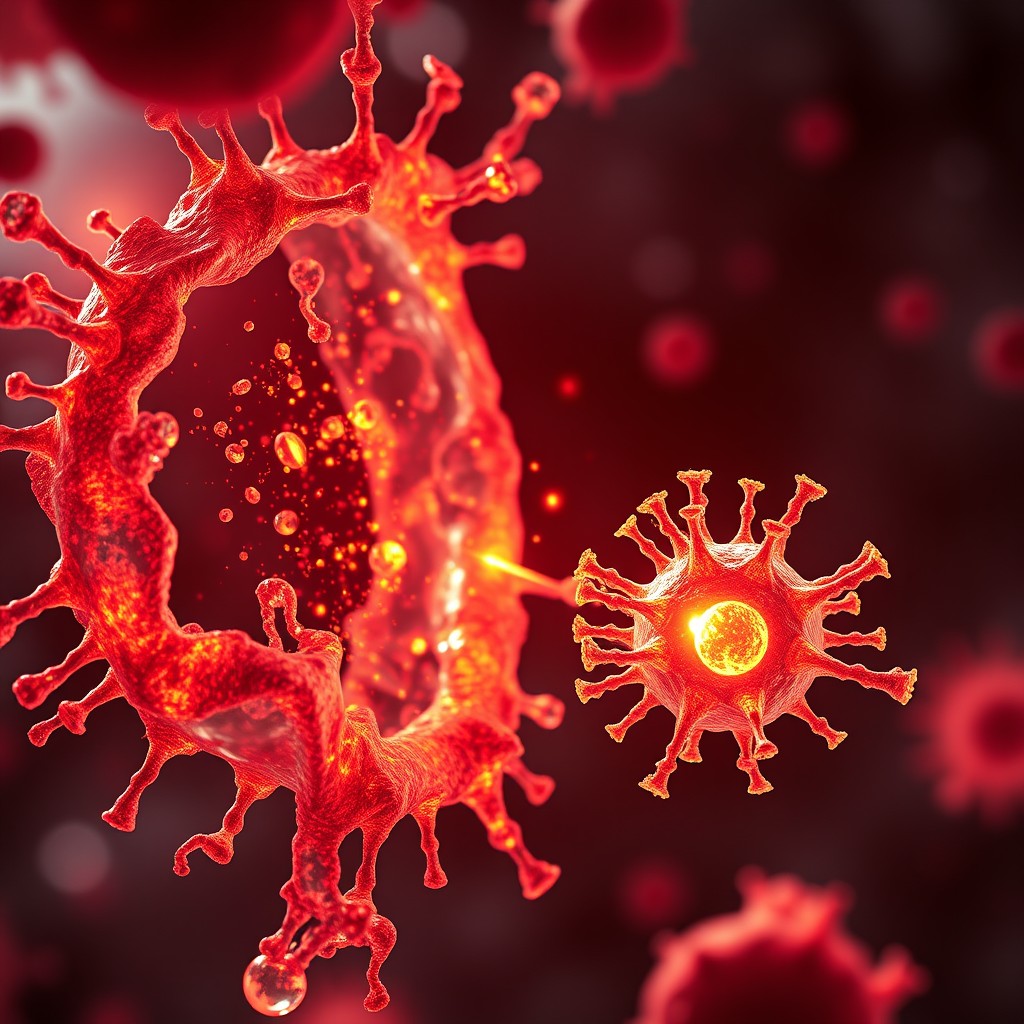
An international research team redesigned the GSDMD protein by replacing its self-cleavage site with a sequence specifically recognized by a virus-specific protease. They then encapsulated the artificially modified GSDMD gene in lipid nanoparticles (LNPs) to create viral cleavage-activated cell death (VID) activator mRNA (VIDA mRNA). In non-infected normal cells, this mRNA remains in a non-reactive protein state. However, when a virus infects a cell and produces viral proteases, the corresponding sequence is cleaved, immediately activating GSDMD. The activated GSDMD forms pores in the cell membrane, leading to the lysis of the infected cell.
In Vivo Antiviral Effects and Immune Induction
In animal model experiments, VIDA mRNA completely blocked the replication and shedding of hepatitis A virus (HAV). The lysis of infected cells released internal antigens and inflammatory signaling molecules, actively recruiting surrounding immune cells, demonstrating a "kill-and-alert" mechanism. This action significantly reduced liver tissue damage and further enhanced the immune response of surrounding non-infected cells. The researchers also demonstrated that this platform functions similarly against Zika virus (ZIKV) and severe acute respiratory syndrome coronavirus 2 (SARS-CoV-2).
Target Precision Enhanced by Generative AI
The researchers introduced a generative artificial intelligence (AI) framework to derive a highly precise cleavage sequence that specifically targets the main protease (Mpro) of SARS-CoV-2. The optimized VIDA mRNA designed by AI exhibited significantly superior antiviral efficacy compared to existing sequences.
Significance and Prospects
A Universal Platform for Combating Variant Viruses
The VIDA mRNA platform utilizes the reverse application of enzyme functions essential for viral replication, making it difficult for viruses to develop drug-resistant mutations. If a virus attempts to evade the VIDA cleavage sequence through mutation, it will also damage its own replication function. Furthermore, even if the target virus changes, the mRNA can be rapidly adapted by simply replacing the internal cleavage sequence, demonstrating its value as a universal platform for preparing for emerging infectious diseases.
Future Challenges for Commercialization
For actual clinical application, the delivery system must be able to precisely deliver LNPs to various organs beyond the liver. Furthermore, strict safety verification is required to prevent unintended cleavage reactions by proteases in the body, which could lead to autoimmune diseases or damage to normal tissues.
While gasdermin (GSDM)-mediated pyroptosis is a potent immune effector, its antiviral potential remains largely untapped. Here, we introduce viral protease-initiated lytic cell death (VID), a universal mRNA therapeutic platform inspired by the modular architecture of GSDM and the clinical success of mRNA vaccines. By engineering gasdermin-D (GSDMD) to harbor viral protease-specific cleavage motifs, we generated VID activators (VIDAs) that selectively trigger lytic cell death in virus-infected cells. Using hepatitis A virus (HAV) as a model, lipid nanoparticle (LNP)-encapsulated VIDA mRNA abolished viral replication and shedding in vivo and mitigated liver injury through a coordinated "kill-and-alert" mechanism that primes bystander immunity. The platform's versatility was further demonstrated against Zika virus (ZIKV) and SARS-CoV-2. Leveraging a generative artificial intelligence (AI) framework, we designed de novo cleavage motifs for the SARS-CoV-2 main protease, yielding optimized VIDAs with superior antiviral potency. Collectively, our study establishes VIDA mRNA as a versatile, broadly applicable strategy for combating diverse viral threats.
VIDA mRNA technology proposes a new paradigm for developing new drugs that can immediately respond to emerging and re-emerging pandemic viruses. Conventional antiviral drugs require separate research and structural elucidation of each viral target protein, which takes a long time to develop. In contrast, the VIDA platform can design optimized candidate mRNA molecules in a short period by analyzing the protein cleavage enzyme sequence of a new virus using generative AI.
Furthermore, it has high potential for expansion as a therapeutic agent for difficult-to-treat respiratory infectious diseases with frequent mutations or chronic viral infections. In the field of cancer treatment, it can also be applied to precision treatment technologies that selectively induce the lysis of cancer cells by targeting cancer cell-specific enzyme expression.