Identifying the Genetic Traces Crops Leave in Soil: A Next-Generation Breeding Method Designing Entire Crop Rotation Systems Beyond Single Varieties
Background
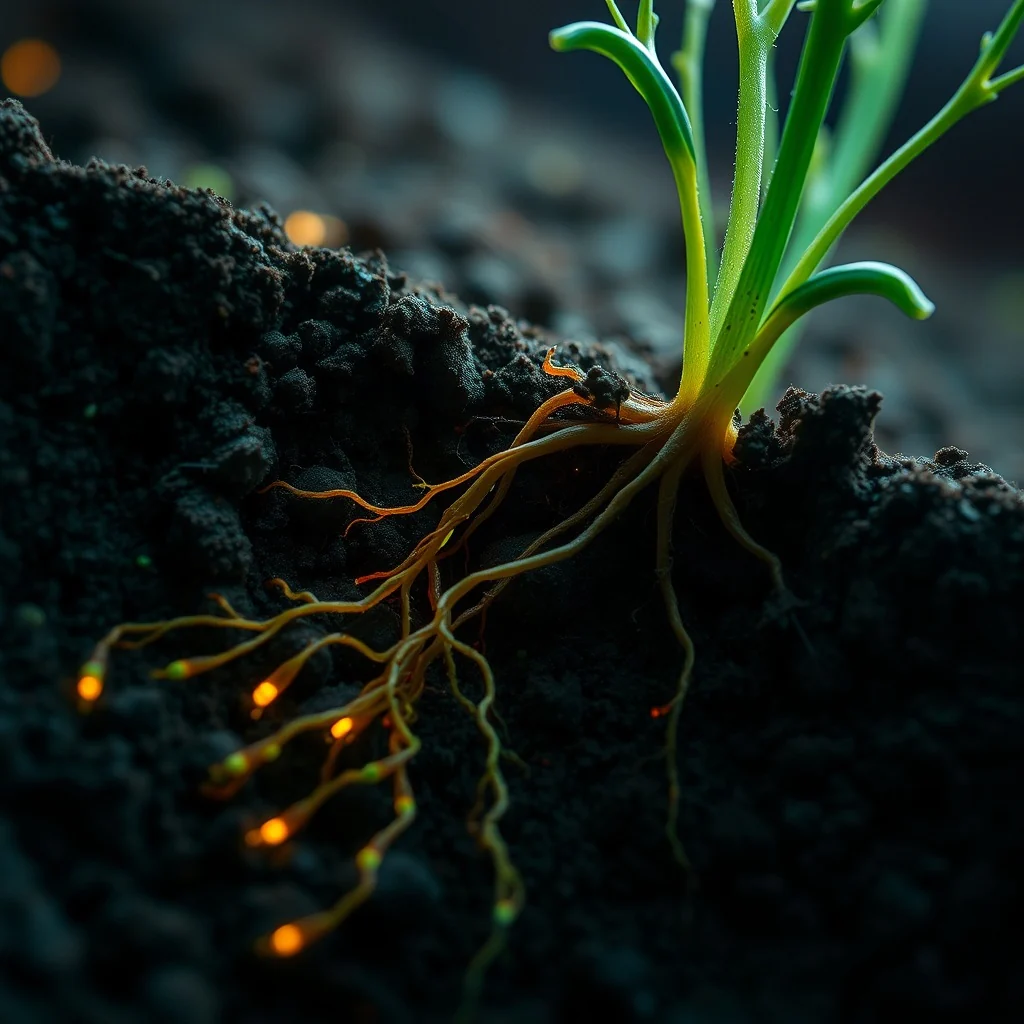
Modern agricultural breeding has focused on maximizing the yield of individual crops. While single-variety-centered selection breeding contributed to increasing annual productivity, it created structural limitations such as continuous cropping disorders and the degradation of soil ecosystems. In farmland, crop rotation systems—planting different crops in succession—are widely used to replenish soil fertility and suppress pest proliferation. In actual cultivation, residual organic matter and root exudates remain in the soil even after the previous crop is harvested, directly affecting the growth of subsequent crops in the following season. This is referred to as Plant-Soil Feedback (PSF) or soil legacy.
The problem is that existing crop improvement programs have proceeded while completely excluding these soil legacy interactions. Breeders evaluated traits by planting only a single target crop in independent plots, without tracking the impact of changes to the soil microbiome or nutrient balance on subsequent crops planted the following year. While farmers experienced extreme productivity variations depending on the variety combination when planting corn after certain legumes, they attempted to solve the problem by relying on chemical fertilizer and pesticide inputs without identifying the clear cause.
Key Findings
This Perspective article published in Nature Genetics presents an empirical analysis demonstrating that the biochemical and microbiological footprints left by crops in the soil are not merely environmental factors, but are determined by the variety's inherent genetics. The researchers explained that even within the same crop species, the composition of phenolics and organic acids in root exudates varies depending on which alleles are carried, which in turn determines the structure of the rhizosphere microbial community and the amount of fixed nitrogen.
A particularly noteworthy observation is that the magnitude and quality of the soil legacy depend heavily on genetic variation between varieties. According to experimental analysis, certain wheat varieties accumulate beneficial bacteria in the soil that aid in nodule formation for subsequent legumes, whereas other varieties leave pathogenic fungal spores in the soil, inhibiting the initial rooting of the next crop. In other words, the genetic traits of a crop indirectly control not only the current year's yield but also the phenotype of the next crop through the medium of the soil.
The research team proposed a complete revision of the traditional breeding system, which used only the single-season yield of a single crop as an indicator. An integrated multi-crop breeding system that optimizes the cumulative productivity and resource use efficiency of the entire rotation cycle, spanning 2 to 4 years, was proposed as an alternative, moving beyond the independent evaluation of individual varieties. The strategy involves quantifying the interactions between the genotypes of preceding and subsequent crops to custom-design genetic combinations so that the previous crop contributes to fertilization and suppresses soil-borne pathogens.
Significance and Outlook
This proposal provides a new breeding paradigm for the global agricultural industry, which must drastically reduce the use of chemical fertilizers and fungicides. It opens a path to move away from the practice of applying inputs after sowing to maintain soil health, and instead utilize the genetic characteristics of crops themselves as tools for improving the soil environment. Once the genetic compatibility between crops within a rotation system is identified, farmers can secure stable total yields throughout the rotation cycle while minimizing fertilizer input.
However, there are significant challenges to overcome before fully implementing this method in the breeding industry. Since the genetic combinations of multiple crops must be cross-validated over several years, the area of breeding test plots and the evaluation period will inevitably increase by three to four times compared to existing methods. Controlling the complexity of Genotype-by-Environment (GxE) interactions, which depend on soil microbiome and climatic conditions, is also a difficult task. The researchers added that the development of technologies to pre-screen soil legacy traits by combining metagenomic analysis with machine learning-based predictive models must proceed in parallel to reduce the cost of large-scale field evaluations.
Nature Genetics, Published online: 16 September 2026; doi:10.1038/s41588-026-02744-2Crops leave a legacy in the soil that shapes the next season’s harvest, and the size of that legacy depends on the variety’s genetics. This Perspective proposes breeding for entire rotations rather than single crops to build more sustainable farms.
Seed companies and agricultural operations can develop customized complex seed package products based on this concept. For example, it is anticipated that a business model will emerge to supply farmers with rotation-specific variety sets featuring verified mutual soil feedback synergies, moving away from the practice of selling preceding wheat varieties and subsequent soybean varieties individually. This can be expanded into crop rotation placement prescriptions optimized for regional soil characteristics when combined with precision agriculture data. Amid rising fertilizer and pesticide prices that are increasing the burden of farming costs, designing crop rotations that leverage natural soil metabolic legacies offers a practical alternative to reduce farming expenses while addressing stricter eco-friendly agricultural regulations.