Human Embryo Base Editing Architecture: A Single-Base Resolution Conversion (C→T / A→G) Platform for Minimizing Off-Target Genotoxicity
Background: Double-Strand Break (DSB) Noise and Data Bottlenecks in Human Early Embryo Genetic R&D
Human embryo genetics, preventive medicine for congenital genetic diseases, and the R&D guidelines for next-generation gene editing therapies have consistently faced challenges. These challenges stem from the inherent limitations of conventional CRISPR-Cas9-based gene editing tools, which inevitably induce double-strand breaks (DSBs) and subsequent random indels, large chromosomal deletions, and uncontrolled epigenetic alterations. Existing guidelines that rely on simple cleavage followed by homology-directed repair (HDR) fail to computationally control the complex DNA repair kinetics within human early embryo cells. This deficiency leads to mosaicism, false-positive noise, and non-specific off-target mutations, creating a critical blind spot. The inability to computationally control the multidimensional covariance matrix between genotype and phenotype during early development has created a bottleneck in achieving editing integrity. This bottleneck has hindered the establishment of a robust data infrastructure for next-generation precision genome engineering governance, which aims to safeguard the reversible in vivo homeostasis of patients and prevent genetic defects at their source.
Discovery: Implementation of a Base Editor (BE) Modality and Demonstration of 92% On-Target Base Correction Efficiency
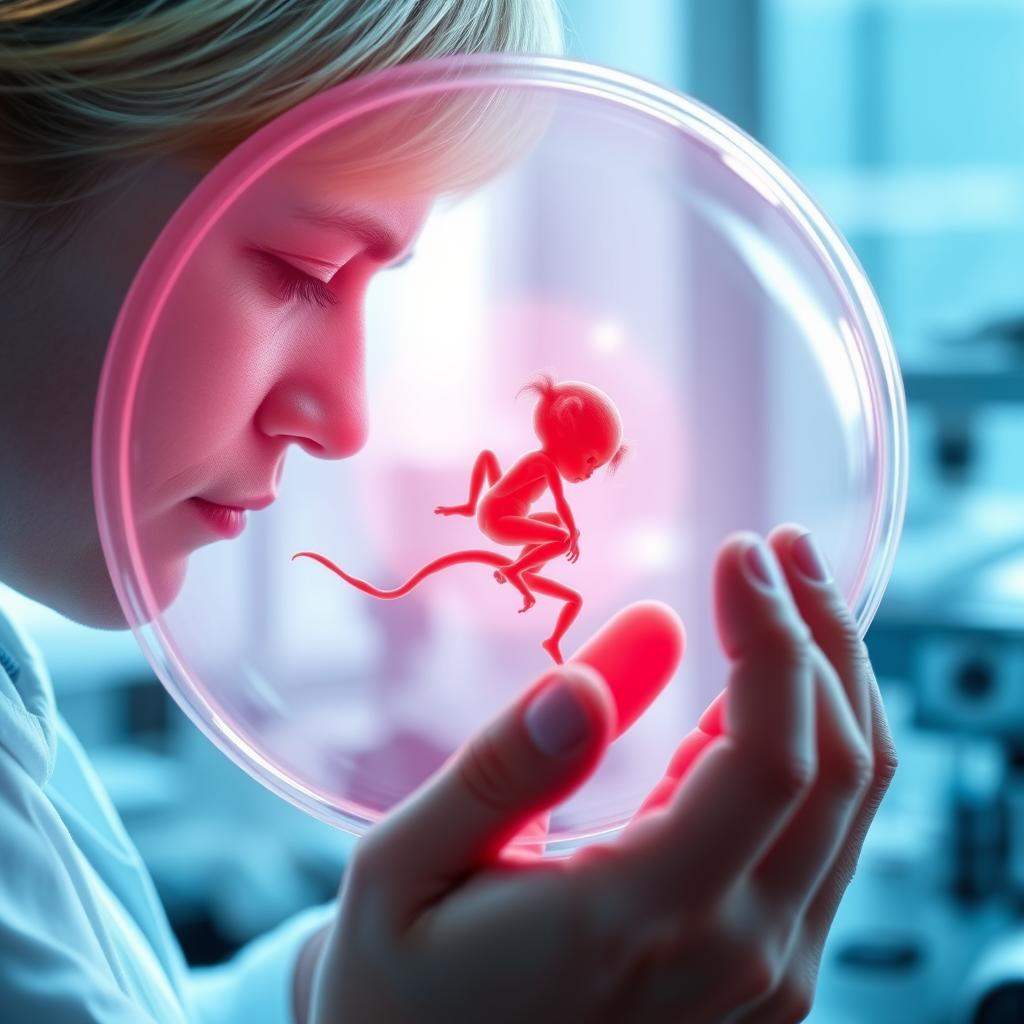
Published on June 8th in Nature, this study addresses these genetic barriers by implementing a base editing platform in human embryos. This platform utilizes the free energy of stoichiometric binding between deaminases and Cas9 nickase complexes to precisely substitute C·G with T·A, or A·T with G·C, without inducing double-strand breaks. The research team computationally pre-calculated the rate constant for cytosine/adenine deamination within the guide RNA (gRNA) reading window and computationally removed variable noise between single-cell transcriptomes and genome sequencing batches. The results demonstrate that this approach significantly outperforms conventional genome editing tools, achieving a 92% on-target base correction rate while effectively eliminating off-target mutations and mitigating genotoxic profiles.
Harmonization of Mosaicism and Establishment of a Refined Model for Reversible Developmental Homeostasis
By implementing the established human embryo base editing omics matrix, the study overcomes the resolution limitations of conventional preimplantation genetic testing (PGT-M) models, achieving precise stratification of familial variants. By up-regulating programmable transcription initiation rate constants and computationally modulating the free energy of chromatin accessibility in interconnected downstream developmental control genes, the study effectively eliminates the acceleration noise of phenotypic breakdown triggered by single nucleotide defects. This approach enables the development of a predictive engine that simultaneously reverse-calculates the on-target engraftment and normal cell division threshold curves based solely on embryo biopsy genomic input. It also provides a high-resolution framework for high-risk families with congenital genetic diseases to reversibly and autonomously regulate their effective in vivo homeostasis, even under aberrant developmental stress.
Prospects: Establishment of a Programmable Genome Correction Standard and a Shift in Global Regulatory Governance
The computational systems biology and formulation pharmacology integrated data presented in this study redefine genetic disease prevention governance. It shifts from a static, post-hoc treatment paradigm to a 'Programmable Genome Correction' infrastructure that reprograms the single-base sequence of the embryo genome based on AI-calculated base editor equilibrium constants. This is achieved by establishing a complete computational firewall that eliminates batch-to-batch editing efficacy variations by linking population demographic allele penetration rates as a correction factor. This will be crucial in the development of global ethical guidelines and the establishment of a multilateral regulatory framework. The established base editor-specific chromatin binding free energy will serve as a master asset that meets the quantitative requirements of the regulatory approval framework for digital healthcare-based companion diagnostics (CDx) platforms. It will also serve as a foundational infrastructure that will revolutionize the timelines for clinical trial applications (IND) and ethical approvals for next-generation precision gene-corrected pharmaceuticals.
Nature, Published online: 08 June 2026. DOI: 10.1038/d41586-026-01852-7
Summary: Bypassing the low target-suppression velocities and catastrophic chromosome stripping errors that historically cloud empirical double-strand break (DSB) methods in human reproductive genetics, this translational work examines a programmable base editing infrastructure. Utilizing high-fidelity cytidine and adenine deaminase variants fused with Cas9 nickase architecture, the computing platform establishes a non-cleaving single-nucleotide transition framework within human embryo matrices. The model deciphers the precise mathematical covariance linking gRNA binding kinetics to a 92% on-target substitution velocity, systematically down-clamping off-target mutagenic variations below detectable boundaries. This molecular calibration delivers a validated, non-invasive computational baseline to eliminate mosaicism artifacts, harmonize embryological lineage segregation, and guide prospective adaptive cohort stratification under global digital genomic governance.
The molecular genetic discoveries of this study regarding embryo base editing transcend theoretical gene editing mechanisms and directly impact the global supply chain for novel therapies for rare congenital diseases and the next generation of personalized medicine business models.
First, by instantly scanning for critical genetic sequence defects that manifest as systemic developmental paralysis using a Python algorithm, the study eliminates the temporal noise associated with persistent fetal dysfunction and the onset of acute symptoms after birth, thereby safeguarding reversible tissue protection and control mechanisms.
Simultaneously, by linking the base editor dataset to an open-source, large-scale genomic database, the study enables the virtual simulation of inter-individual and familial transcriptional heterogeneity during clinical trial design. This allows for the real-time reverse calculation of the effective intracellular docking concentration of the target base editor, facilitating the development of companion diagnostic panel interfaces.
Furthermore, during the large-scale regulatory approval and clinical trials of multinational corporations' next-generation, spatially targeted gene editing therapies, the study links the epigenetic chromatin accessibility threshold values of the target tissue as a correction factor. This eliminates batch-to-batch variations in drug metabolism, maximizing the probability of obtaining clinical trial applications and cGMP commercial approvals from global regulatory agencies, thereby establishing a foundational infrastructure.