A 20,000-Year Analysis of Ancient Genomes Reveals the History of Genetic Isolation and Restoration Strategies for North American Bison
Background
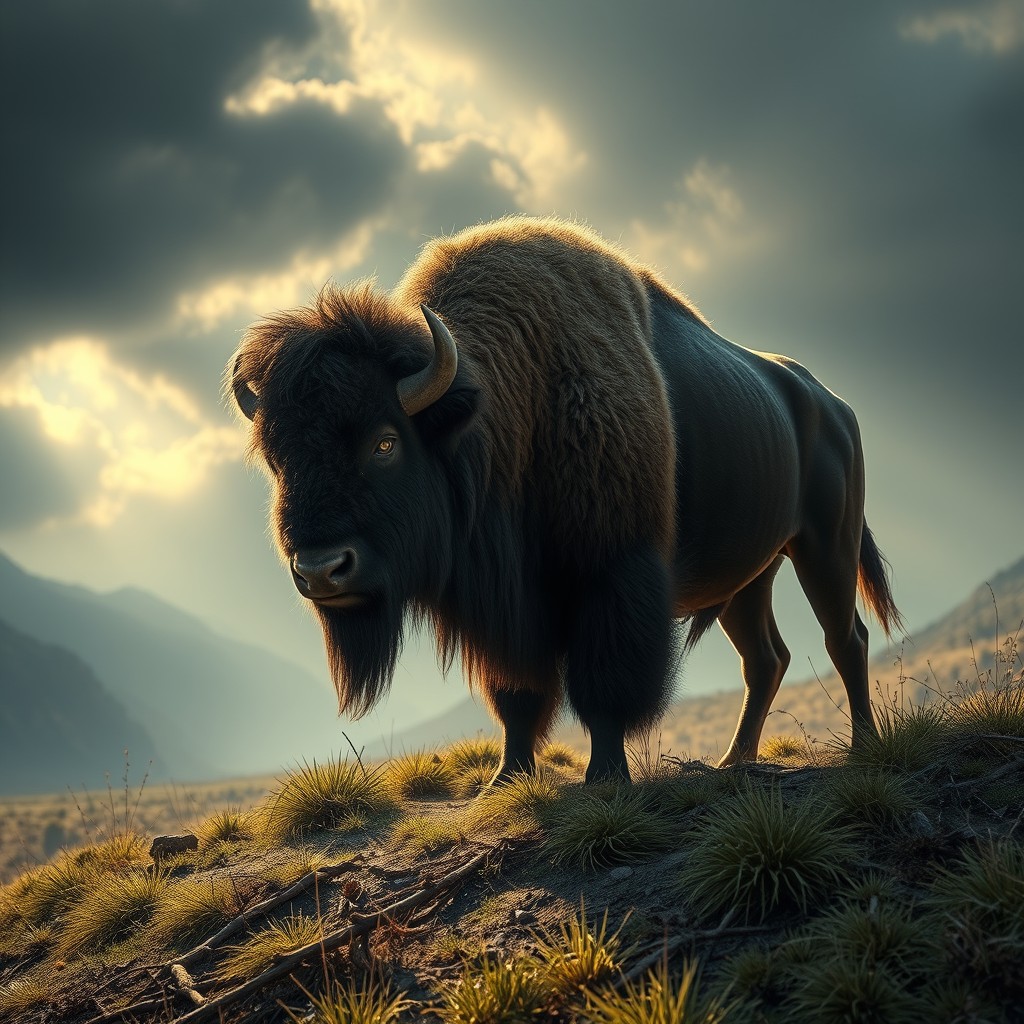
North American bison (Bison bison), a symbol of the United States, once roamed the plains in herds of tens of millions. Due to indiscriminate hunting and development, their population plummeted to just a few hundred individuals by the late 19th century, creating a bottleneck. Conservation efforts in the 20th century, aimed at preventing extinction, inadvertently created new challenges. The surviving bison herds were confined to small, isolated reserves and managed on a limited scale. Concerns arose about the potential contamination of the species' genetic purity due to the introduction of genes from domesticated cattle.
To fully restore bison to their ecosystem, it is necessary to establish clear criteria for understanding their past genetic history and the genetic health of modern herds. Previous analyses focused only on surviving modern populations, limiting the ability to elucidate the original genetic makeup.
Key Findings
An international research team attempted to address this challenge by conducting large-scale genomic sequencing. They integrated genomic information from 115 ancient bison remains collected from sites in Wyoming and 45 modern bison. This was combined with 52 existing datasets, resulting in a comprehensive genetic dataset of 212 individuals.
The analysis revealed findings that challenged conventional wisdom. Until the population decline in the late 19th century, North American bison were connected in a vast genetic network across the continent. Genetic differences between regions were minimal. The isolation and divergence observed in modern herds are not natural phenomena but rather the result of genetic drift that occurred in small, isolated populations within conservation reserves after the 20th century.
The study also investigated the long-standing debate in conservation regarding the introgression of cattle genes. There were concerns that the DNA of domesticated cattle had permanently mixed into the genomes of modern bison due to past artificial breeding. However, the actual analysis revealed that the traces of cattle genes were less significant than expected. Among the 97 modern plains bison studied, only 32 individuals showed evidence of cattle genes. Furthermore, the introduced DNA fragments were confined to a very small region of the genome, suggesting that they can be eliminated through selective breeding and genetic management over generations.
The genetic relationship between the plains bison and wood bison subspecies was also established. Forced translocation efforts in the 1920s, aimed at increasing population numbers, disrupted the boundaries between the two subspecies. It was confirmed that all existing wood bison populations inherited genetic material from the plains bison.
Significance and Prospects
This research demonstrates that ancient genomics provides a practical roadmap for conservation genomics in endangered species. It opens the door to actively utilizing modern bison herds, which were previously excluded due to the presence of cattle genes. A refined management model is possible, allowing for the preservation of genetic diversity while reducing the presence of cattle genes.
However, the geographic environment of North America is different from the past, when bison freely roamed the continent. Due to fragmented habitats, restoring the natural connectivity of wild populations is nearly impossible. A sophisticated conservation strategy is needed, involving human-mediated transfer of individuals between isolated small populations. The research team hopes that the genomic map will serve as a blueprint for creating ecological corridors where humans and wildlife can coexist.
Scientists are racing to conserve what remains of these majestic animals’ genetic diversity
This study proposes solutions to maximize the efficiency of wildlife restoration efforts. Previously, conservation organizations spent excessive resources searching for pure individuals with no cattle DNA. In the future, they can use technology to precisely identify the locations of cattle gene introgression and adopt a flexible approach, incorporating individuals with high genetic diversity into restoration efforts, even if they have some cattle genes. Selective breeding, which eliminates traces of cattle genes over generations, is a prime example. Furthermore, by integrating scattered conservation reserves across North America into a virtual metapopulation and periodically mixing genes, it is expected to prevent inbreeding in isolated populations.