The CIP2A–TOPBP1 complex emerges as a key regulator of mitotic DNA double-strand break repair
Background
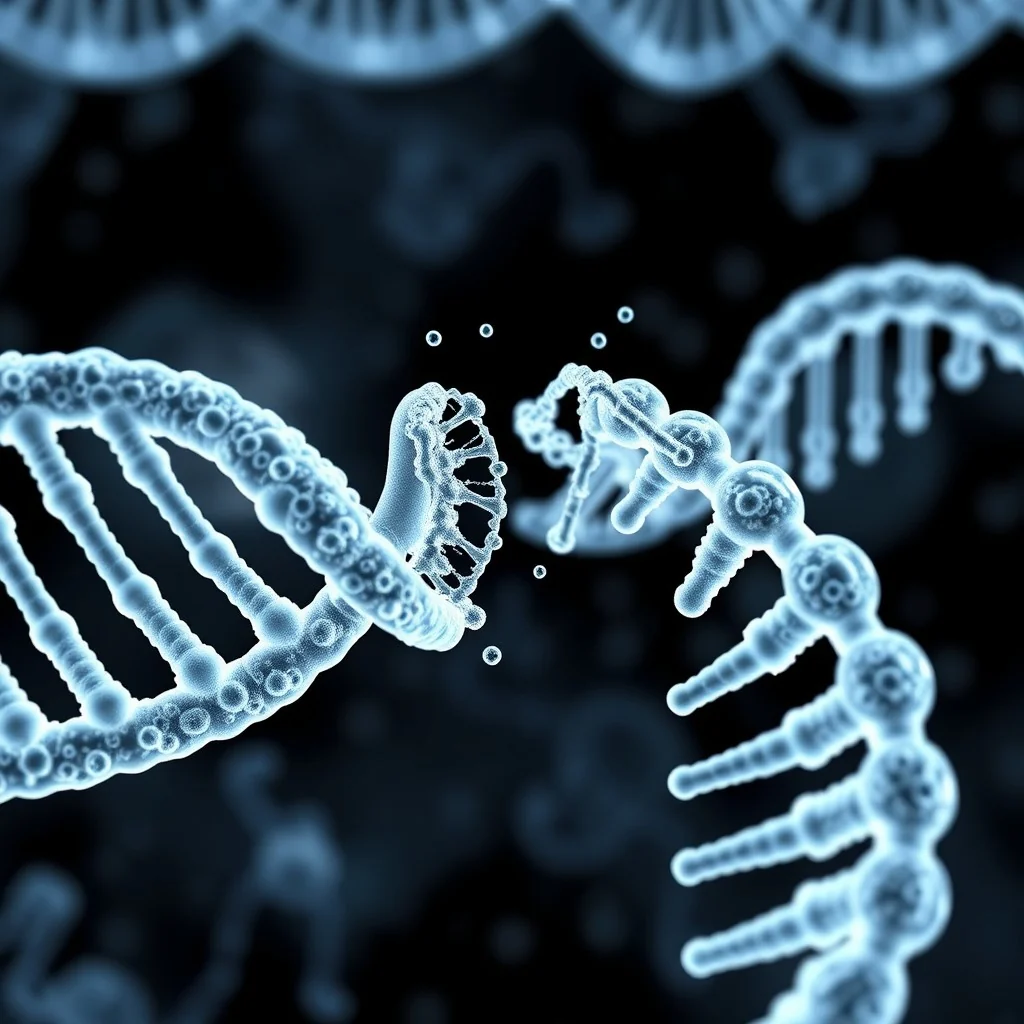
DNA double-strand breaks (DSBs) are lethal lesions that cause simultaneous breaks in both strands of a chromosome. If not properly repaired, they can lead to chromosome loss and rearrangements, and the formation of micronuclei, which can cause various diseases, including cancer. Cells typically repair DSBs through non-homologous end joining (NHEJ) and homologous recombination (HR); however, both pathways are largely suppressed during mitosis, when chromosomes are segregated into two daughter cells.
This suppression is due to the fact that prematurely ligating condensed chromosomes can lead to the joining of mismatched ends, resulting in fusion or large-scale rearrangements. Cells are known to employ a strategy of holding onto broken chromosome fragments and repairing them in the next cell cycle; however, the proteins that coordinate this process at the site of damage have not been fully elucidated. In particular, the roles of cancer-associated protein phosphatase 2A inhibitor (CIP2A) and DNA topoisomerase II-binding protein 1 (TOPBP1) have been interpreted as being limited to chromosome tethering and damage signaling.
Key Findings
This study, published in PNAS, identifies the CIP2A–TOPBP1 complex as a key regulator of mitotic DSB repair. The researchers compared the localization of proteins at different stages of the cell cycle and the accumulation of proteins at the site of damage, and analyzed how the processing of DSBs and chromosome stability changed in cells with reduced or absent function of each protein.
In interphase, CIP2A primarily resides in the cytoplasm, but during mitosis, when the nuclear envelope breaks down, it enters the chromatin and binds to TOPBP1. When DNA is broken, the damage-associated protein MDC1 recruits the complex to the marked chromosome region, and TOPBP1 creates a platform for the activation of various repair factors. This regulatory axis, consisting of three proteins, operates only at a limited time and place in the cell cycle.
In CIP2A-deficient cells, the localization of TOPBP1 at the site of damage was disrupted, and DNA damage remained after mitosis. Radiation sensitivity, micronucleus formation, and chromosome instability were also increased. This demonstrates that the complex is not simply a structural element that holds the broken ends together, but rather a regulatory mechanism that determines the timing and location of damage processing during mitosis. However, the provided abstract does not present the cell line, radiation dose, effect size, and statistical values, making it difficult to judge the quantitative superiority.
Significance and Prospects
These results challenge the view of mitosis as simply a 'time when DNA repair is paused.' Even in the presence of limited NHEJ and HR, cells appear to use the CIP2A–TOPBP1 axis to protect broken ends, regulate access to repair factors, and prevent chromosome fragments from being randomly dispersed into daughter cells.
As a therapeutic target, it has both advantages and disadvantages. Cancer cells with impaired HR ability, such as those with BRCA1/BRCA2 mutations, may be more dependent on mitotic damage management, so blocking CIP2A–TOPBP1 binding may induce selective cancer cell death. On the other hand, since the complex protects the genome in normal dividing cells, systemic inhibition may be toxic to rapidly proliferating tissues such as bone marrow and intestinal epithelium.
The current study is closer to elucidating the mechanism at the cellular level. Subsequent tasks include how the complex physically maintains the two ends of the DSB, which types of breaks it prioritizes, and how the dependence varies depending on the genetic background of the cancer. Confirmation of the therapeutic index and effects on normal tissues in animal models is necessary before it can be translated into an actual anticancer strategy.
Proceedings of the National Academy of Sciences, Volume 123, Issue 32, August 2026. SignificanceFaithful repair of DNA double-strand breaks (DSBs) during mitosis is critical for genome stability, yet the underlying regulatory mechanisms remain poorly defined. We identify the CIP2A–TOPBP1 complex as a key regulator of mitotic DSB repair ...
A clinically relevant scenario is the combination therapy of tumors with BRCA1/BRCA2 mutations or high replicative stress. It is possible to first measure the CIP2A–TOPBP1 dependence in patient-derived tumor cells and then administer a complex-inhibiting candidate substance in combination with radiation therapy or DNA-damaging anticancer agents. This strategy aims to prevent cancer cells from repairing the remaining breaks in mitosis, inducing micronucleus formation and lethal chromosome loss.
Industrially, small-molecule compounds targeting the binding interface of the two proteins or proteolysis-inducing agents, and companion diagnostic tests that detect TOPBP1 accumulation at the site of damage are potential follow-up candidates. However, rather than predicting drug response based solely on CIP2A expression levels, a biomarker panel that reflects HR deficiency, replicative stress, and cell proliferation rate may be necessary.