Resolving Hexaploid Complexity: De Novo Genome Assembly Reveals Structural Variations and DREB Copy Number Variation Mechanisms Underlying Drought-Resistant Wheat JIN50
-
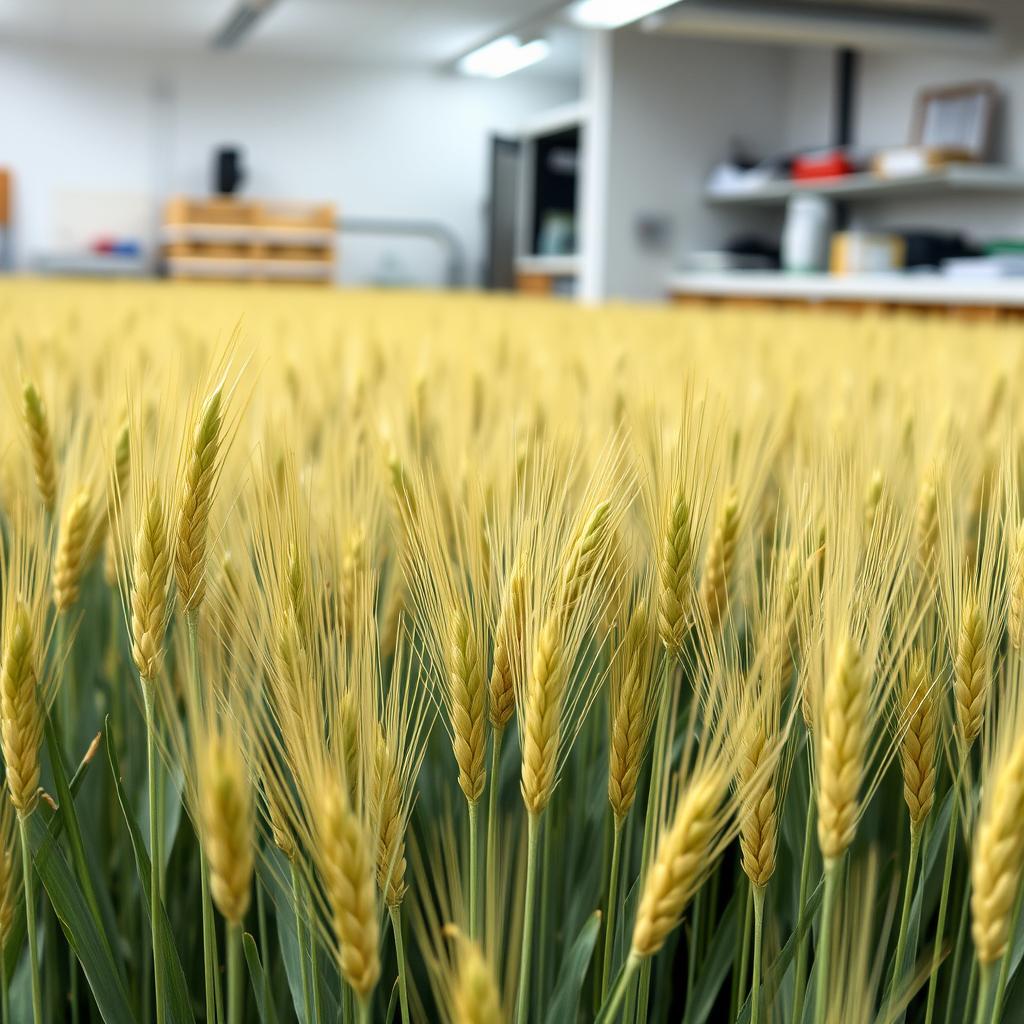
Barriers of Hexaploid Genomes and Limitations in Crop Drought-Resistance R&D Bread wheat (Triticum aestivum L.) is a highly complex allohexaploid (2n = 6x = 42) composed of three subgenomes (A, B, and D), with more than ~85 % of its genome occupied by repetitive sequences (transposable elements). Because of this extreme genomic complexity, conventional short-read sequencing or mapping to the standard reference genome (Chinese Spring) was virtually unfeasible for fully identifying the structural variations (SVs) unique to drought-resistant cultivars. As climate-driven global food-security threats intensify, deciphering the hidden genomic domains that confer drought-resistance has become a top priority in agricultural genomics.
-
JIN50 De Novo Genome Assembly: Ultra-Precise Physical Map Constructed with Long-Read Technology The research team combined ultra-long PacBio HiFi sequencing with three-dimensional genome capture (Hi-C) to generate a chromosome-level de novo assembly of the drought-resistant wheat genotype JIN50. Released in Nature Genetics on 19 May 2026, comparative analysis of this genome atlas against other wheat germplasm revealed thousands of large-scale insertions/deletions (INDELs), inversions, and translocations that were completely absent from the standard reference, effectively isolating these SVs with high precision.
-
Copy Number Variation of the DREB Transcription-Factor Cluster and Drought-Defense Dynamics A central molecular breakthrough of this study is the identification of copy number variation (CNV) within the DREB (Dehydration-Responsive Element-Binding) transcription-factor family, a master regulator of drought-stress responses. Unlike drought-susceptible cultivars, the JIN50 genome harbors tandem duplications of DREB gene copies, resulting in a significant increase in copy number. This CNV architecture triggers an immediate, downstream activation of stomatal-closure regulation and osmoprotectant-protein synthesis pathways upon onset of water deficit, constituting an evolutionary adaptation that preserves metabolic function while minimizing water loss.
-
Why it Matters: Polyploid Genomics Marker Development and Temporal Compression of Molecular Breeding The impact of this megagenome dataset on agricultural biotech and climate-resilience strategies lies in its ability to accelerate marker-assisted selection (MAS) simulations for complex hexaploid crops. By integrating the DREB CNV and key structural-variation markers from JIN50 into AI-driven genomic-value prediction models, breeders can design drought-resistant elite varieties within a few generations, bypassing the decades-long conventional crossing cycles. This constitutes a powerful biological safeguard for food-supply chain security.
Nature Genetics, Published online: 19 May 2026. DOI: 10.1038/s41588-026-02596-w
Summary: This structural genomics study establishes a high-fidelity, chromosome-level de novo genome assembly of the drought-resistant hexaploid wheat (Triticum aestivum L.) genotype JIN50. Cross-germplasm comparative analyses mapped a dense network of structural variations (SVs) tailored to hydric stress responses. Crucially, the architecture uncovers a distinct copy number variation (CNV) within the DREB transcription factor cluster, enabling rapid zero-order transcriptional activation of osmotic pathways under drought conditions and delivering essential sequence metadata for programmable molecular breeding.
This dataset represents a premier example of a successful polyploid de novo assembly—the most challenging task in plant genomics—and provides mathematically and physically validated evidence that structural variations and CNVs drive environmentally adaptive traits. It includes precise mapping coordinates for a hexaploid crop, serving as a robust, exclusive reference for future AI-based integrative omics analysis engines and complex-genotype screening algorithms (e.g., agricultural extension layers such as BioArx).