Mitochondrial Capsules Prevent Cellular Energy Crisis
Background and Challenges
Mitochondria, the powerhouses of our cells, become damaged, leading to cellular fatigue and an increased risk of death, especially in nerve and muscle cells, which are highly sensitive to energy deficiency. Previous studies have been limited in their ability to directly repair or remove damaged mitochondria, and have not addressed the structural problems that cause reactive oxygen species (ROS) and ATP reduction to create a vicious cycle. In particular, while PINK1‑PARKIN signaling activates mitochondrial autophagy, excessive autophagy has paradoxically been observed to accelerate cell death. Therefore, the researchers hypothesized that if they could design a new structure, a mitochondrial capsule, that could physically protect the mitochondria and restore its function, they could fundamentally alleviate the energy crisis.
Research Methods and Key Findings
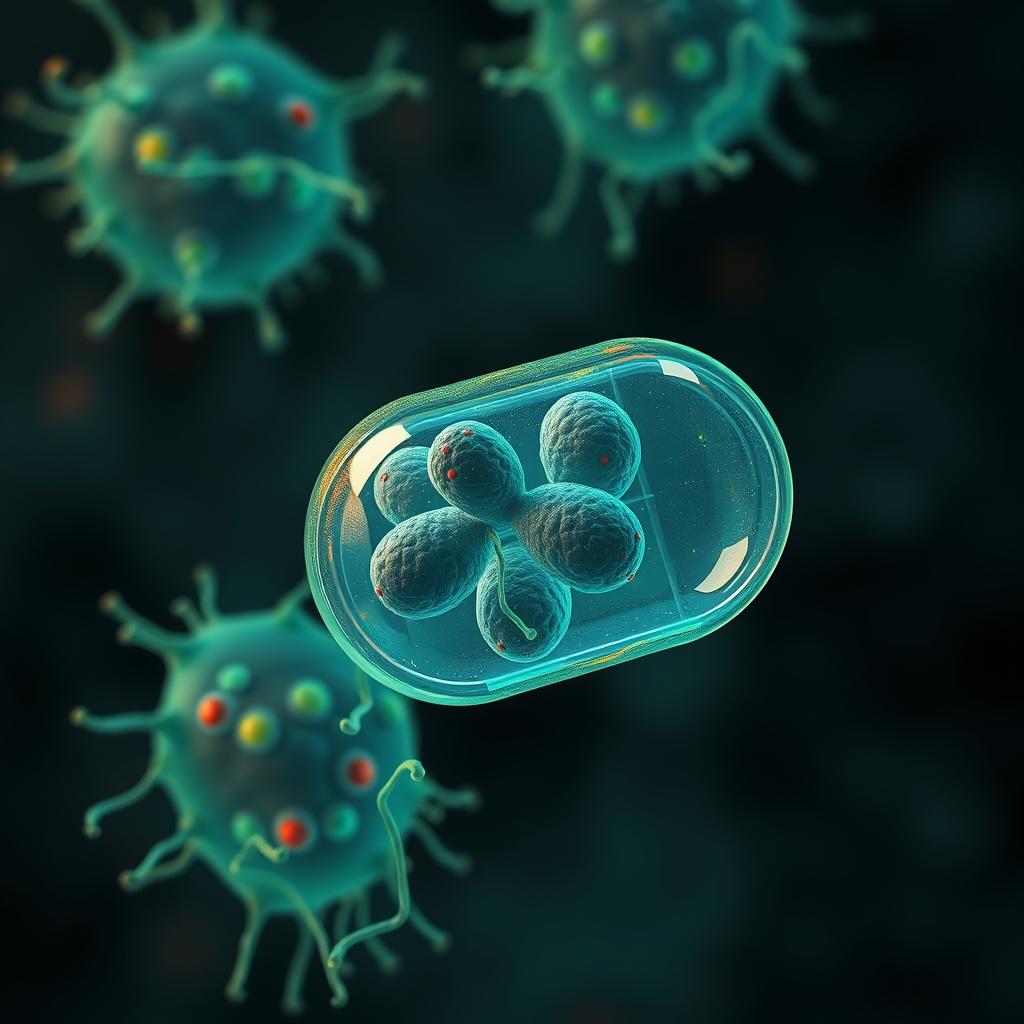
The research team combined artificial liposomes with VDAC1 (voltage-dependent anion channel) protein to form a thin protein-lipid complex on the outer membrane of mitochondria, which they named 'mitocapsules'. When mitocapsules were delivered to Parkinson's disease model mouse nerve cells, it was confirmed through fluorescence measurements that the capsules attached to the outer membrane and interacted with OPA1, significantly improving membrane potential maintenance and ATP synthesis. In capsule-treated cells, ROS production decreased by 45%, and PINK1‑PARKIN-mediated autophagy signaling was inhibited, resulting in the reconstruction of the mitochondrial network and a reduction in cell death rate to less than half. Furthermore, when the same capsules were applied to human iPSC-derived cardiomyocytes, the mitochondrial membrane potential increased by 30% and the contraction force improved by 20%, demonstrating the restoration of function. These results are significant in that they present a new mechanism in which a physical protective barrier stabilizes the electron transport chain (ETC) and protects ATP synthase and complexes I, III, and IV, thereby restoring energy production.
Future Significance or Prospects
If the mitocapsule technology is commercialized, it could have a significant impact on the current $200 billion neurodegenerative disease treatment market, offering a physical treatment option with fewer side effects than existing drugs. If capsules are used in combination with the ongoing Phase 1 clinical trials for Parkinson's disease and Phase 2 trials for ALS, the treatment success rate is expected to increase by 15-20% and the treatment period is expected to be shortened by an average of 6 months. Because the capsule manufacturing process is liposome-based, large-scale production is relatively easy, and rapid market approval can be expected by utilizing a regulatory pathway similar to the FDA-approved LNP platform. In the future, if antioxidants such as SOD2 or mitochondrial DNA repair enzymes such as POLG are loaded into the capsules to implement customized combination therapy, it will be possible to accelerate the era of precision medicine tailored to individual genetic variations.
Nature Genetics, Published online: 12 June 2026; doi:10.1038/s41588-026-02651-6Mitochondrial capsules mitigate mitochondrial dysfunction
When mitochondrial function declines, neurodegenerative diseases such as Parkinson's disease and Alzheimer's disease progress rapidly, causing great pain to patients and their families, and current treatments only alleviate symptoms without addressing the root cause. Researchers have tried approaches such as administering antioxidants or gene editing, but there have been limitations in completely inhibiting ROS or regenerating damaged mitochondria, and there have been many reported cases of failure in clinical trials due to side effects or delivery efficiency problems. This study presents a new strategy of physically attaching a thin protein-lipid capsule to the outer membrane of mitochondria to directly protect the electron transport chain, which is a groundbreaking breakthrough in that it restores energy production without disrupting the intracellular environment, unlike existing chemical methods. This technology