Oral Peptides and AAV Gene Therapy for Immune Tolerance
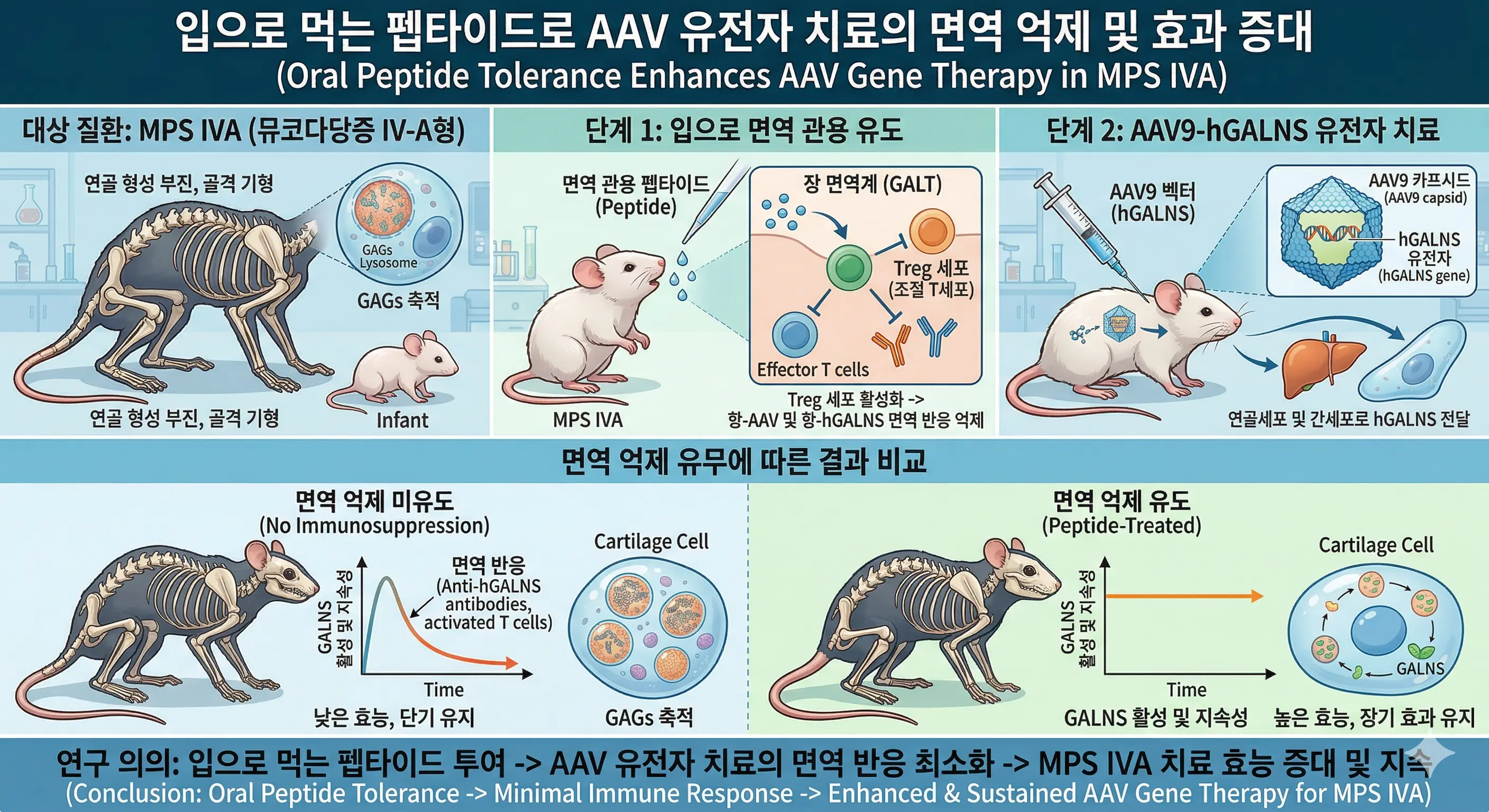
MPS IVA is a progressive skeletal disorder. Our team administered oral tolerogenic peptides to neonatal mice and used AAV9 to introduce human GALNS. The oral peptides suppressed immune responses, enhancing efficacy. This one-time gene therapy may have a longer duration of action.
Mucopolysaccharidosis IVA (MPS IVA) is caused by the accumulation of undegraded glycosaminoglycans due to the deficiency of the N-acetylgalactosamine-6-sulfate sulfatase (GALNS) enzyme. MPS IVA manifests as progressive systemic skeletal dysplasia. Gene therapy (GT) is potentially a one-time treatment in which the enzyme is continuously produced, circulated, and delivered to target tissues. However, immune responses to gene products can diminish therapeutic efficacy. We hypothesized that oral delivery of tolerogenic peptides induces immune tolerance to human GALNS (hGALNS) in MPS IVA mice, enhancing therapeutic efficacy. Neonatal mice deficient in mouse GALNS (mGALNS) were treated orally with three T-cell/B-cell epitope peptides or hGALNS protein on alternate days from day 3 after birth to day 20 before intravenous injection with AAV9 vectors encoding human GALNS.
Immune tolerance ensures the longevity of gene therapy