APOBEC3: A Dual-Faced Emerging Target in HBV-HCC Treatment
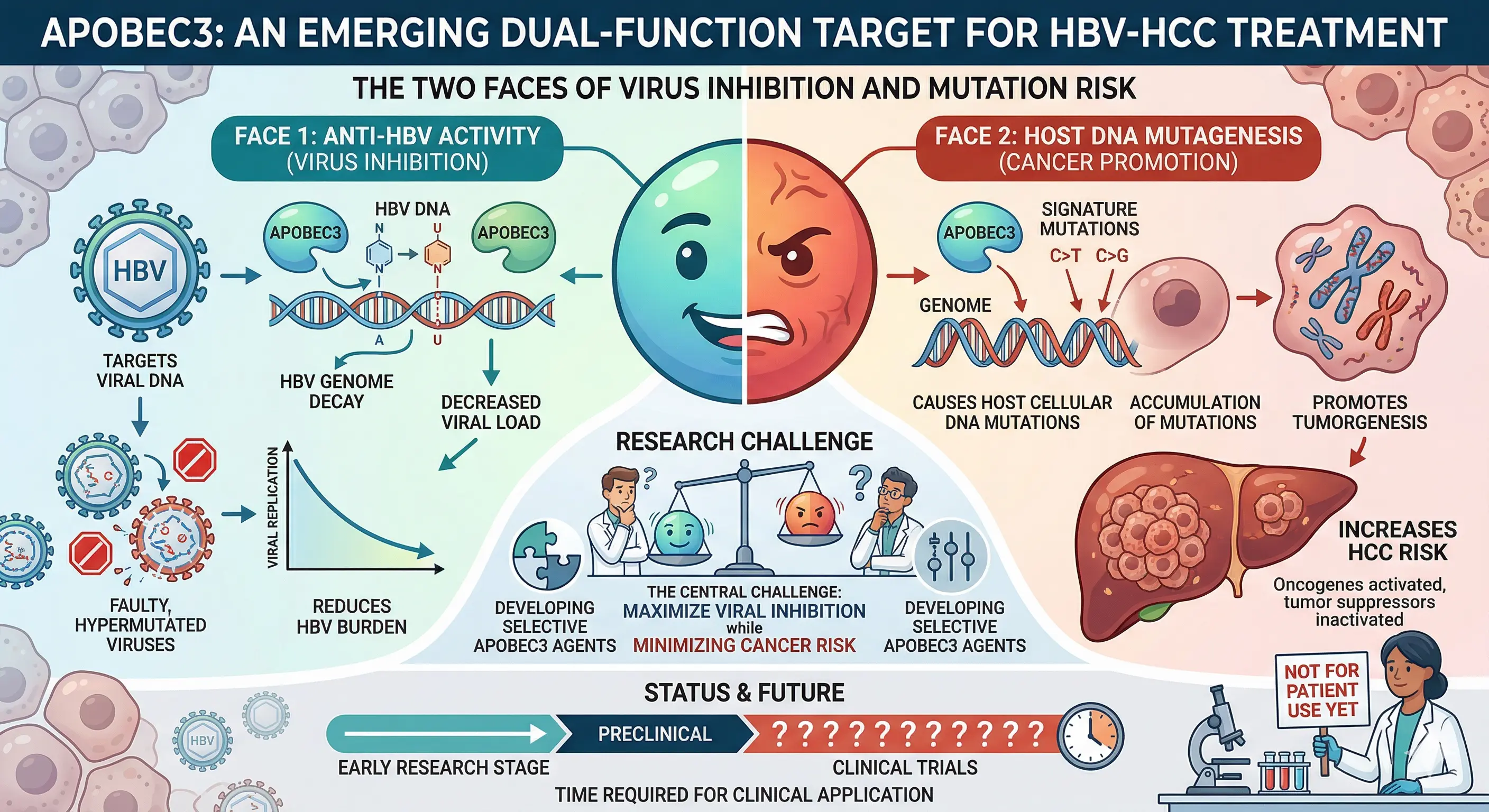
The APOBEC3 protein effectively combats HBV but may simultaneously induce DNA mutations leading to cancer, posing a dual challenge in therapeutic applications. Researchers are exploring ways to manage this duality, though clinical application remains in early stages.
BACKGROUND AND OBJECTIVE: Hepatocellular carcinoma (HCC) is among the most widespread cancers globally, posing a major healthcare challenge. HBV infection is the leading cause of HCC, alongside other risk factors. Early HBV intervention could effectively prevent HCC development. However, conventional treatments like nucleos(t)ide analogues and interferon-α (IFN-α) often fail to achieve complete HBV eradication. Emerging gene editing techniques also carry inherent risks. This review examines the roles of the APOBEC3 (A3) protein family in HBV-related HCC, aiming to propose innovative management approaches.
METHODS: A comprehensive literature search was performed across relevant databases, focusing on recent English-language publications pertinent to APOBEC3, HBV, and HCC.
KEY CONTENT AND FINDINGS: The APOBEC3 (A3) protein family, known for their DNA cytidine deaminase activity, shows promise in inhibiting viruses and influencing tumor development. In HBV-induced HCC (HBV-HCC), A3 proteins exhibit both antiviral activity and the potential to induce carcinogenic mutations, facilitating cancer progression.
CONCLUSIONS: The dual nature of APOBEC3 proteins—exhibiting both antiviral and carcinogenic effects—underscores their intricate role in HBV-HCC. Elucidating regulatory mechanisms could pave the way for innovative HBV-HCC management strategies.
Developing balanced therapeutic strategies that leverage antiviral benefits while mitigating cancer risks is crucial.