Human Erythropoiesis: Unveiling the EBI Blueprint with Spatial Transcriptomics, a Process Not Fully Explained by Mouse Models
Background
Limitations of Mouse-Centric Research in Cross-Species Studies
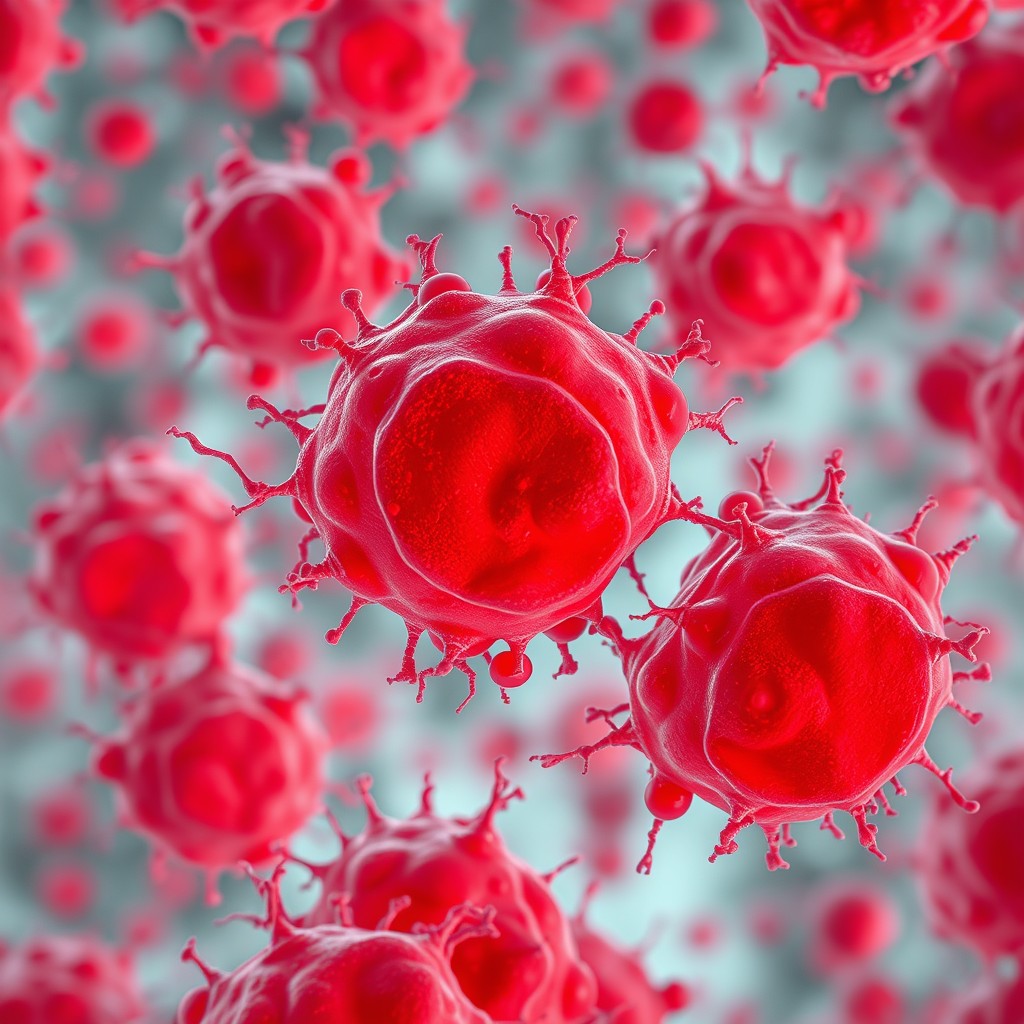
Erythropoiesis, the continuous production of oxygen-carrying red blood cells, is a vital physiological process that sustains life. This process, involving the creation of millions of new red blood cells every second, occurs within the erythroblastic island (EBI), a specialized microenvironment where immature red blood cell precursors cluster and develop. Previously, the scientific community believed that, based on observations from mouse models, a large macrophage resided at the center of the EBI, acting as a central regulator that directs the growth and maturation of surrounding red blood cells. However, artificial in vitro 2D cell cultures and mouse-based research methods cannot fully capture the complex 3D cellular network interactions that occur within the human bone marrow. To bridge the physiological gap between mice and humans and restore the original tissue environment, single-cell-level, high-precision spatial gene analysis has emerged as an alternative approach.
Key Findings
Divergent Cellular Organization in Humans and Mice
The research team led by Professor Peng Ji at Northwestern University used spatial transcriptomics (ST) technology to precisely characterize the structural differences in EBIs across tissues and developmental stages in humans and mice. They introduced 10x Genomics' Visium and Xenium analysis methods, which preserve cell location information while tracking transcriptional patterns, to achieve this. The comparative analysis focused on hematopoietic tissues such as fetal liver, adult bone marrow, and spleen.
'Erythrocyte-Centered Islands' Driven by ICAM4
The results are strikingly different from what is found in conventional biology textbooks. In mice, as expected, the central macrophage (particularly C1q+ macrophages) served as a hub, attracting surrounding erythroblasts. In contrast, no central macrophage was found in human EBIs. Human erythroblasts self-assemble into 'erythrocyte-centered islands' without macrophage induction, forming a harmonious structure. The key factor binding these cells together was identified as intercellular adhesion molecule 4 (ICAM4). ICAM4 molecules, highly expressed on the surface of human erythroblasts, act like magnets, attracting each other and maintaining the structure.
Significance and Prospects
Providing Clues to the Causes of Clinical Failure
This research highlights the need for the hematology field to rapidly diversify its standard experimental models, shifting from a mouse-centric approach to human cell research. The reason that anemia drugs, which showed excellent efficacy in animal experiments, have repeatedly failed in final clinical trials is due to the structural differences in the EBI microenvironment between the two species. By elucidating the unique hematopoietic adhesion mechanism found only in human cells, the physical limitations of existing animal models have been overcome through spatial analysis technology.
The industry anticipates that the screening of new anemia drugs or hematopoietic failure control agents targeting the newly identified ICAM4 signaling pathway will be rapidly promoted. The development of next-generation molecular compounds that can be customized for specific genetic blood disorders is expected to gain momentum. However, developing microscopic techniques to track the unique 3D EBI dynamics of humans in real-time outside the body, and developing sophisticated tissue-mimicking chips to validate large numbers of drugs in the laboratory, remain challenges to be addressed.
Nature Genetics, Published online: 02 July 2026; doi:10.1038/s41588-026-02671-2Spatial transcriptomic profiling of erythroblastic islands across tissues and developmental stages highlights distinct spatial architecture in humans compared to mice.
This discovery provides a direct opportunity to improve the success rate of new drug development in the pharmaceutical and biotechnology industries, as it can significantly reduce the costs associated with clinical failures due to interspecies barriers. Specifically, it enables the design of dedicated screening panels to evaluate the ICAM4-blocking ability of candidate substances at the discovery stage. Companies aiming to commercialize artificial blood are also expected to actively utilize this technology, as it opens the way to devise high-efficiency red blood cell mass production culture formulations that can independently aggregate and differentiate human erythroblasts without macrophages. In clinical settings, it will be possible to trace the family history of patients with rare anemias that do not respond to existing treatments, identify ICAM4 gene mutations, and prescribe personalized compounds, leading to precision medicine scenarios.