Expanding Horizons of PARP Inhibitors through the Identification of Replication Gap Accumulation and Okazaki Fragment Defects
Background
Poly ADP-ribose polymerase (PARP) inhibitors are representative targeted therapies that have successfully demonstrated the concept of synthetic lethality in precision oncology. The classical mechanism of action established over the past decade has been relatively clear. Since PARP1 and PARP2 enzymes are involved in the repair of DNA single-strand breaks (SSBs), the logic was that inhibiting enzyme activity with drugs or trapping the enzymes at sites of DNA damage would lead to replication fork collisions, which would then worsen into double-strand breaks (DSBs). At this time, cancer cells with BRCA1/2 gene mutations that cause homologous recombination deficiency (HRD) fail to fully repair their damaged genomes, leading to cell death.
However, phenomena difficult to explain with the classical model have been repeatedly observed in clinical settings. While clear therapeutic responses were confirmed in some patients without BRCA mutations, resistance frequently occurred in patient groups receiving standard treatments due to restoration of repair pathways or increased expression of efflux pumps. Furthermore, because the molecular biological link between the timing of cytotoxicity and DNA replication stress had not been fully elucidated, there were clear limitations in expanding the target population beyond certain ovarian and breast cancer patients. This provided the background for a need for new approaches to examine the interactions between the replication machinery and drugs within cancer cells with higher precision.
Key Findings
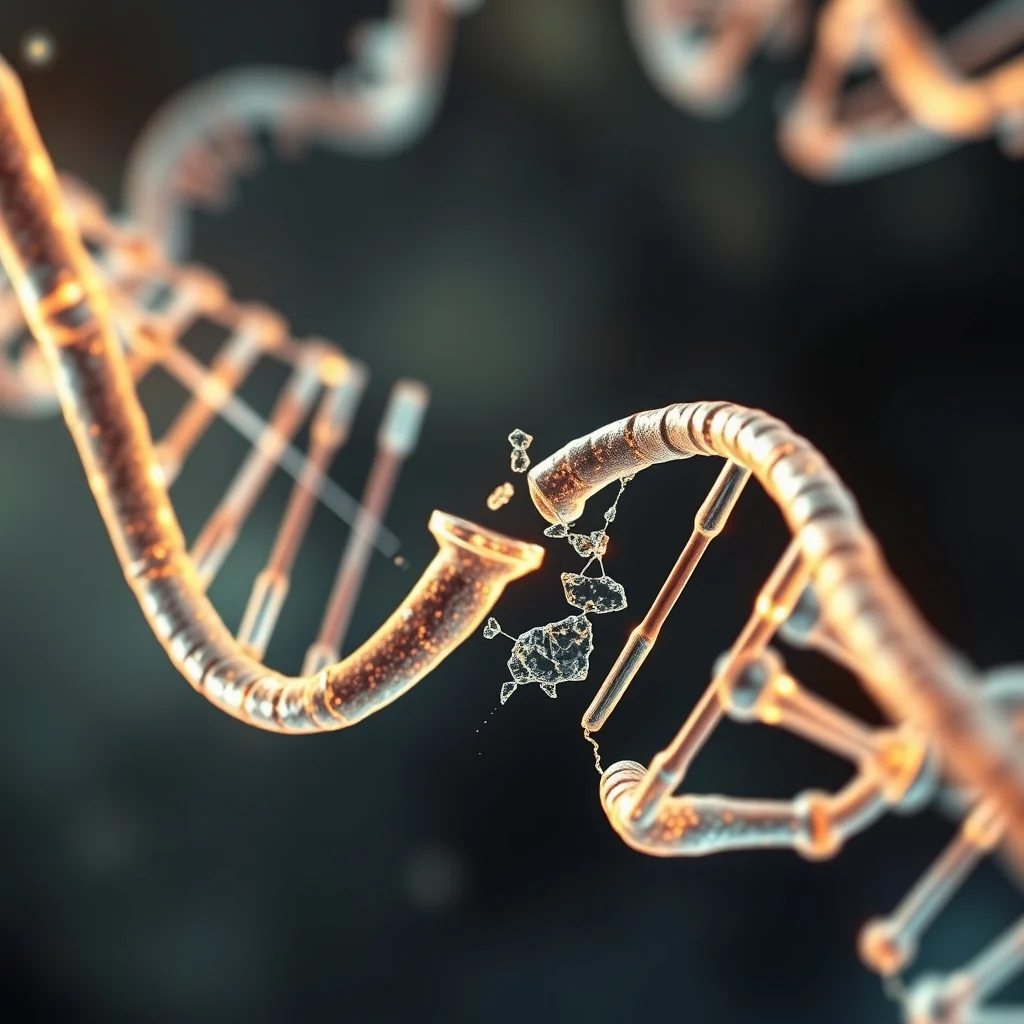
Recent accumulated genomic studies and CRISPR-based genome-wide screening results clearly show that the primary cell death mechanism of PARP inhibitors goes beyond simple inhibition of break repair to include the induction of defects in DNA replication itself. Researchers have presented integrated molecular evidence that the drugs disrupt the Okazaki fragment maturation process during replication fork progression. If the ligation processing of Okazaki fragments formed during lagging strand synthesis is delayed, replication gaps accumulate unresolved throughout the nascent DNA strands.
The accumulation of these single-strand gaps acts as a direct cause of lethal genomic instability during the cell cycle. In particular, a pathway was identified in which immature strands, vulnerable to PRIMPOL (primase-polymerase)-mediated restart processes or nuclease activity, undergo degradation, leading to irreversible chromosomal collapse. This suggests that the occurrence and maintenance of replication gaps themselves are a more fundamental precursor to toxicity expression than the generation of double-strand breaks assumed by the classical model.
Furthermore, screening data newly defines a broad 'BRCAness' phenotype that is not limited to the classical BRCA mutation group. Deficiencies in the Shieldin complex, a DNA replication stress response and repair factor, activation of the DNA polymerase theta (POLQ) pathway, and abnormalities in the ATR-CHK1 axis involved in protecting replication forks were all identified as molecular indicators determining drug sensitivity. Based on the synthetic lethality map observed when specific repair factors are disrupted using genome editing technology, numerous alternative targets that accelerate replication fork collapse have been identified.
Significance and Outlook
This discovery is highly impactful as it provides a foundation for combination therapies that artificially maximize replication stress, rather than limiting PARP inhibitors to monotherapy. The combination of ATR inhibitors or WEE1 inhibitors, which disrupt DNA replication initiation and progression, with chemotherapeutic agents that induce replication gap degradation has opened the possibility for new treatment protocols. If analytical methods for quantifying the size and frequency of replication gaps are introduced into the precision diagnostics field, it will be possible to identify patients among those with solid tumors who tested negative in existing gene panel tests but could still benefit.
The tasks are also clear. Since replication stress-inducing combination strategies may exert toxicity not only on cancer cells but also on normal dividing cells such as hematopoietic stem cells, optimization of dosage and cycles to minimize hematological side effects like myelosuppression is essential. In follow-up studies, the discovery of liquid biopsy-based biomarkers capable of rapidly monitoring in vivo replication gap accumulation levels must be pursued in parallel to achieve practical improvements in the therapeutic index.
This review examines the expanding role of PARP inhibitors in cancer therapy, moving beyond the traditional model of single-strand break repair inhibition and BRCA-dependent synthetic lethality. We highlight emerging evidence that PARP inhibitors induce cytotoxicity through replication-associated DNA damage, including defects in Okazaki fragment maturation and replication gap accumulation. By integrating recent mechanistic insights with findings from CRISPR-based screens, we outline how disruptions in DNA replication and repair pathways define a broader BRCAness phenotype. We further emphasize the clinical implications of these discoveries, including novel combination strategies that extend the therapeutic applicability of PARP inhibitors beyond prevailing treatment regimens.
This research provides an immediate turning point for establishing treatment strategies in clinical settings and expanding the anticancer drug development pipeline. Patient selection criteria, which previously relied on the presence or absence of BRCA mutations, can now be expanded to include indicators of replication gap formation capability and replication stress vulnerability. For example, clinical protocols for the co-administration of low-dose PARP inhibitors with ATR or CHK1 inhibitors will gain momentum in patients who did not respond to first-line maintenance therapy for ovarian cancer, as well as in those with pancreatic, prostate, or triple-negative breast cancer.
From a pharmaceutical industry perspective, the basis for expanding the indications of existing assets and developing combination drugs to respond to patent expirations has been established. The screening of novel small-molecule compounds targeting Okazaki fragment processing and replication gap accumulation will accelerate, paving the way for core assets that simultaneously improve response rates in precision anticancer therapy and overcome drug resistance.