Disease targets identified by transcriptome-wide association studies may be the exact opposite of actual biological mechanisms
Background
Genome-Wide Association Studies (GWAS) have led the advancement of genetics over the past 20 years by discovering numerous disease-associated genetic variants. However, identifying which target gene expressions are regulated by statistically significant non-coding region variants to cause disease remains a difficult challenge. To overcome this, the tool that emerged is Transcriptome-Wide Association Study (TWAS).
TWAS utilizes expression Quantitative Trait Loci (eQTL) reference data to predict genotype-based gene expression levels using statistical models, then directly links them to disease phenotypes. Due to its advantage in prioritizing drug target genes by converting complex genomic signals into functional transcriptomic units, it has become a de facto standard analysis pipeline in academia and the drug development field.
However, many researchers have tended to assume that the direction of statistical association matches the direction of the biological causal pathway. That is, if predicted increased gene expression correlates with an elevated disease risk, the inhibition of that gene expression is directly adopted as a therapeutic strategy for the disease. Academic doubts have persisted regarding whether the derived directionality accurately reflects actual intracellular causal mechanisms, given that biases arising during the statistical alignment process were not closely verified.
Key Findings
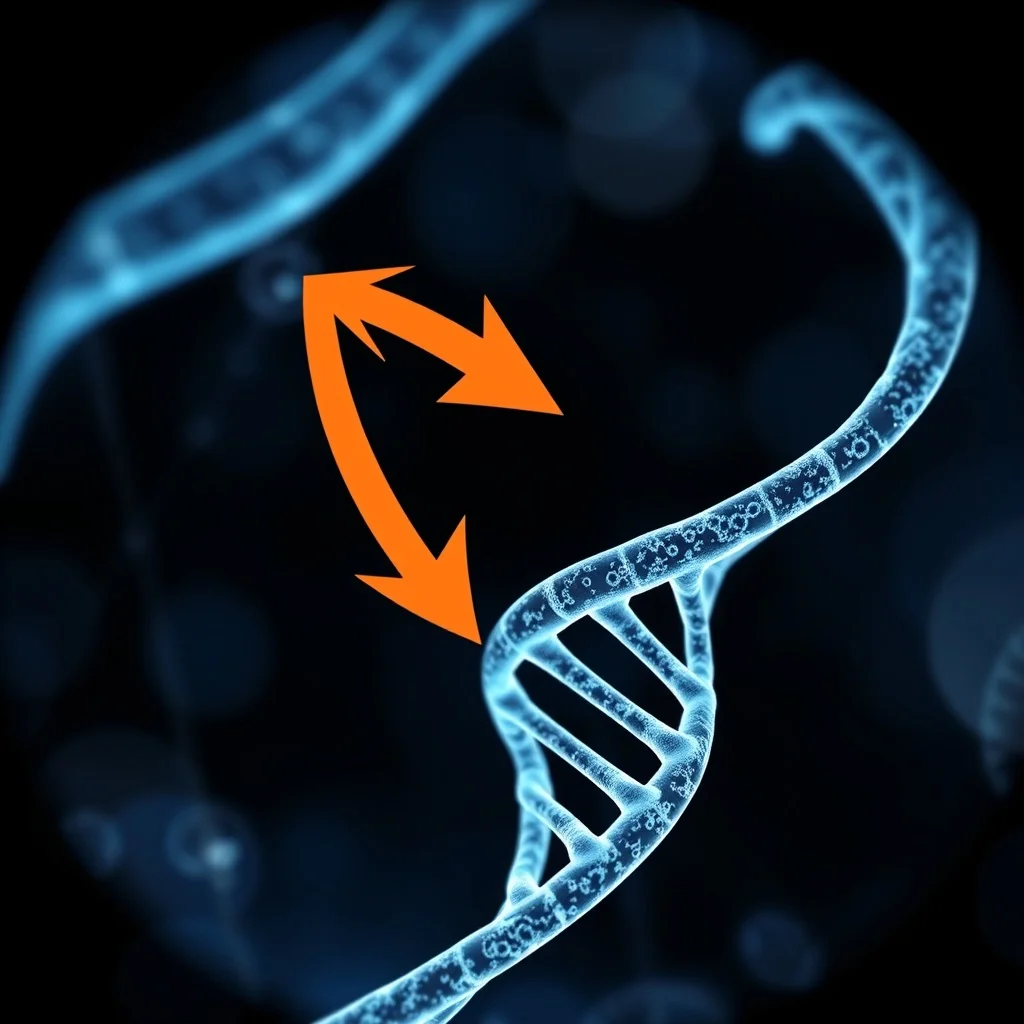
In this paper, researchers presented statistical genetic evidence that the direction of effect captured by TWAS frequently occurs in a direction opposite to the actual underlying biological mechanism. While previous studies focused only on the presence or absence of TWAS association signals, this analysis systematically identified the mathematical and genetic conditions under which the positive or negative signs of association signals are distorted from the actual molecular causal direction within tissues.
The research team demonstrated that such signal reversal is intensively induced when the complexity of Linkage Disequilibrium (LD) structure, pleiotropy, and differences in eQTL effects between tissues are intertwined. Even when a specific disease risk variant actually acts through an adjacent unknown regulatory factor, statistical modeling revealed that the sign was inverted by using the strongest eQTL signal within the LD region as a proxy.
As a result of parallel simulation and large-scale genomic cohort empirical analysis, discrepancies in the direction of effect between statistical predictions and actual genetic perturbation experiments were observed in numerous disease-associated gene regions. It was experimentally confirmed that regulating target expression based solely on the predicted expression changes suggested by existing analysis pipelines could trigger the exact opposite biological response. This directly shows that transcriptome association signals relying on simple statistical co-variance cannot serve as an absolute standard for determining biological causality.
Implications and Outlook
This study highlights the need for rigorous validation in the drug development industry, which has been selecting disease genes and designing therapeutic inhibitors or activators based on transcriptome prediction models. It serves as an early warning that incorrect interpretation of directionality during the initial stages of candidate gene targeting projects could cause the entire pipeline to fail.
Future genomic research should shift toward combining multi-omics colocalization analysis and causal inference verification at the single-cell transcriptome level, rather than relying solely on simple TWAS results. The step of directly confirming the direction of actual expression regulation in the laboratory using CRISPR-based gene editing screening and human induced pluripotent stem cell (iPSC)-derived differentiated cell models is expected to become an essential cross-validation procedure.
However, this study does not entirely negate the utility of the TWAS methodology itself. Its value as an exploratory tool to narrow down disease candidates by compressing tens of thousands of genetic variants into functional units remains valid. The key lies in accurately recognizing the limits of signal distortion inherent in interpreting association statistics as in vivo mechanisms and refining data interpretation criteria.
Nature Genetics, Published online: 22 October 2026; doi:10.1038/s41588-026-02796-4This study finds that the direction of effect captured by transcriptome-wide association studies is often reversed relative to the true biological mechanism, suggesting that caution is needed when interpreting these studies and using the results for downstream applications.
A fundamental redesign of the method for discovering disease targets and verifying mechanisms of action (MoA) using TWAS data in the drug development pipeline is required. If a pharmaceutical company developing a specific gene expression inhibitor falls into the trap of reverse causality, it may face side effects that worsen symptoms despite incurring massive clinical costs. Accordingly, a strategy of incorporating in vitro functional genomics experiments and gene perturbation data as essential gates from the early stages of target discovery will effectively mitigate therapeutic development risks in advance.