Chromosome-Level Genome Assembly of the Synchronously Flashing Firefly Reveals the Key to Aquatic Adaptation and Bioluminescence Evolution
Background
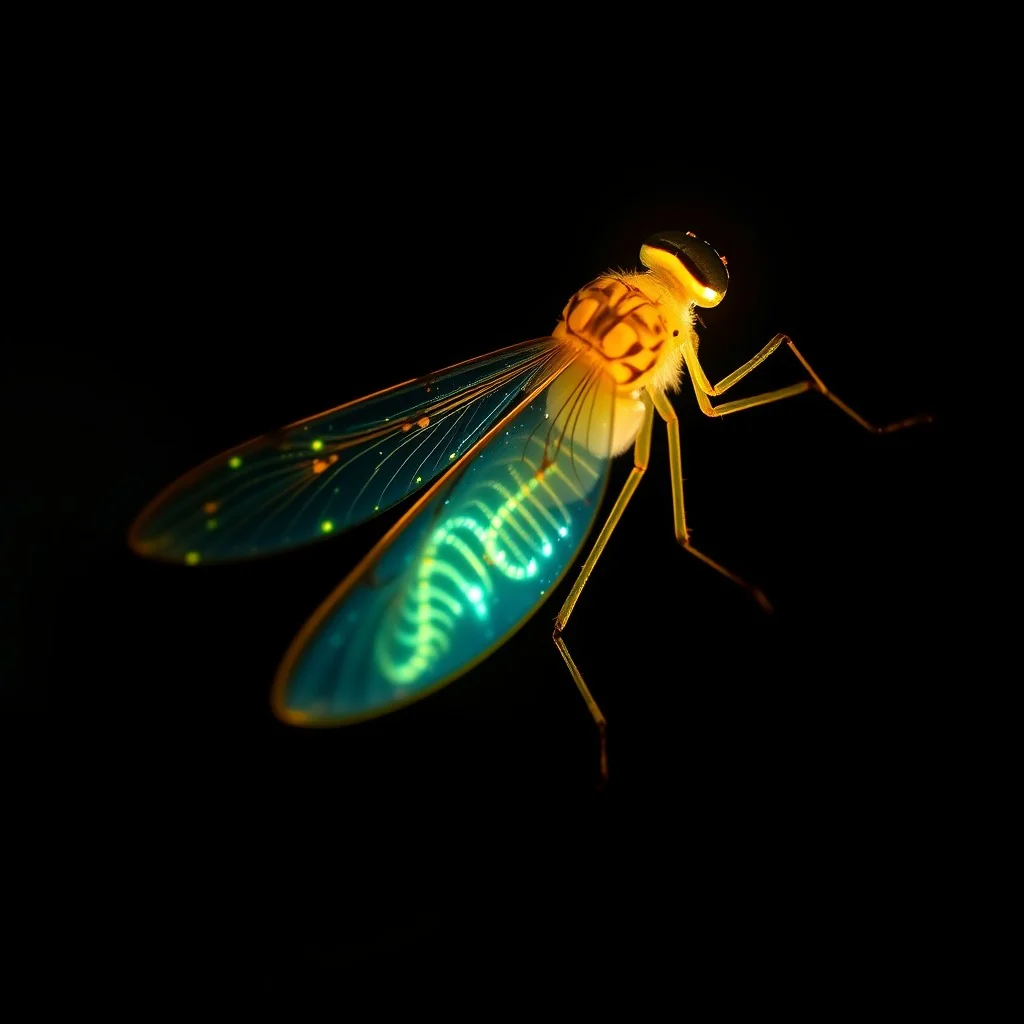
The synchronously flashing firefly (Pygoluciola qingyu) has captured the attention of the biological community with its mysterious behavior of thousands of individuals flashing in unison in the darkness. Belonging to the Lampyridae family (Coleoptera), it exhibits a unique semi-aquatic ecology, spending its larval stage in water, which also contributes to its high ecological value. It is highly sensitive to environmental pollution and is regarded as a natural indicator for assessing the water quality of its habitat. Efforts have been continuously made to elucidate the bioluminescence mechanism and the genetic basis of aquatic adaptation. However, previous studies have been limited to fragmented draft genomes, making it difficult to obtain a precise genetic map. In particular, to trace the molecular biological mechanisms of the brain and the bioluminescent neural network that regulate the highly coordinated bioluminescent signals, a high-resolution genome map covering the entire chromosome is essential. There has been a growing call for a high-quality genome map that can closely track genetic variations for the conservation of biological diversity.
Key Findings
An international collaborative research team led by Chinese researchers has completed the chromosome-level genome assembly of Pygoluciola qingyu by combining PacBio HiFi sequencing technology and high-throughput chromosome structure capture (Hi-C) technology. The total size of the completed genome is 1.10 Gb, and the contig N50, which represents the continuity of the genome assembly, is at a high level of 12.3 Mb. The research team aligned 99.2% of the entire genome sequence to the chromosome level using Hi-C data, maximizing the accuracy of the assembly. Gene annotation analysis revealed a total of 21,450 protein-coding genes. During the genome analysis, the research team successfully captured the complex duplication structure around the luciferase gene, which regulates bioluminescence. It is also noteworthy that the photoreceptor gene family, which detects the synchronous flashing signal and coordinates visual responses, has been significantly expanded. The expansion of the cytochrome P450 (CYP) and glutathione S-transferase (GST) gene families, which support the detoxification ability of larvae living in aquatic environments, is considered a factor that has enabled fireflies to successfully adapt to aquatic ecosystems.
Significance and Prospects
This completed genome will serve as a foundation for understanding the unique evolutionary history of fireflies and establishing effective conservation measures. In research tracing the evolutionary pathway of synchronous flashing, this data will serve as a solid reference point for comparative genomics. It can also be usefully applied to habitat conservation and the establishment of a genetic diversity monitoring system. However, obtaining a physical map has limitations in immediately explaining the neural network mechanism involved in real-time synchronous flashing. Given that the structural variation of the light-synthesizing enzyme gene, which is widely used in biological research, has been confirmed, it may provide useful clues for improving high-performance biosensors or bioluminescent markers in the field of biotechnology. In order to elucidate the actual gene activation mechanism, the research team is planning additional research that combines gene editing and in vivo imaging. The academic community is looking forward to the high-quality genomic information leading to research on the development of sensory organs and environmental hormone resistance in other insects.
Nature, Published online: 12 August 2026; doi:10.1038/s41597-026-08078-2The chromosome-level genome of the synchronously flashing firefly Pygoluciola qingyu (Coleoptera: Lampyridae)
This research is evaluated as providing useful practical tools for aquatic ecosystem monitoring and the field of bio-biotechnology. Specifically, high-quality genomic information can be combined with environmental DNA (eDNA) analysis technology to activate a monitoring technique that detects habitat pollution without capturing fireflies. It is also worthwhile to attempt to design a biosensor that precisely diagnoses the health of river ecosystems by using the genetic information of semi-aquatic insects that are sensitive to water pollution as an indicator. At the same time, the unique luciferase gene structure discovered is expected to contribute directly to the production of highly efficient bioluminescent labels used in disease diagnosis and drug development. By discovering new molecules with higher light intensity and thermal stability than existing artificial enzymes, it is expected to lead to the sophistication of the bio-medical reagent market.