HIV Capsids Enter the Nucleus by Navigating the 'Affinity Gradient' of Nuclear Pore Proteins
Background
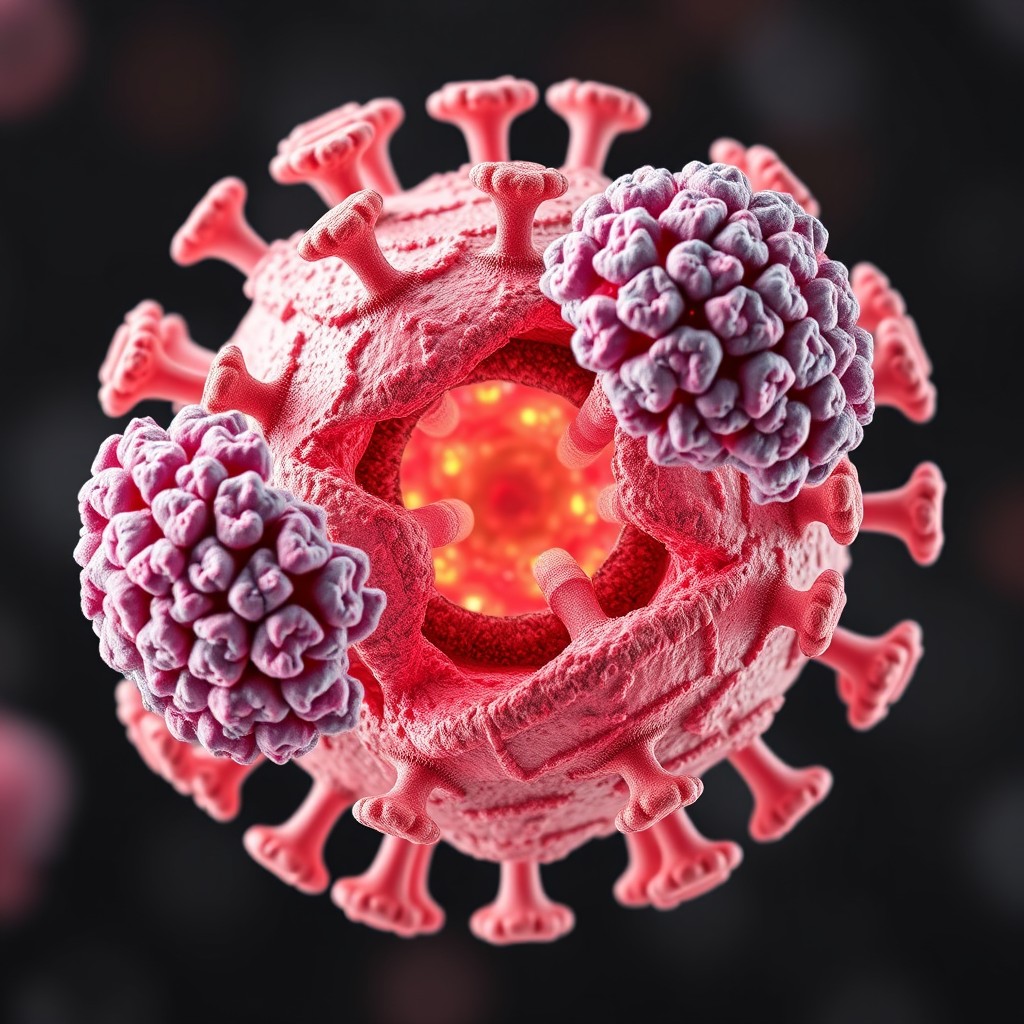
HIV-1 must deliver its genome into the host cell nucleus to replicate. The process by which the viral capsid core passes through the Nuclear Pore Complex (NPC) is a critical step in establishing infection, but the molecular mechanisms have long remained elusive. The NPC contains numerous nucleoporins with phenylalanine-glycine (FG) repeat motifs, and it is known that these interact with capsid proteins (CA). However, it has not been determined how individual nucleoporins exhibit different binding affinities to CA, or how these differences contribute to the directional movement of the capsid.
Key Findings
The Emory University research team, led by Ivo Melcak, combined microscale thermophoresis (MST) binding assays and X-ray crystallography to systematically measure the binding affinity between major nucleoporins within the NPC and CA hexamers (PNAS, July 2026).
The most notable finding was the 'FG supermotif' found in NUP153. The C-terminus of NUP153 contains a PSGVFTFG sequence adjacent to a cluster of basic residues, and this arrangement increased the binding affinity for CA by approximately 1,000-fold. The GLFG motif of NUP98, located in the central channel, also exhibited significantly stronger binding to CA than previously known generic FG/FxFG sequences. Additional elements that enhance binding were also identified in NUP58 and POM121.
In contrast, the FG motifs of NUP214 and NUP42, located on the cytoplasmic side, showed relatively low affinity, and the binding strength gradually increased as it moved toward the nuclear basket. The research team proposed this as an 'affinity gradient' model. This model suggests that the CA capsid is directionally guided by increasingly stronger binding as it moves from the cytoplasm toward the nucleus. Electron density maps obtained by X-ray crystallography provided structural evidence that each FG peptide binds to the same binding pocket on the CA hexamer, with the occupancy of the pocket varying depending on the concentration.
Significance and Implications
This study redefines HIV nuclear entry not as a simple 'passage' but as a directional transport driven by the binding affinity of individual nucleoporins. The discovery that specific nucleoporin-CA interfaces, such as the NUP153 supermotif, form unusually strong bonds, provides a basis for antiviral strategies targeting these interfaces. In fact, the existing capsid inhibitor, lenacapavir, acts near the FG binding pocket of CA, suggesting that this affinity map provides a structural blueprint for the design of next-generation capsid-targeting drugs.
However, this study measured the binding between purified CA hexamers and synthetic peptides, and did not demonstrate the dynamic process of the complete capsid core passing through the NPC in actual infected cells. Real-time imaging in living cells or cryo-electron microscopy (cryo-EM) to determine the structure of the entire NPC-capsid complex remains as a follow-up task.
Proceedings of the National Academy of Sciences, Volume 123, Issue 28, July 2026. SignificanceHIV capsid cores encapsulate viral genomes and must pass through the Nuclear Pore Complex (NPC) as a necessary step for viral DNA to integrate into the host genome. Despite this vital role in the viral replication cycle, the molecular details ...
By dissecting the HIV capsid's nuclear entry mechanism at the molecular level, this research expands the target space for the development of antiretroviral drugs. In particular, the NUP153 supermotif-CA binding interface represents a completely different target from existing reverse transcriptase or integrase inhibitors, which may contribute to the development of treatment options for multi-drug resistant HIV. For pharmaceutical companies seeking to build a capsid-targeting drug pipeline after lenacapavir, the affinity gradient map revealed in this study will serve as a starting point for optimizing binding pockets and ensuring selectivity. Furthermore, the NPC passage mechanism is not limited to HIV and may apply to other nuclear entry viruses (e.g., influenza, HBV), making it a valuable resource for developing broad-spectrum antiviral strategies.