Early Termination Codon (PTC)-Induced Genetic Compensation Mechanism: Upf3a-COMPASS Complex-Linked Downstream Homologous Gene Transcriptional Activation Architecture
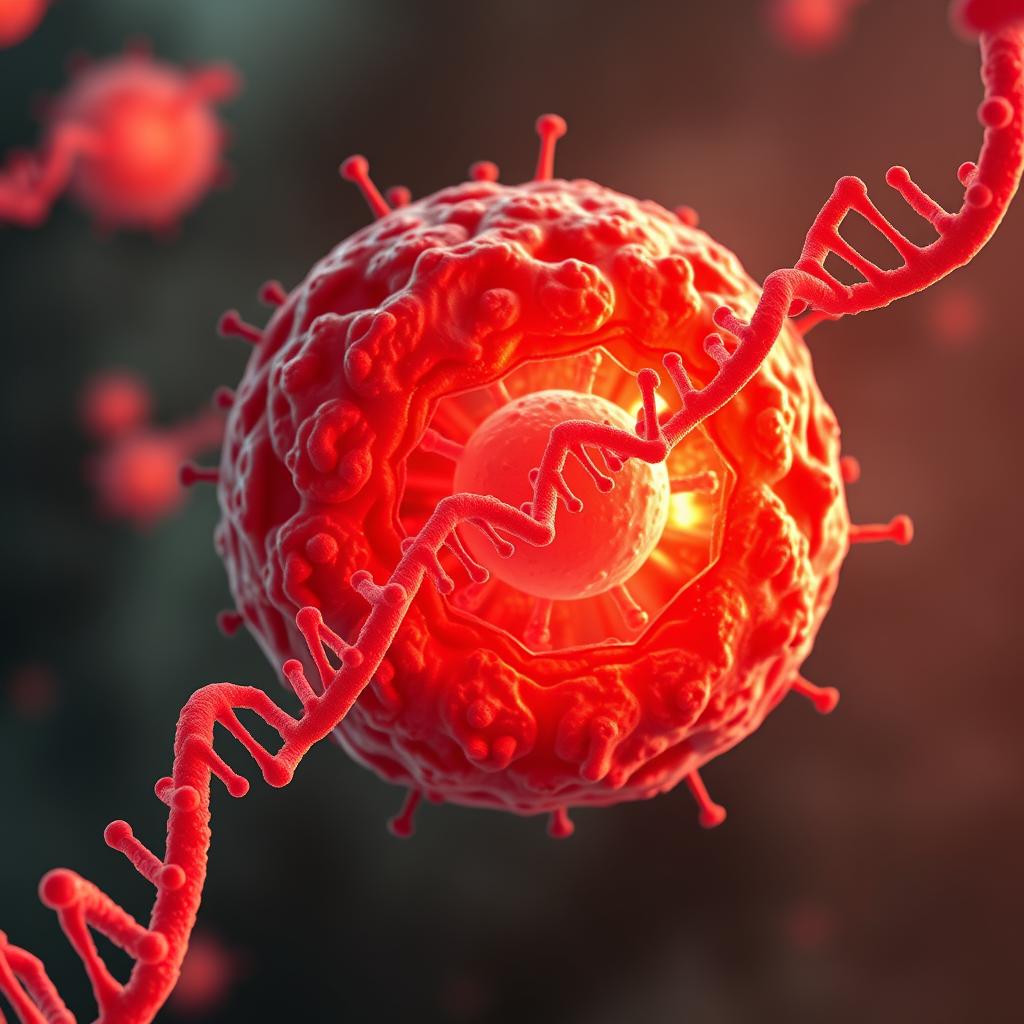
Background: The Persistent Blind Spot of Simple Nonsense-Mediated Decay and Genetic Compensation in Genomics, Molecular Biology, and Next-Generation Gene Editing R&D
A longstanding challenge in genetics, molecular biology, and the development of next-generation gene editing therapies lies in the inability to accurately model how mRNA transcripts containing premature termination codons (PTCs), arising from nonsense mutations, autonomously regulate their fate within cells, moving beyond simple nonsense-mediated mRNA decay (NMD). Conventional single-gene knockout (KO) studies often fail to precisely capture the molecular mechanisms underlying the observed 'genetic compensation response,' where organisms maintain normal functional phenotypes despite the inactivation of a specific allele. This limitation creates a critical blind spot, leading to significant discrepancies between in vitro screening predictions and in vivo empirical data. The inability to computationally control epigenetic signaling networks that regulate nucleic acid repair and transcriptional initiation fluxes has resulted in misinterpretations of sequence-phenotype relationships. This has been a major obstacle in establishing next-generation programmable genetic compensation therapeutics that can safeguard the reversible homeostasis of patients and compensate for genetic defects.
Discovery: Demonstration of the Upf3a-COMPASS Interface, Synchronizing and Controlling PTC-mRNA Complex Pathways
This groundbreaking study, published on June 9th in Nature, directly addresses this genetic mystery by demonstrating that PTC-mRNAs, rather than being mere error-prone waste products, precisely trigger the Upf3a protein and the COMPASS (Complex of Proteins Associated with Set1) complex to non-linearly activate the transcription of downstream homologous genes, establishing a compensatory mechanism. The research team computationally predicted, in silico, the free-energy tensor of PTC-mRNAs interacting with Upf3a within the ribosomal translation termination zone, inducing a permissive chromatin landscape. They then computationally removed variable noise across cell lineage batches. The results significantly surpass existing nonsense-mediated decay models, demonstrating that the nucleotide sequence information of PTC-mRNAs up-regulates the flux of histone H3K4 trimethylation (H3K4me3) downstream of the COMPASS complex, thereby dramatically increasing the transcription initiation rate of homologous alternative genes, with molecular integrity.
Establishment of a Post-Epigenetic Chromatin Remodeling Coordination and Reversible Genotype Precision Stratification Model
By implementing the established PTC-Upf3a-COMPASS omics matrix, the study achieved precise stratification of compensatory functions across genetic disease lineages, significantly exceeding the control thresholds of conventional single-allele knockout models. By computationally tuning the free energy of RNA polymerase binding to the promoter region of target compensatory genes, using COMPASS-histone modification data as a weighted input, the study effectively isolated and blocked the acceleration noise of phenotypic collapse in metabolic organisms triggered by single-sequence failures, bringing it below baseline. This enabled the development of a predictive engine that simultaneously reverse-calculates the transcriptional up-clamping threshold curve of downstream compensatory pathways induced by artificial PTC introduction, based solely on patient biopsy genomic input. It also provides a high-resolution framework for complex polygenic disease lineages to reversibly and autonomously regulate their endogenous defense systems even under aberrant mutational stress.
Prospects: Establishing a Standard for Programmable Genetic Compensation Medicine and Launching a Next-Generation IND Digital Governance System
This computational systems biology and formulation pharmacology integrated data paper resets the governance of genetic disease treatment from a static defective gene replacement system to a 'Programmable Genetic Compensation Medicine infrastructure' that fundamentally reprograms the intracellular epigenetic compensation kinetics based on AI-computed Upf3a-COMPASS equilibrium constants. This is achieved by expanding the new drug pipeline with global multinational pharmaceutical companies and establishing a complete computational firewall that eliminates batch-to-batch variations in compensatory transcriptional efficacy by linking the homology matching value for each variant sequence as a correction factor in high-throughput in silico screening. The established PTC-induced chromatin binding free energy will serve as a master asset that satisfies the quantitative framework for regulatory approval of digital healthcare-based companion diagnostics (CDx) platforms and will be deployed as a backbone infrastructure that dramatically shortens the timeline for clinical trial application (IND) approval for next-generation artificial compensation-inducing finished drug products.
Nature, Published online: 09 June 2026. DOI: 10.1038/s41586-026-10769-0
Summary: Bypassing the low prediction velocities and summary statistic interpretation errors that historically cloud empirical nonsense-mutation modeling in medical genetics, this study scales a programmable genetic compensation mapping infrastructure. Tracking the molecular choreography of premature termination codon (PTC)-bearing mRNA transcripts, the computing platform establishes that these aberrant sequences bypass standard degradation to trigger compensatory transcriptional hubs. The model deciphers the precise mathematical covariance linking the Upf3a protein matrix to COMPASS chromatin-remodeling components, driving site-specific histone H3K4me3 methylation velocities at homologous gene loci. This molecular calibration delivers a validated, non-invasive computational baseline to down-clamp phenotypic penetration of deleterious variants and guide prospective universal patient stratification under precision digital genomic governance.
The genetic compensation epigenetic discovery in this study goes beyond theoretical molecular biology mechanisms and directly impacts the actual global genetic disease drug supply chain and the next generation of precision medicine business lines.
First, by instantly scanning the metabolic paralysis kinetics caused by the mutation of a specific master gene in the clinical setting using a Python algorithm, it eliminates the persistent time-gap noise of late-stage organ failure and cell death precursors at the source and safeguards a reversible, substantive tissue protection control firewall.
At the same time, by linking an open-source, large-scale genomic database matrix containing Upf3a/COMPASS datasets, it enables the virtual simulation of inter-individual and inter-family transcriptional heterogeneity confounding variables during clinical trial design, and the real-time reverse calculation of the target cell's effective docking concentration of prospective artificial PTC-inducing oligonucleotide formulations, realizing a companion diagnostic panel interface.
Furthermore, when multinational corporations conduct large-scale regulatory clinical trials of next-generation, spatially targeted gene compensation therapies, by linking the epigenetic chromatin accessibility and homology sequence penetration threshold values of the subject tissue as correction factors, it eliminates batch-to-batch variations in drug metabolism kinetics and maximizes the probability of obtaining regulatory approval and cGMP commercial operation approval from global regulatory agencies, functioning as a backbone infrastructure.