The Rhythm of Silence and Activity Created by the Distance Between Enhancers and Promoters in the Genome: Unraveling the Mechanism Regulating Fluctuations in Gene Expression
Background
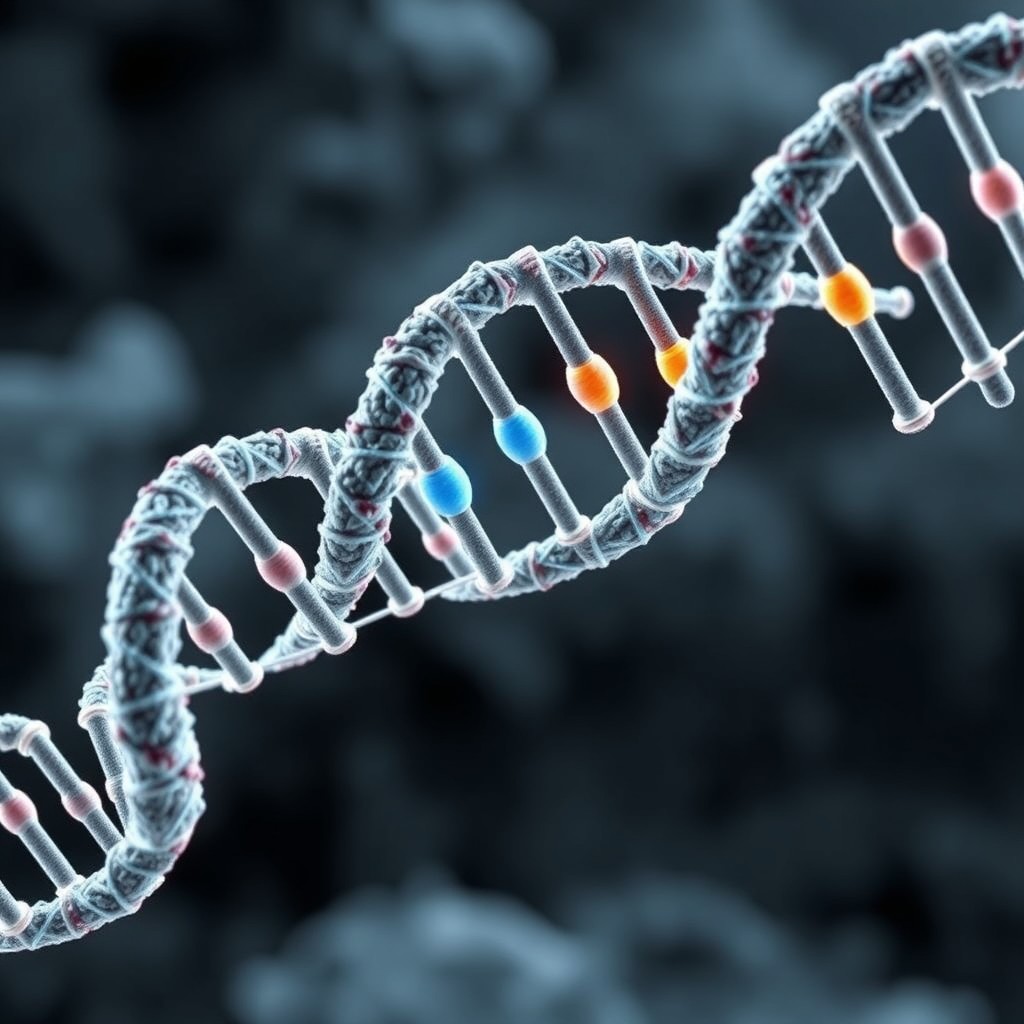
The first step in protein synthesis, which determines the traits of living organisms, is the process in which DNA, which contains genetic information, is transcribed into messenger RNA (mRNA). In this process, promoters, which directly initiate transcription, and enhancers, which maximize transcriptional efficiency, play key roles. The academic community has also believed that regulatory genes interact in three-dimensional space to regulate transcriptional activity. However, the impact of physical distance has remained an unexplored area. This is because gene transcription does not occur continuously but rather in the form of bursts. As a result, it has been very difficult to precisely measure the dynamics of transcription at the single-cell level in response to changes in distance. Researchers at the Friedrich Miescher Institute (FMI) overcame these barriers by designing a genomic environment with minimal structural complexity and challenging themselves to observe gene expression using real-time imaging technology.
Key Findings
The FMI research team edited the gene locus of mouse embryonic stem cells (mESCs) to segment the distance between enhancers and promoters into 5 kilobases (kb), 29 kb, 149 kb, and 232 kb. Based on these cell lines, they tracked the initial RNA levels using MS2 transcript labeling technology and real-time live-cell imaging. The results were very interesting. Gene expression did not remain constant, but rather exhibited 'clustered transcriptional bursts' in which expression occurred explosively for a certain period of time, followed by a long period of silence. Surprisingly, the position of the enhancer had little effect on the size or duration of individual transcriptional bursts. Only the frequency of clustered bursts, a frequency modulation (FM) type of frequency change, increased as the distance decreased. Examining the actual measurement data, the average waiting time between bursts in cells with a distance of 29 kb between the promoter and enhancer was 1.0 hour, while in cells with a distance of 232 kb, this waiting time increased to 3.1 hours, about three times longer, and the transcription frequency per hour decreased from 1.4 to 0.4. The research team incorporated these visual tracking results into a mathematical Markov model for in-depth analysis. The analysis revealed that as the physical distance decreased, the probability of the promoter escaping from the transcriptionally inactive basal state and transitioning to a high-frequency burst active state increased dramatically.
Significance and Prospects
This research challenges the conventional molecular biological notion that the interaction between enhancers and promoters is simply an on/off switch or a volume dial that regulates the level of expression. It experimentally and clearly demonstrates the frequency modulation (FM) model, which states that the genomic position of the enhancer controls the frequency of transcriptional bursts, thereby determining the total amount of transcription. In particular, it clearly explains the biological reason why living organisms place specific regulatory elements close to target genes in order to suppress the noise of gene expression, which occurs irregularly in cells, i.e., cell-to-cell variability, using physical distance. However, it should be noted that this experiment was performed in an extremely simplified gene locus in order to minimize variables. In reality, the natural genomic environment in cells is complex, with numerous enhancers acting synergistically, and loop structures formed by cohesin and CTCF proteins intricately intertwined. Therefore, subsequent research should continue to analyze the effects of distance in complex, high-dimensional genomic networks beyond this simple model.
Nature Genetics, Published online: 21 July 2026; doi:10.1038/s41588-026-02693-wWe show that, in a genomic locus with minimal complexity, the distance between promoter and enhancer modulates the frequency of clustered transcriptional bursts. Thus, besides the nucleotide sequence, the relative genomic positions of promoter and enhancer control mRNA production and cell-to-cell transcriptional variability, which contribute to the precision of transcriptional responses.
It provides concrete guidelines that can be directly applied to the design of precision gene therapies and the cell and gene therapy industry. The biggest barrier in current gene therapy development is the lack of control, which leads to toxicity by overexpressing the target gene or failing to achieve therapeutic efficacy due to insufficient expression. By fine-tuning the frequency of expression of therapeutic genes by adjusting the physical distance between enhancers and promoters in the three-dimensional genome, it is possible to achieve safe and precise drug delivery at a level similar to that of normal cells in vivo. For example, in the design of chimeric antigen receptor T-cell (CAR-T) therapies that edit immune cells, it is possible to establish an expression cycle that prevents excessive immune reactions such as cytokine release syndrome while maintaining the ability to attack cancer cells. Furthermore, it is expected to be useful in improving process yields by maximizing the uniformity of protein production in Chinese hamster ovary (CHO) cell lines, which are widely used in the production of biopharmaceuticals.