Procrastination and Impulsivity: Two Sides of the Same Coin, Driven by Shared Genetic and Left Dorsolateral Prefrontal Cortex (DLPFC) Underpinnings
Background
Procrastination, the act of delaying important tasks and engaging in less important activities, is a common psychological challenge in modern society. Clinical psychology and neuroscience have primarily associated procrastination with individual impulsivity or a lack of self-control. From an evolutionary perspective, procrastination has been interpreted as a byproduct of impulsivity, driven by the pursuit of immediate gratification. In hunter-gatherer societies, immediate responses to threats or opportunities were more crucial for survival than long-term planning.
However, these hypotheses have largely been based on behavioral observations or qualitative surveys. The specific biological mechanisms underlying these behaviors have remained unclear. Previous genetic studies have been limited by small sample sizes or a lack of molecular data to support correlations with specific brain structures. Therefore, researchers aimed to investigate the underlying causes of procrastination by integrating genetic and neuroanatomical perspectives.
Key Findings
In this study, researchers elucidated the relationship between procrastination and impulsivity at the genetic and brain structural levels. A comprehensive analysis of a large longitudinal twin cohort and meta-analysis of existing twin studies revealed a high genetic correlation of 0.51 between procrastination and non-planning impulsivity (NPI). This suggests that procrastination and impulsive behavior share a significant genetic basis. The two behaviors are deeply intertwined at the genomic level.
Longitudinal data showed that NPI levels in late adolescence and early adulthood were reliable predictors of procrastination severity in adulthood. Individuals who struggle with impulse control in their youth are more likely to exhibit procrastination patterns as adults.
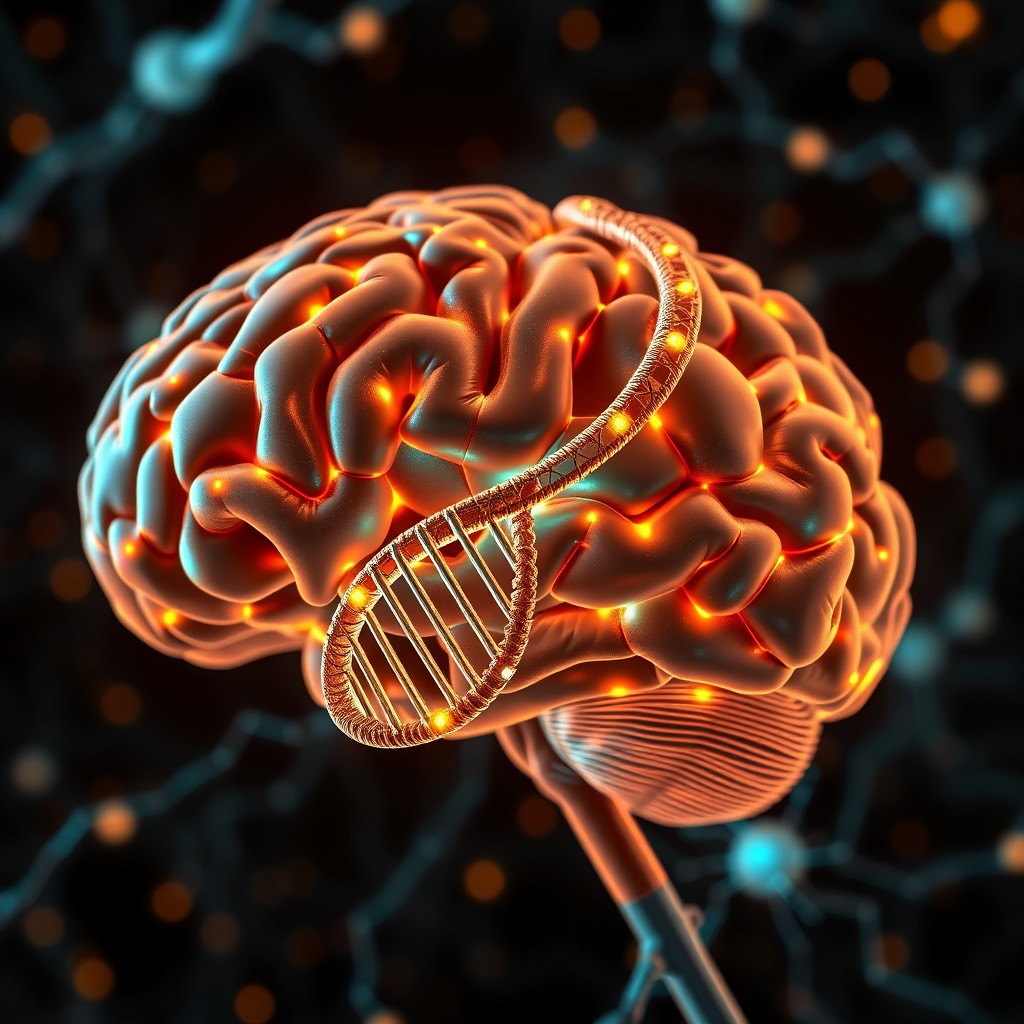
Furthermore, analysis of magnetic resonance imaging (MRI) data revealed specific neurobiological regions associated with these behaviors. Both procrastination and impulsivity were strongly correlated with subtle structural differences in the left dorsolateral prefrontal cortex (left DLPFC). Morphological variations, such as gray matter volume or thickness in this region, appear to mediate the relationship between NPI and procrastination.
Researchers also conducted a functional enrichment analysis based on genetic data. This analysis revealed that genes associated with the structural characteristics of the left DLPFC and NPI consistently converge on intracellular metabolic processes and neural development pathways. This suggests that specific genes influence the development and expression of the prefrontal cortex, ultimately leading to the manifestation of both impulsivity and procrastination.
Significance and Implications
The DLPFC is a key brain region involved in executive functions, including planning, attention, and goal-directed behavior. This discovery provides scientific evidence that procrastination is not merely a personality flaw or laziness, but a biological phenomenon linked to the development and genetic basis of the prefrontal cortex. The study establishes an objective framework for quantitatively explaining procrastination by combining genetic information and brain structure mapping.
However, due to the study's focus on twin cohorts, further research is needed to generalize these findings to more diverse populations with varying ethnic and socioeconomic backgrounds. While genetic factors account for approximately 50% of the influence on procrastination, the remaining 50% is attributed to environmental factors, such as educational environment and stress management strategies.
Future research will focus on identifying specific single-gene variants associated with procrastination and investigating how environmental factors may mitigate or exacerbate these genetic vulnerabilities.
Proceedings of the National Academy of Sciences, Volume 123, Issue 28, July 2026. SignificanceProcrastination is a puzzling human behavior compromising survival-relevant outcomes, yet remains both widespread and moderately heritable. Although it has been theoretically framed as the evolutionary byproduct of impulsivity, empirical ...
This research has implications beyond academic curiosity, with potential applications in clinical diagnosis and the digital healthcare industry. It may enable the early identification of high-risk individuals with DLPFC dysfunction and genetic vulnerabilities, allowing for the development of personalized cognitive-behavioral therapy programs to prevent procrastination from escalating into more serious conditions such as depression or anxiety. For example, a smartphone application could be developed to measure users' planning patterns and impulsivity in real-time, providing personalized micro-goal setting reminders or cognitive feedback based on their individual brain characteristics. This could be expanded into a digital therapeutics (DTx) business model. In workplace or educational settings, the findings could inform the design of work environments that reduce cognitive overload, rather than simply blaming individuals for their lack of willpower.