Direct Neuronal Reprogramming: A New Path for Treating Brain Injury
-
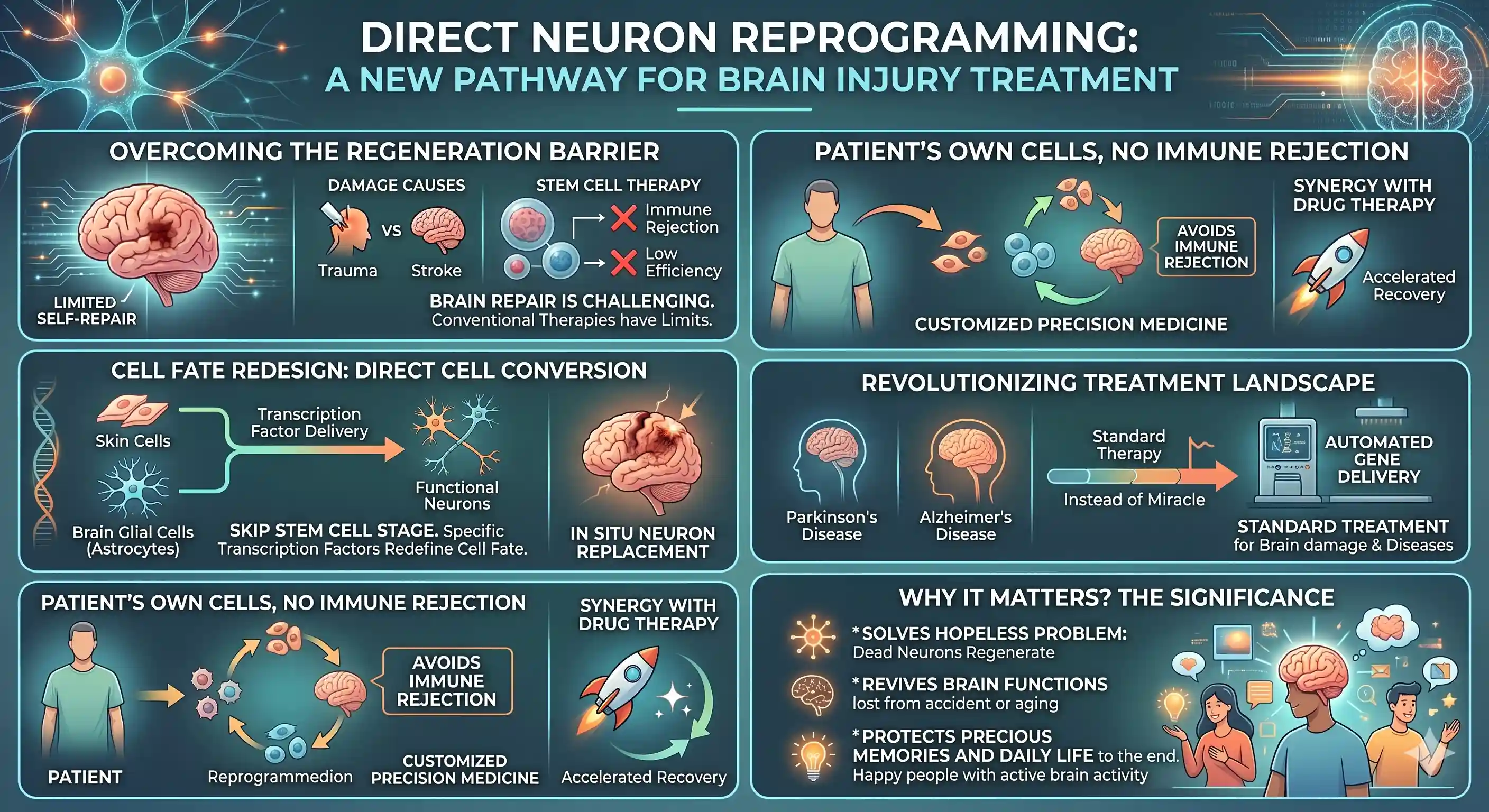
Overcoming the limits of brain regeneration The brain is a tissue that, once damaged, is extremely difficult to recover on its own, akin to a "cliff." Conventional stem cell transplantation often uses external cells, leading to immune rejection or suboptimal efficacy. Consequently, scientists have identified an innovative breakthrough that leverages other cells already present within the body.
-
Gene redesign that changes cell fate The "direct reprogramming" highlighted by the research team is a technique that converts skin or glial cells in the brain directly into neurons. By introducing specific transcription factors, the cell’s fate is wholly redesignated without passing through a complex stem‑cell stage. The ability to populate the damaged area with new neurons on‑site is the principal attraction of this approach.
-
"My own cells" repair the brain Because this method uses the patient’s own cells as the source material, the risk of immune rejection is minimal. It essentially creates a “self‑treating therapeutic” within the body, aligning perfectly with true personalized precision medicine. When combined with other pharmacologic treatments, a powerful synergistic effect that dramatically accelerates neural recovery can be anticipated.
-
Future significance and outlook This technology is poised to fundamentally reshape the therapeutic landscape for intractable neurodegenerative diseases such as Parkinson’s disease and Alzheimer’s disease. Should gene‑delivery systems become safer and more automated, overcoming disabilities caused by brain injury could transition from a miracle to a routine treatment.
BACKGROUND: Treatment of brain injuries and neurodegenerative disorders is a critical challenge due to poor regenerative capabilities of the central nervous system. The current therapeutic strategies are primarily focussed on treating the symptoms than addressing the core issue of loss of neurons. Despite advances in stem cell therapies and surgical alternatives, they are not always successful due to challenges like immune rejection and limited efficacy. Direct neuronal reprogramming of endogenous somatic cells is a promising approach to restore lost neurons. This review evaluates traditional reprogramming techniques and their limitations, explores novel DISCUSSION: Traditional neuronal reprogramming is based on CONCLUSIONS: Direct neuronal reprogramming offers a viable strategy for replenishing neuronal cell mass in neurodegenerative diseases and brain injuries through autologous therapy. Novel This article aims to explain direct neuronal reprogramming as focused treatment for the root causes of neurodegenerative diseases, replenishing lost neuronal cell mass.
It addresses the desperate problem that neurons lost to brain injury or dementia do not naturally regenerate. By directly reviving lost brain functions with one’s own cells, it enables the preservation of precious memories and daily life.