GWAS reveals polygenic modular architecture governing hand-foot skeletal coevolution
-
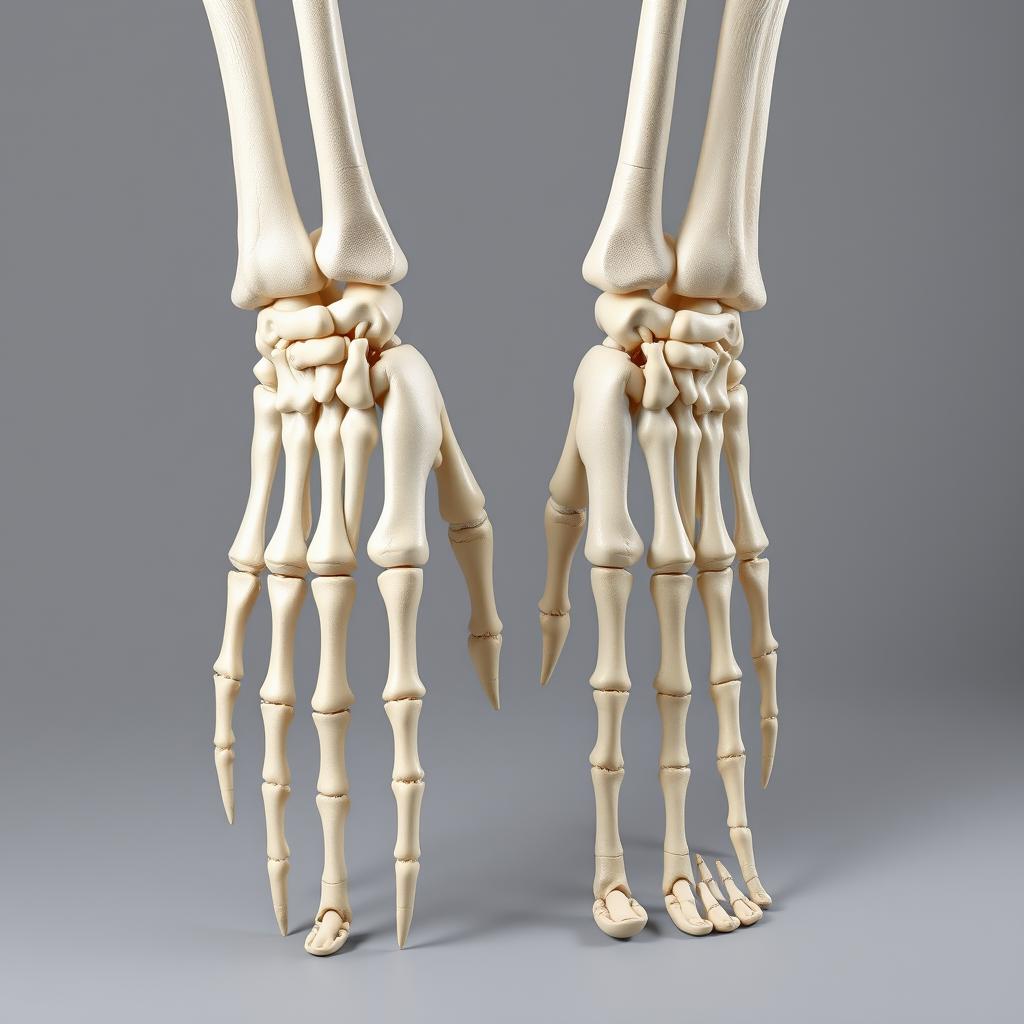
Anatomical mystery of primate coevolution and the barrier of genetic polymorphism During human evolution, the transition to bipedalism transformed the foot into a locomotor organ and liberated the hand from weight‑bearing duties, allowing specialization for tool use. Although functionally fully differentiated, the size and shape of phalanges in both hands and feet remain highly covariant across primates, including humans. This anatomical "evolutionary constraint" has been recognized for decades, yet the polymorphic network at the genomic level that simultaneously ties the morphogenetic mechanisms of these two structures has remained hidden. It represents a complex genomic black box that cannot be explained by single‑gene approaches.
-
Integrated pipeline of 3D digital morphometrics and multi‑cohort GWAS Published in the May 2026 issue of the Proceedings of the National Academy of Sciences (PNAS), this study analyzed thousands of hand and foot X‑ray and CT scans from diverse multinational cohorts using high‑resolution 3D morphometric techniques. By coupling these phenotypic data with whole‑genome association analyses, the authors identified a unique "genotypic module" that bidirectionally regulates the size of homologous bones in the hand and foot. This structure is not driven by a single independent variant; rather, it consists of a polygenic architecture in which numerous small‑effect variants distributed across the genome cooperate as a network to stabilize specific limb ratios.
-
Shared transcription‑factor clusters and cis‑regulatory dynamics Mechanistically, the modular network controls upstream activity of a specific cluster of transcription factors that govern the embryonic limb‑development program. Spatial transcriptomics and chromatin‑accessibility profiling demonstrated that polymorphisms within non‑coding cis‑regulatory elements near master skeletal regulators HOX and TBX enhance transcriptional efficiency in distal cell populations of both hands and feet. Consequently, even when selective pressure targets only one side (e.g., optimization of foot bones for locomotion), the shared genetic module forces the opposite side (hand bones) to change in a domino‑like fashion, revealing the molecular basis of this evolutionary dynamics.
-
Advanced paleo‑body reconstruction algorithm and programmable developmental simulator As requested, the decisive value of this work for the [8 Time‑Machine Biology] portfolio lies in its ability to construct a molecular‑phylogenetic timeline that perfectly back‑projects and predicts the bodily matrix of past and future humans using fragmented fossil remains or ancient genomes. By extracting the limb‑module variant values from Neanderthal or Denisovan genomic data, researchers can digitally reconstruct precise hand‑foot ratios and morphological ranges that are not preserved in the fossil record. Moreover, these ancient evolutionary markers constitute a unique data asset for screening genetic causes of developmental skeletal dysplasias and for pushing AI‑driven human‑form prediction models to their performance limits.
PNAS, Vol. 123, Issue 20, May 2026. DOI: 10.1073/pnas.2603129226
Summary: This evolutionary genomics study maps the polygenic modular architecture dictating the phenotypic covariation between corresponding hand and foot bones in primates. Integrating 3D digital morphometrics with cross-cohort genome-wide association studies (GWAS), the framework identifies highly linked polymorphisms within cis-regulatory elements of upstream transcription factor clusters (HOX/TBX). This shared pleiotropic routing demonstrates how structural constraints maintain strict anatomical proportions across divergent evolutionary trajectories, delivering a predictive sequence-to-phenotype framework for paleogenomic reconstruction and developmental modeling.
This dataset validates the pleiotropy of limb evolution through a large‑scale genome‑3D morphometrics pipeline, providing a top‑tier reference for [8 Time‑Machine Biology]. It includes annotated modular variants and accessibility scores for cis‑regulatory elements, making it indispensable for future AI‑based solid‑bone shape prediction models and for building anthropological evolution simulators (e.g., BioArx archaeological extensions).