Preventing Highly Pathogenic Avian Influenza in Cattle: mRNA Vaccine Blocks Mammary Gland Infection and Raw Milk Viral Shedding
Background
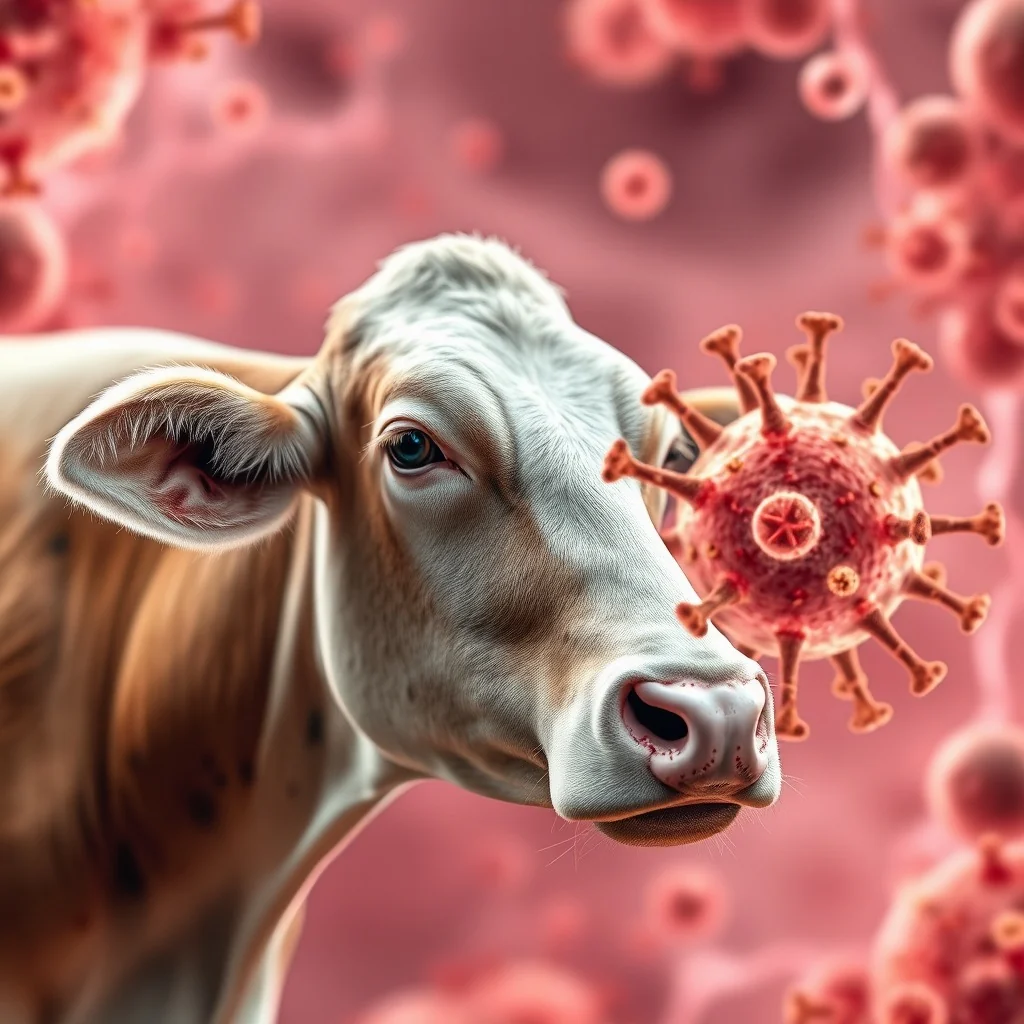
Highly Pathogenic Avian Influenza (HPAI) virus H5N1, which primarily targets birds, has caused global chaos in the health and livestock industries as it spreads to mammalian livestock. The H5N1 clade 2.3.4.4b virus infections confirmed in dairy farms across the US in 2024 exhibited a transmission pattern entirely different from that of typical avian influenza. The virus did not stop at causing respiratory disease but directly invaded and replicated in the mammary tissue of dairy cows. Infected cows experienced a sharp drop in milk production and suffered from anorexia, and high concentrations of the virus, potentially fatal to humans, were detected in the milk. The risk of secondary transmission to farm workers and the dairy processing environment also rose sharply.
Existing veterinary approaches to stabilize the situation revealed clear limitations. Inactivated vaccines or attenuated live vaccines used for poultry disease control failed to induce sufficient protective antibody formation in the immune system of cattle, which are mammals. The time required for vaccine manufacturing and strain propagation was also too long to respond immediately to viral antigens mutating rapidly within mammals. Considering the body size and metabolic rate of cattle, high antigen doses and strict safety are simultaneously required; however, the development of livestock vaccines has lagged behind that of human therapeutics. This created an urgent need for a precision vaccine platform capable of fundamentally inhibiting viral replication in the mammary glands and blocking viral shedding into milk.
Key Findings
Researchers introduced the Lipid Nanoparticle (LNP)-formulated messenger Ribonucleic Acid (mRNA) platform, verified during the COVID-19 pandemic, to control livestock infectious diseases. In this study, the nucleotide sequence of the Hemagglutinin (HA) glycoprotein, a key antigen on the surface of the bovine-derived H5N1 virus, was rapidly decoded to synthesize target mRNA. The synthesized mRNA molecules were encapsulated in lipid complexes to enhance in vivo uptake and stability, resulting in a vaccine formulation for administration to dairy cows. The process from virus isolation to vaccine candidate design and production was completed in just a few weeks.
Vaccinated dairy cows and calves exhibited excellent immune responses. Analysis of serum after two doses showed that the vaccinated group had neutralizing antibody titers dozens of times higher than those in the control group. Clear protective efficacy was also confirmed in viral challenge tests. Despite exposure to high concentrations of H5N1 virus, vaccinated cows experienced almost no systemic symptoms such as fever, lethargy, or decreased feed intake.
The most notable achievement is the complete inhibition of intramammary infection and extracellular shedding. In unvaccinated animals, large amounts of live viral particles were shed not only in nasal secretions but also in milk for several days following infection. In contrast, in cows vaccinated with the mRNA vaccine, viral replication within the respiratory tract was minimal, and no infectious virus was detected in the milk. This is the result of the antibody response reaching beyond the systemic circulation to the mucosal and mammary tissues rapidly enough to prevent target virus colonization.
Significance and Outlook
This achievement demonstrates that mRNA vaccines can serve as an excellent barrier against livestock infectious diseases in the field. It holds high public health value in preemptively blocking the pathway for avian influenza to evolve into a human-to-human transmissible virus using cows as intermediate hosts. The fact that it protects the safety of the dairy supply chain by preventing crude oil contamination is also great news for livestock farmers. It establishes a livestock disease control system that can respond immediately by simply replacing the nucleotide sequence, even if seasonal variants or new recombinant viruses emerge.
Practical challenges remain for commercialization. The ultra-low temperature storage and distribution costs of the mRNA-LNP formulation pose a burden for widespread deployment to farms. Along with process optimization to lower the cost per dose, the development of freeze-drying technology capable of room-temperature storage must follow. It is also essential to establish regulatory guidelines to verify the duration of residual genetic material in food-producing livestock and its potential harm to humans, as well as to address conflicts with organic dairy certification standards. The researchers are currently continuing research on next-generation sustained-release formulations that maintain long-term immunity with a single dose.
Nature Biotechnology, Published online: 28 October 2026; doi:10.1038/s41587-026-03343-6Dairy cows are protected from H5N1 influenza by an mRNA vaccine.
The dairy industry has suffered massive economic losses due to the culling of dairy cows or the disposal of raw milk in the event of an H5N1 virus outbreak. This mRNA vaccine platform enables rapid field response by allowing the mass production of customized vaccines within a minimum of 6 to 8 weeks in response to mutations in circulating strains. In particular, by fundamentally suppressing viral shedding in the milk of lactating cows, it preemptively prevents respiratory exposure among dairy farm workers and secondary infection incidents via raw milk prior to pasteurization. It is expected to function as an economic buffer that reduces the quarantine burden on livestock farms and prevents spikes in dairy prices caused by infectious diseases.