The Emergence of NA-Based mRNA Vaccines That Render Influenza Virus Mutations Ineffective
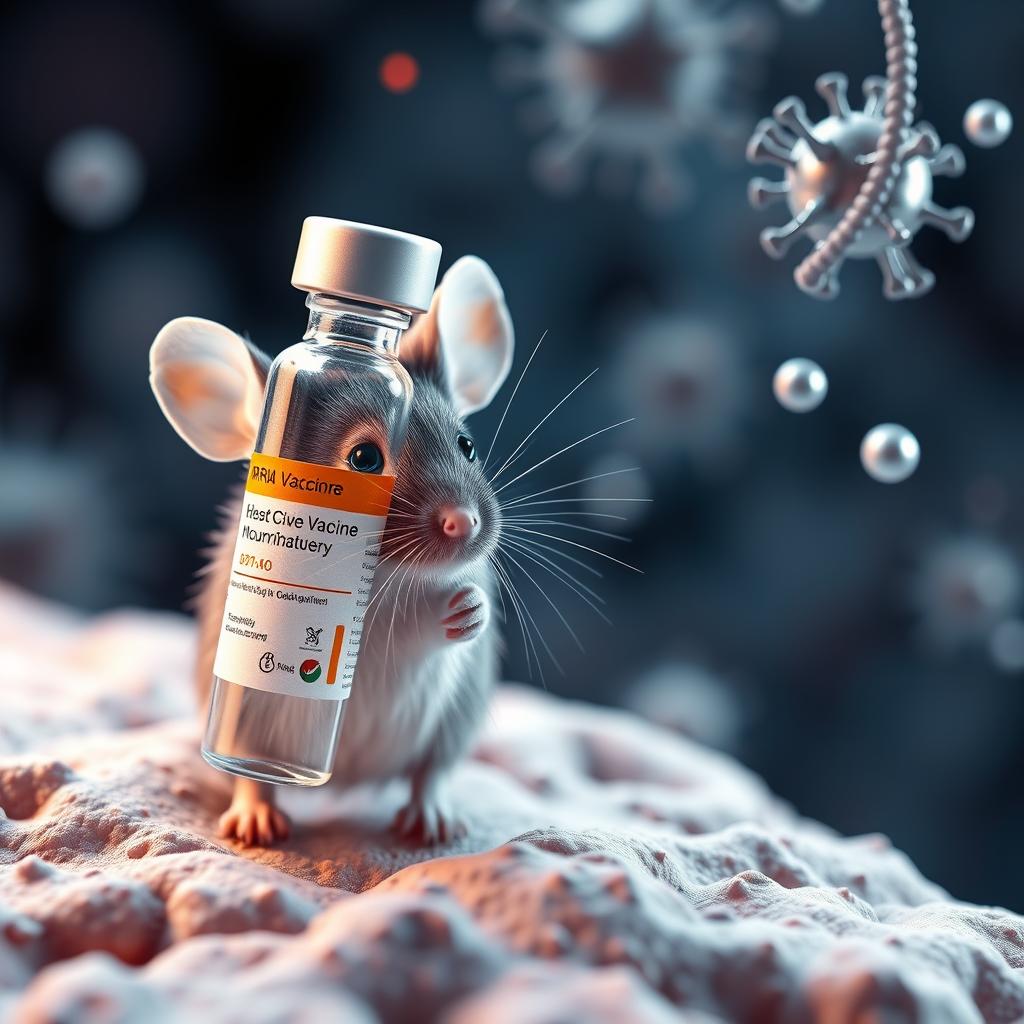
1. Why do annually updated flu vaccines lose effectiveness?
Influenza A virus continuously alters its appearance through antigenic drift and antigenic shift. Conventional vaccines have primarily targeted the surface protein hemagglutinin (HA), but this region mutates so rapidly that vaccines often fail to keep pace with the virus.
2. Computer‑designed precision antigen, the rediscovery of “NA”
The research team focused on neuraminidase (NA), which mutates less frequently than HA. By computationally analyzing 707 viral sequences, they designed two mRNA vaccines—NA‑D1, matched to the latest circulating strains, and NA‑E2, which incorporates features common to multiple viruses. This represents a precision blueprint that targets the virus’s “most vulnerable and conserved” region.
3. Animal study results: perfect protection against H1N1 and potential against H5N1
In mouse experiments, both vaccines generated strong NA‑specific antibodies and completely blocked infection with H1N1 virus. Protection against the more genetically distant H5N1 was only partial, suggesting that a combined HA‑plus‑NA strategy may be required in the future.
4. Implications and outlook
The study demonstrates that NA can serve as a core antigen for next‑generation flu vaccines. If a universal influenza vaccine incorporating both HA and NA is developed, the need for yearly immunizations could be reduced and humanity would be better protected against unexpected influenza pandemics.
Influenza A viruses continuously evolve through antigenic drift and shift, reducing the effectiveness of vaccines that rely primarily on hemagglutinin (HA). Neuraminidase (NA), a surface antigen with greater sequence conservation, has gained attention as a complementary target for broader influenza vaccine design. Using computational analyses of 707 post-2009 A(H1N1)pdm09 NA sequences, we designed two NA-based mRNA vaccine constructs: NA-D1, derived from contemporary H1N1 isolates, and NA-E2, incorporating conserved features shared between H1N1 and H5N1. Mice received prime-boost immunization followed by homologous H1N1 or heterologous H5N1 challenge. Both NA-D1 and NA-E2 induced NA-specific antibody titers and conferred complete protection against homologous H1N1 infection. In contrast, protection against heterologous H5N1 was partial, consistent with lower predicted antigenic similarity between the vaccine constructs and H5N1 NA. Together, these findings demonstrate that NA-based mRNA vaccination can elicit robust homologous protection but offers limited heterologous protection efficacy. Our results support NA as an important complementary antigen for next-generation influenza vaccines and highlight the potential of computationally guided, dual-antigen (HA + NA) strategies to advance the development of broadly protective mRNA vaccines.
On April 28, 2026, artificial intelligence (AI) and mRNA technology joined forces to tackle the ever‑changing influenza virus. The uncertainty of wondering, “Will this year’s vaccine match?” was resolved. By enabling protection against a broader range of viruses for a longer period, this technology can dramatically lower the risk of hospitalization or death from flu and help keep our families’ precious daily lives safer and more resilient.