AAV Gene Therapy Followed by Hepatitis, Resolved with Sirolimus
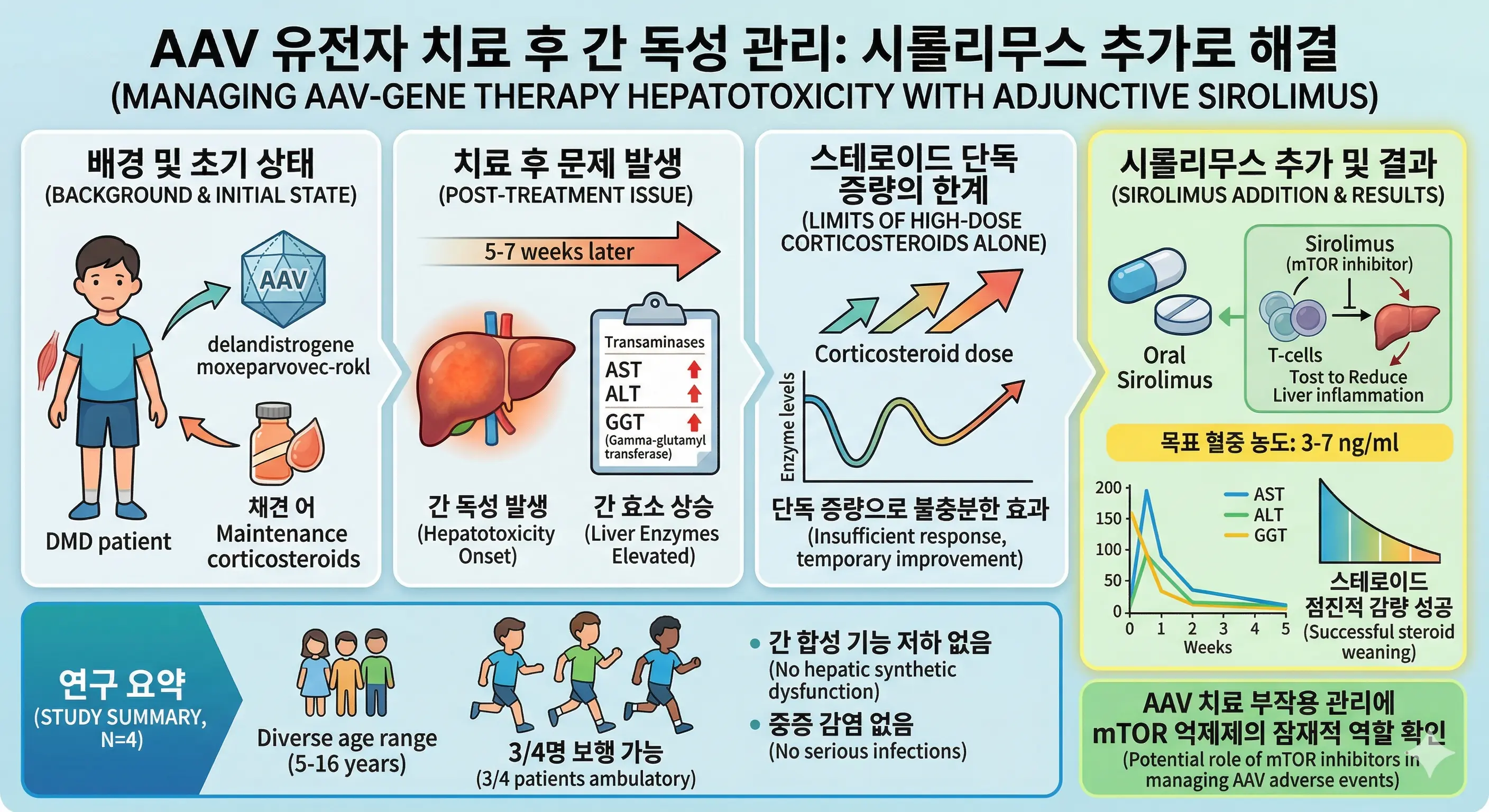
After AAV treatment for DMD patients, liver enzymes increased, causing problems. Increasing steroids alone was ineffective, but adding sirolimus normalized liver numbers. Three out of four patients could move their bodies, and side effects were minimal. This method may be useful for managing gene therapy side effects in the future.
BACKGROUND: Adeno-associated virus (AAV)-mediated gene therapy with delandistrogene moxeparvovec-rokl (Elevidys®) is an approved treatment for patients with Duchenne muscular dystrophy (DMD). While generally well tolerated, hepatotoxicity has been observed following its administration, leading to liver failure and death in two reported cases to date. METHODS: This is a case series describing four male patients with DMD, who received delandistrogene moxeparvovec-rokl at a single academic medical center and developed acute liver inflammation. All patients received corticosteroids, with doses increased as abnormalities developed, followed by the addition of oral sirolimus (goal trough: 3-7 ng/ml), which was used primarily for T-cell immunomodulation. Monitoring included close clinical follow up, serial laboratory testing, and cardiac and functional assessments per institutional protocol. RESULTS: The patients were between 5 and 16 years of age with a weight between 20.8 and 56.7 kg, (median: 32.5 kg). Three boys were ambulatory. The four patients were receiving chronic corticosteroids for the treatment of DMD prior to delandistrogene moxeparvovec-rokl administration. All cases developed hepatic enzyme elevations five to seven weeks post-gene therapy. Treatment with high-dose corticosteroids led to transient improvement or worsening of laboratory abnormalities, and initiation of adjunctive sirolimus therapy resulted in normalization of gamma-glutamyl transferase and improvement of transaminases within two to four weeks. The duration of sirolimus treatment ranged from four to twelve weeks, during which corticosteroids were successfully weaned. None of the patients experienced hepatic synthetic dysfunction or serious infections. CONCLUSIONS: These cases illustrate a subacute pattern of liver inflammation following AAV-gene therapy and support the potential role of mTOR inhibitors in managing AAV-related hepatotoxicity.
Inhibiting hepatotoxicity can greatly increase the safety of gene therapy