cAMP Modulates Lysosomal pH to Treat ATP6V1B2 Variant Syndrome
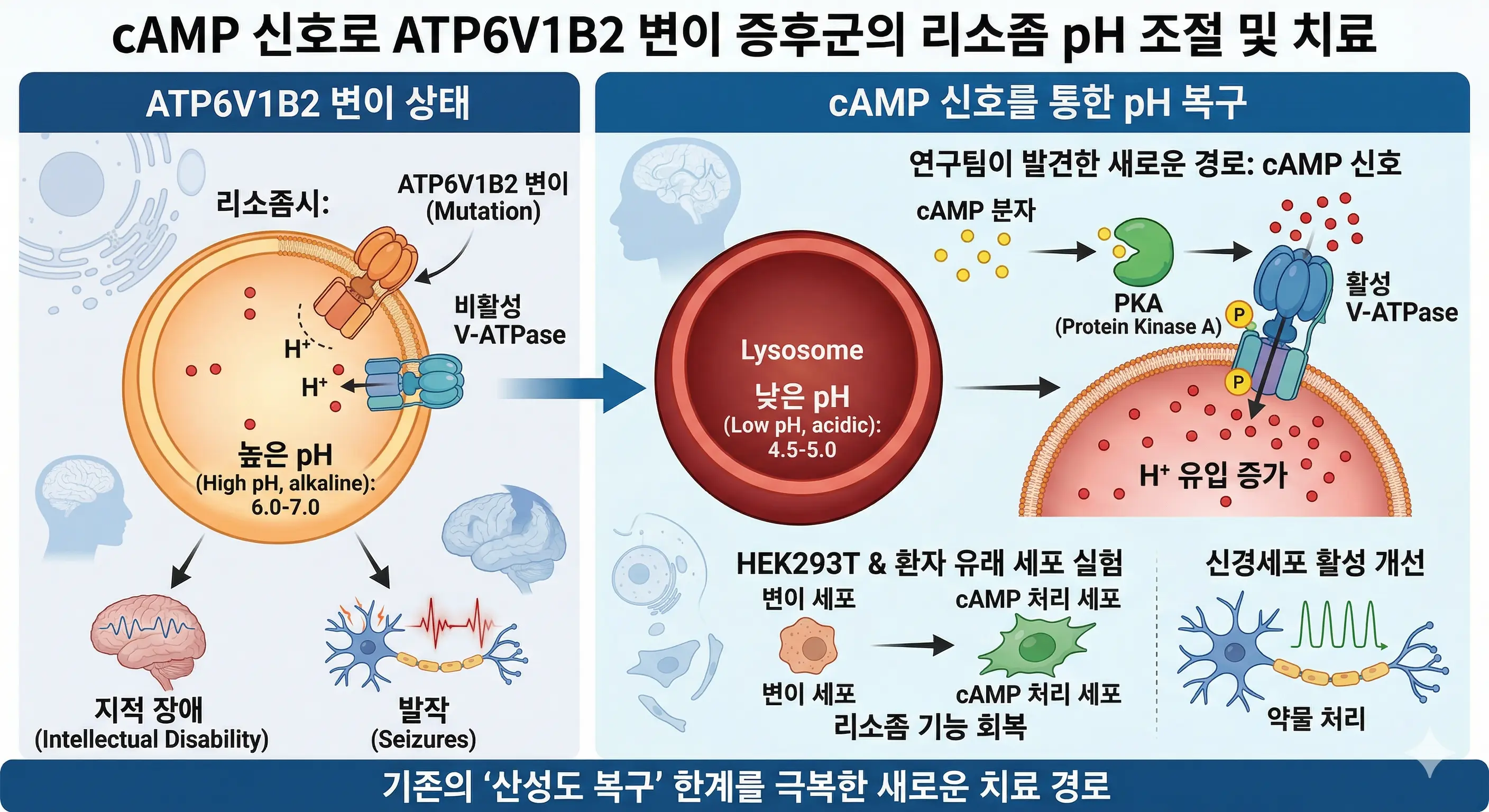
ATP6V1B2 variants hinder lysosomal acidification, leading to intellectual disability and seizures. The research team discovered a method to lower pH using cAMP signaling. In experiments, lysosomal function was restored in HEK293T cells and patient-derived cells, and drug treatment improved neuronal activity. Although still in the animal experiment stage, this finding is noteworthy as it offers a new approach to addressing the previously challenging issue of restoring acidity.
Pathogenic variants in ATP6V1B2, which encodes a critical subunit of vacuolar-type H+-ATPases (V-ATPases), disrupt lysosomal acidification via haploinsufficiency and clinically manifest as intellectual disability and seizure disorders. Despite significant morbidity, mechanism-based therapies remain an unmet need. Through integrated clinical analysis of a Chinese cohort and systematic literature review, we delineated genotype-phenotype correlations in ATP6V1B2-related syndromes. Isogenic HEK293T models (ATP6V1B2
Potential for developing mechanism-based treatments for rare neurological disorders