Microtubule Destruction, New Treatment for Parkinson's Disease
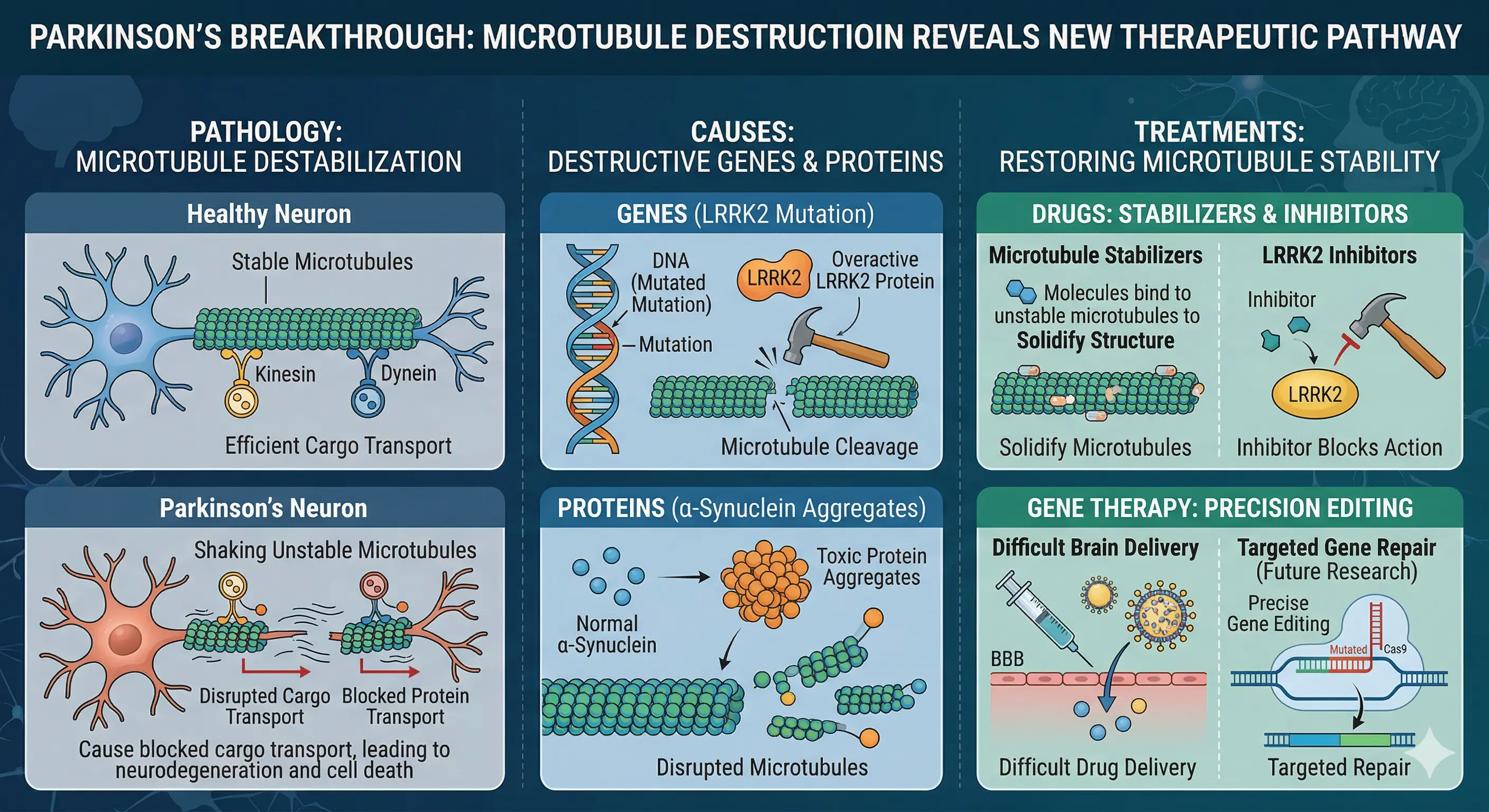
In Parkinson's disease patients, when microtubules in the brain are disrupted, it can cause problems with nerve cells, similar to a traffic jam when moving objects. Genes such as α-synuclein and LRRK2 have been found to break microtubules, leading to the death of nerve cells. Therefore, treatments using drugs that stabilize microtubules or LRRK2 inhibitors are being attempted. Although it is still challenging to deliver drugs to the brain, personalized gene editing, including CRISPR, is also being considered.
Parkinson's disease (PD) is a progressive neurodegenerative disorder primarily marked by the degeneration of dopaminergic neurons in the substantia nigra and the pathological accumulation of misfolded α-synuclein in Lewy bodies. This chapter explores the underrecognized role of microtubule (MT) dysregulation in PD pathogenesis, linking disruptions in cytoskeletal integrity to impaired axonal transport and neuronal survival. The fundamental biology of MTs, their dynamics, and their regulation by motor proteins and associated proteins like MT-associated proteins (MAPs), tau, and gamma-tubulin complexes, are discussed. Special attention is given to how mutations linked to PD, such as those in SNCA (α-synuclein), Parkin, PINK1 (PTEN-induced kinase 1), and LRRK2 (leucine-rich repeat kinase 2), lead to MT destabilization, impaired mitophagy, and disruptions in axonal transport. A self-perpetuating cycle of MT disruption and α-synuclein aggregation is proposed, resulting in synaptic failure and dopaminergic neuron loss. The chapter also evaluates emerging therapeutic strategies targeting MT stabilization, including LRRK2 inhibitors, MT-stabilizing agents like Epothilone D, and approaches to modulate α-synuclein aggregation. Challenges such as the blood-brain barrier, off-target effects of MT-targeting drugs, and patient-specific variability in drug response are critically discussed. Future directions include CRISPR-Cas9-based gene therapies and personalized medicine, emphasizing the need for a deeper understanding of PD-related molecular pathways. This comprehensive overview highlights MT dynamics not just as collateral damage but as a central element in PD pathology, offering novel insights into potential avenues for intervention.
Microtubule-targeted treatment strategies for Parkinson's disease may undergo significant changes