Permanent Inactivation of PCSK9 via In Vivo Base Editing, Demonstrating Sustained Efficacy in Phase 1 Clinical Trial for Familial Hypercholesterolemia
Background
Patients with heterozygous familial hypercholesterolemia (HeFH) suffer from continuous impairment in removing low-density lipoprotein (LDL) cholesterol from the blood due to genetic defects. Existing standard therapies, such as statin-lowering agents or proprotein convertase subtilisin/kexin type 9 (PCSK9) inhibiting antibodies, have contributed to lowering blood lipid levels. However, there was the issue of medication adherence, as patients had to receive periodic drug administration for life.
Unlike ex vivo gene therapies, in vivo genome editing, which delivers therapeutic molecules directly into internal organs, presents much higher technical difficulty. Existing 1st-generation CRISPR-Cas9 technology causes DNA double-strand breaks (DSB), leaving safety concerns such as large-scale chromosomal deletions or translocations. In this study, the research team tested a new approach at the clinical stage by combining liver-targeted lipid nanoparticles (LNPs) with an adenine base editor (ABE) that precisely converts only a single base, aiming to normalize blood lipids with a single lifetime dose.
Key Findings
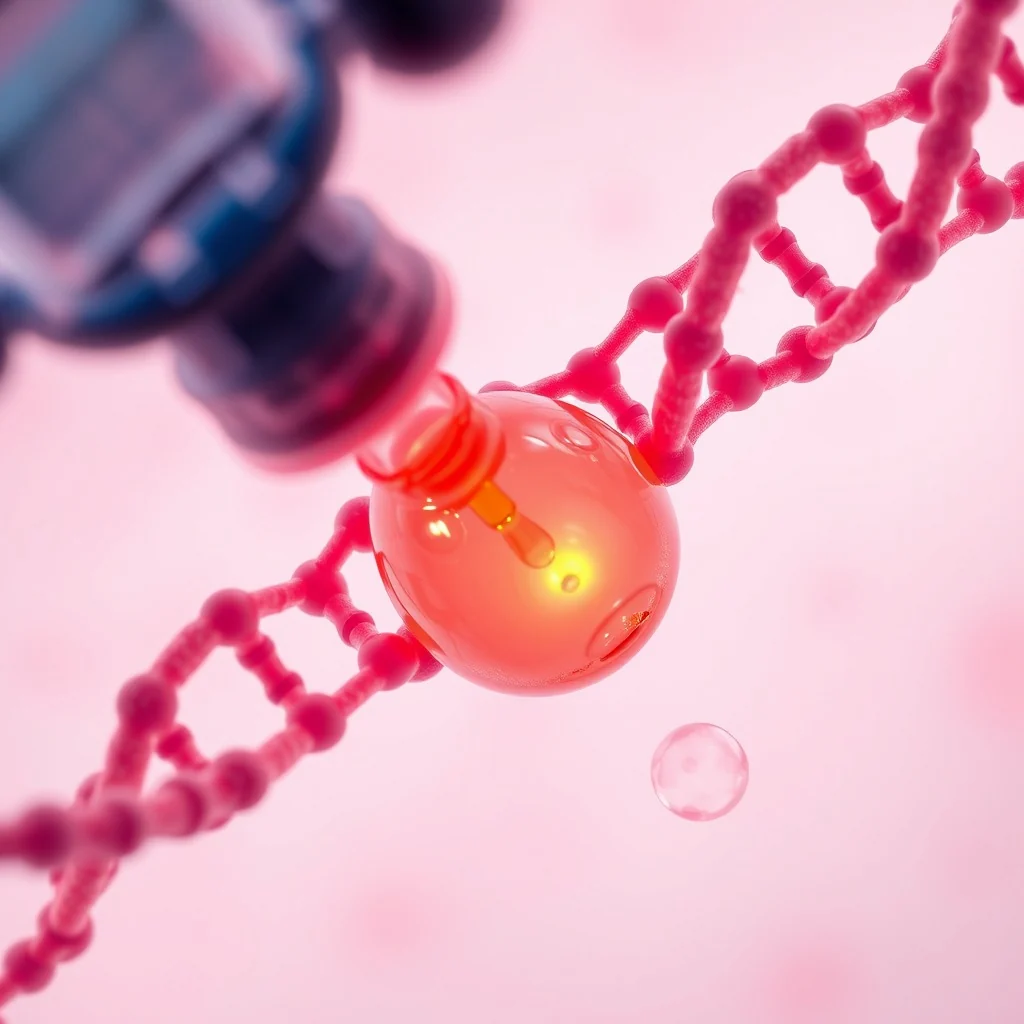
The Phase 1 Heart-1 trial was conducted using a single intravenous dose-escalation method in adult HeFH patients accompanied by severe atherosclerotic cardiovascular disease. VERVE-101, the test substance, is an in vivo base-editing therapeutic consisting of messenger RNA (mRNA) and guide RNA encapsulated in lipid nanoparticles (LNPs), designed to replace a single adenine with guanine at a specific splicing donor site of the PCSK9 gene in hepatocytes.
The researchers tracked safety and lipid-lowering efficacy while gradually increasing the dose from 0.1mg/kg to 0.6mg/kg. In the 0.45 mg/kg and 0.6 mg/kg dose groups that reached therapeutic concentrations, successful PCSK9 target gene editing was induced in liver tissue. As a result, blood PCSK9 protein levels decreased by up to 84%, and patients' blood LDL cholesterol levels decreased by up to 55% compared to baseline. This lipid-lowering effect was stably maintained for over one year after a single administration.
In the safety assessment, mild and transient infusion-related reactions and transient elevations in liver enzymes (ALT/AST) were observed in most patients, followed by natural recovery. Although cardiovascular events were reported in a high-risk group with a history of myocardial infarction, the independent Data and Safety Monitoring Board (DSMB) evaluated that these were consistent with the underlying disease characteristics of the patient group suffering from progressive coronary artery disease.
Significance and Outlook
This study presents the world’s first clinical validation of permanently correcting a disease-causing gene by performing precision base editing on hepatocytes within the human body. The direct proof in humans that target genes can be controlled in vivo through single-base substitutions without DNA double-strand breaks signals a paradigm shift in genomic medicine. The concept of a 'one-and-done' treatment that permanently lowers the risk of chronic cardiovascular disease with a single intravenous injection, without the need for regular medication, is entering the realization stage.
Challenges to be resolved for commercialization are also clear. Long-term follow-up studies are required to confirm the lifelong persistence of in vivo base editing and the occurrence of off-target mutations. Research into expanding delivery vectors to organs other than the liver and minimizing LNP immune responses should also be addressed. The researchers are currently conducting follow-up clinical trials for next-generation base editing therapeutics with further improved safety profiles.
Nature Medicine, Published online: 03 November 2026; doi:10.1038/s41591-026-04786-9Author Correction: In vivo base editing gene therapy for heterozygous familial hypercholesterolemia: a phase 1 trial
This research provides a practical turning point for shifting the paradigm of chronic disease treatment from lifelong managed medication to one-time genetic correction. It provides a definitive treatment option for patients with severe HeFH who find it difficult to regularly administer statins or monoclonal antibodies, lowering LDL cholesterol for an extended period with a single injection. By fundamentally suppressing the incidence of major cardiovascular events such as myocardial infarction or stroke, it increases patient survival rates and reduces long-term medical costs. Furthermore, it is expected to serve as an industrial catalyst for expanding the LNP-based in vivo base editing platform into various metabolic diseases and rare genetic disorders targeting the liver.