Biological Paradigm Shift of AAV: Elucidation of Actin Bundling Virus (ABV) Mechanism and Optimization of Nuclear Trafficking Kinetics via Capsid Surface Engineering
-
Clinical limitations of high‑dose AAV administration and the intracellular trafficking black box AAV (adeno‑associated virus)–based gene therapies constitute a unique platform that can provide durable therapeutic benefit after a single administration. However, low transduction efficiency forces clinicians to deliver massive vector quantities (tens to hundreds of billions of particles). This not only drives prohibitive manufacturing costs but also represents a primary cause of severe immune‑mediated adverse events such as hepatic toxicity and complement‑triggered thrombotic microangiopathy (hTMA). To date, the journey of capsids from endocytosis to the perinuclear region has remained a major black box in genomic medicine, and the reasons why the majority of vectors fail to reach the nucleus and are lost have not been clearly defined.
-
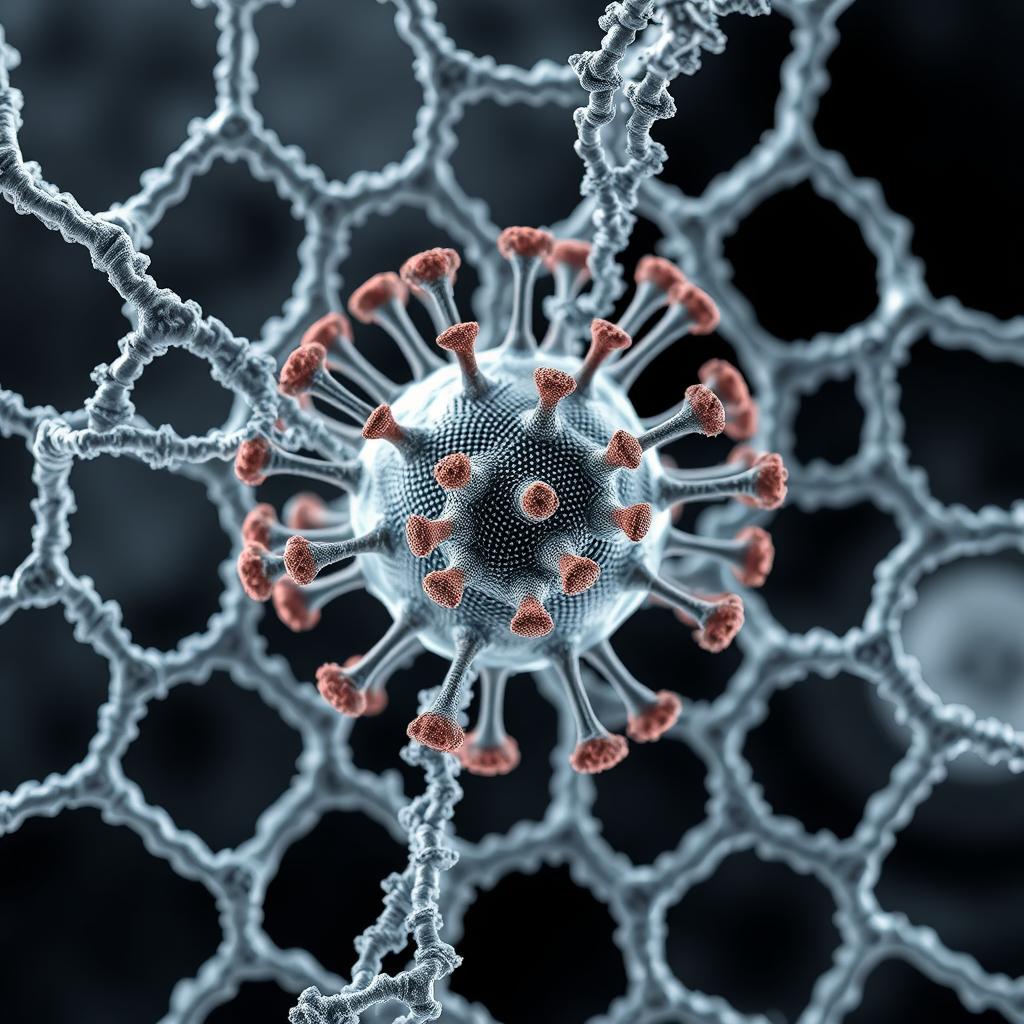
Discovery of the Actin Bundling Virus (ABV): a hexagonal lattice trap Using cryogenic electron microscopy (cryo‑EM) structural analysis, the investigators revealed that AAV2 capsids directly and physically bind to intracellular actin filaments. Rather than being passive cargo that merely rides actin tracks, AAV2 actively bundles multiple actin filaments into a highly periodic hexagonal lattice. Thus, AAV2 represents the first identified member of a new class, the actin‑bundling viruses (ABV). This potent bundling activity entraps capsids within the cytoplasmic actin meshwork, providing the fundamental mechanism for peri‑nuclear stalling and accumulation of vectors.
-
Capsid surface engineering: bypassing the actin trap and revolutionizing nuclear trafficking kinetics Guided by the cryo‑EM–derived structural data, the team identified the key amino‑acid residues at the AAV2 capsid surface that directly contact actin filaments. Precise targeting of this interface enabled the design of capsid surface mutants that abrogate actin binding. The engineered AAV2 variants completely lost actin‑bundling activity, resulting in rapid, unimpeded transport to the nuclear envelope via canonical pathways such as microtubules. Unnecessary peri‑nuclear cytoplasmic accumulation was also fundamentally eliminated.
-
Milestone for low‑dose, high‑efficacy next‑generation capsid design and acquisition of preclinical biomarkers The impact of this work on the gene‑therapy field stems from a paradigm shift in AAV capsid engineering—from merely enhancing cell‑surface receptor affinity to actively dismantling intracellular trafficking barriers. Incorporating capsid architectures that lack actin‑binding capability dramatically increases nuclear entry efficiency at the same administered dose, enabling a reduction of the required vector amount by orders of magnitude. This not only mitigates chronic immunogenic and toxic risks but also creates a disruptive cost advantage for manufacturing. Moreover, the study establishes a top‑priority genotoxicity assessment metric for future AI‑driven capsid‑screening pipelines.
Adeno-associated virus (AAV) capsids are important gene therapy vectors, allowing for the one-time treatment of monogenetic disorders, with durable gene expression lasting for years. However, despite the clinical success of AAV usage, low transduction efficiencies require high dosage to achieve therapeutic efficacy, resulting in prohibitive costs and rare, but life-threatening immune responses. One key knowledge gap is how the capsids traffic to the nucleus following endocytosis. Here, we identify a direct interaction between AAV2 and actin filaments. Our results show that AAV2 bundles multiple actin filaments in a highly periodic hexagonal lattice. Therefore, we propose that AAV2 is the founding member of a new class of actin binding proteins, the actin bundling viruses (ABVs). Using cryogenic electron microscopy, we determined the structure of AAV2-actin filaments, identified the interaction interfaces, and engineered capsid variants that no longer bundle actin. Together, our results suggest that the AAV2-actin interaction may be responsible for trapping capsids and mediating peri-nuclear accumulation. Overall, this interaction expands the current understanding of AAV2 biology and offers new directions for capsid engineering.
This dataset provides the first Cryo‑EM‑level proof that AAV intrinsically perturbs the cellular cytoskeleton via ABV activity, thereby overcoming capsid design limitations at the hardware level. It includes a structural‑biology interface map that governs intracellular trafficking kinetics, offering a uniquely valuable training dataset for next‑generation tissue‑specific capsid optimization algorithms and AI‑based vector‑behavior simulation engines.