Potential for Parkinson's Gene Correction Highlighted Using CRISPR
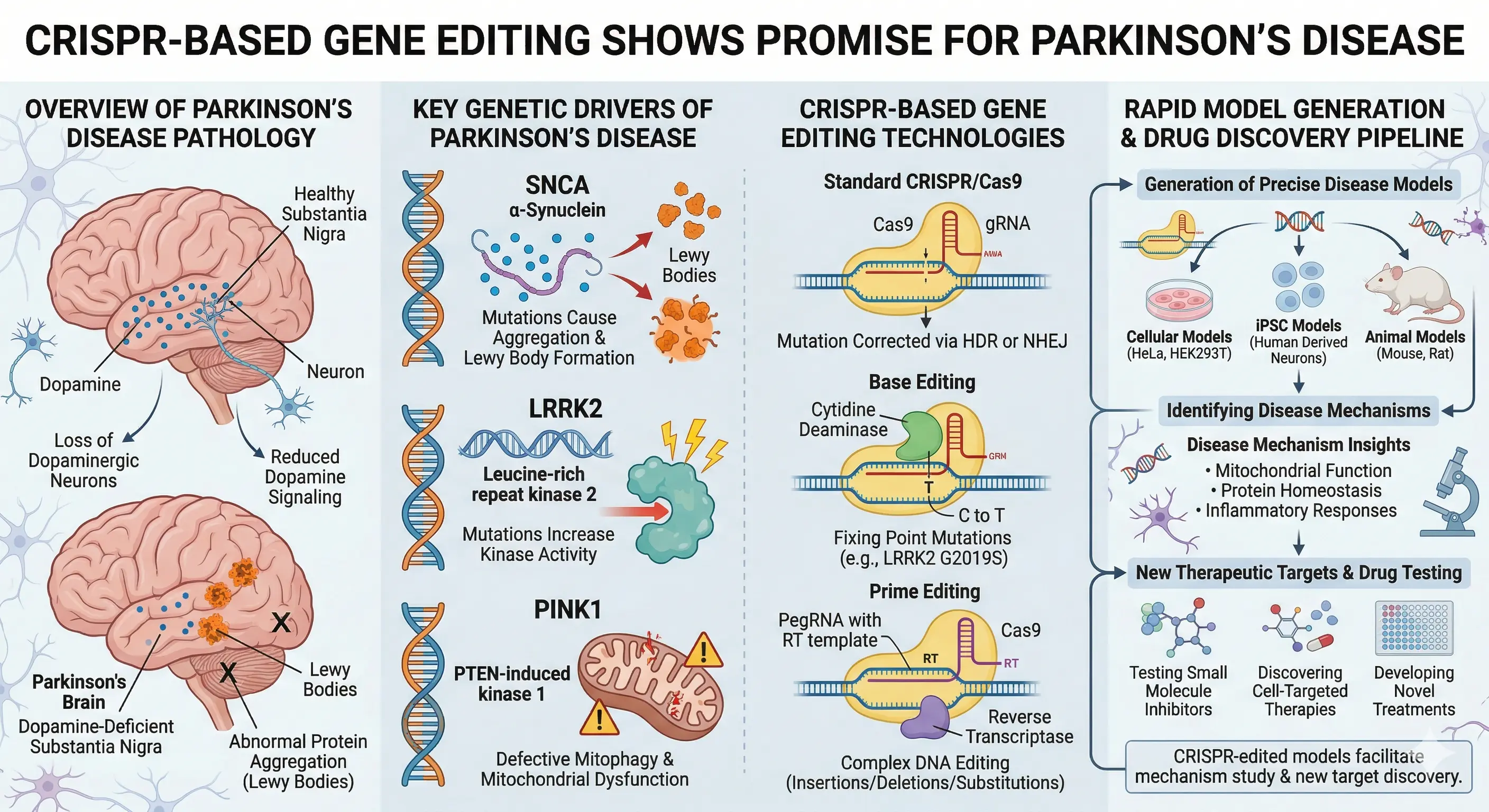
Parkinson's disease arises from the degeneration of dopamine neurons, often due to mutations in genes like SNCA, LRRK2, and PINK1. Advances in CRISPR-based prime editing and base editing have enabled precise correction of these genetic mutations, facilitating the rapid development of cell, animal, and iPSC models. These models significantly aid in understanding disease mechanisms and identifying novel therapeutic targets.
Parkinson's disease (PD) manifests with both motor and non-motor symptoms due to the progressive loss of dopamine-producing neurons in the substantia nigra. While symptomatic treatments show promise, there remains no effective therapy to stop or reverse disease progression. Genes such as SNCA, LRRK2, and PINK1 are pivotal in PD etiology due to their mutations driving both familial and sporadic forms of the disease. The CRISPR-Cas9 system, a revolutionary genome-editing tool, offers precise genetic modification capabilities crucial for advancing PD research and therapy. Recent studies emphasize the efficacy and precision of prime editing and base editing techniques in gene modification within PD contexts. This review synthesizes recent advancements in utilizing CRISPR to develop PD models, focusing on their roles in elucidating disease pathways and discovering new therapeutic avenues. These models encompass isogenic cell lines, transgenic animals, and induced pluripotent stem cells (iPSCs). The review underscores the potential of CRISPR-based approaches to address PD-related mutations, regulate pathogenic gene expression, and develop neuroprotective strategies targeting critical processes like mitochondrial dysfunction. Additionally, it critically assesses the transformative potential and challenges associated with translating CRISPR technologies into clinical applications for PD treatment.
Opens the possibility to halt or reverse Parkinson's progression through gene correction