Piezoelectric toothbrush bristles generate power from brushing pressure to remove oral biofilm by inducing reactive oxygen species
Background
Daily brushing is a fundamental method for preventing oral diseases. Traditional toothbrushes have relied on the physical friction of nylon micro-bristles and surfactants in toothpaste to scrape plaque from tooth surfaces. The problem is that biofilms, formed by clustered bacteria, adhere strongly to tooth enamel and gum crevices. Simple friction is insufficient to dislodge pathogens settled in microscopic gaps, and excessive brushing to increase cleaning power can lead to side effects like gum damage or tooth abrasion.
Electric toothbrushes equipped with vibration motors remain limited to assisting physical reciprocating motion, while chemical oral cleansers carry the risk of indiscriminately killing beneficial oral flora or inducing resistance with long-term use. According to WHO statistics, a significant portion of the adult population suffers from periodontitis and dental caries. Thus, there was an urgent need for new oral care technology capable of effectively controlling biofilms through routine brushing motions.
Key Findings
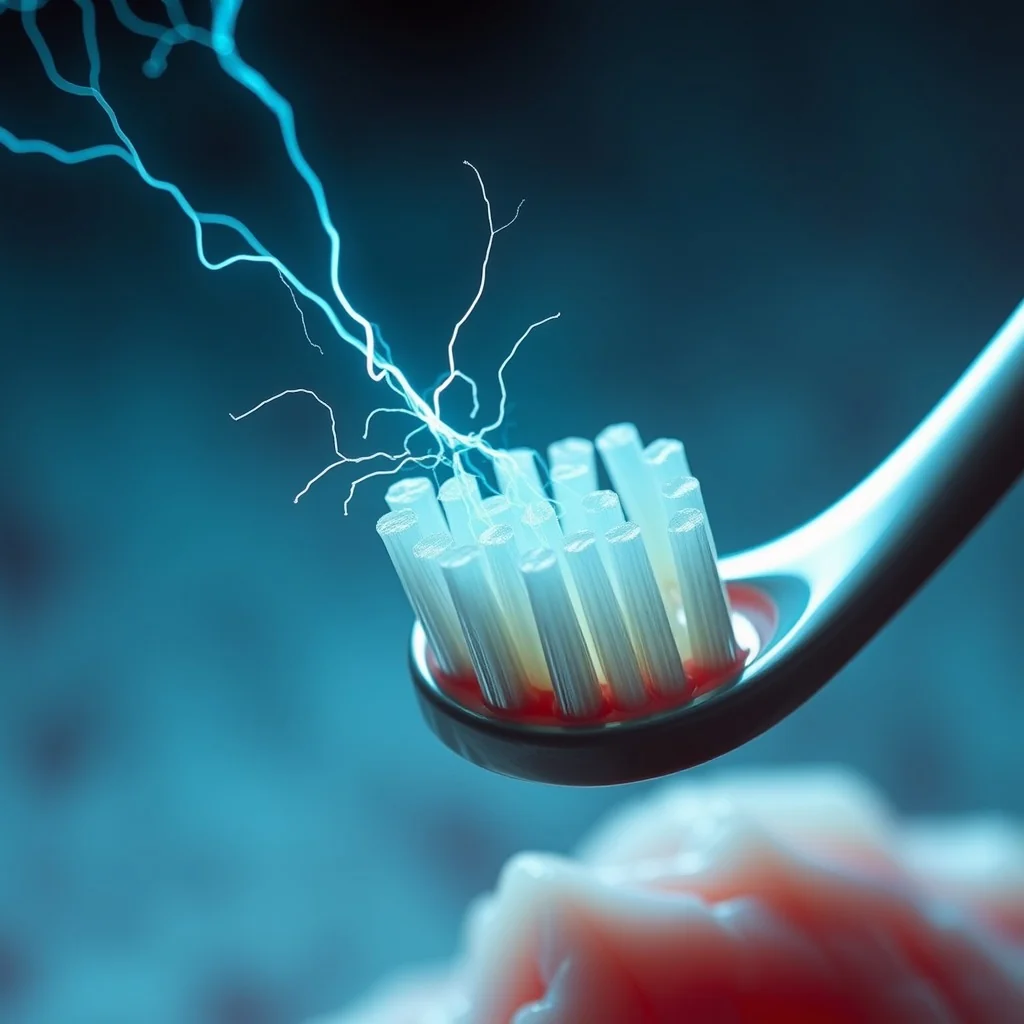
A research team from Peking University, China, focused on piezoelectric materials that convert mechanical force into electrical energy. Instead of conventional nylon fibers, the researchers fabricated bristles using polyvinylidene fluoride (PVDF), a biocompatible piezoelectric polymer. This was designed to induce micro-electrical polarization whenever the bristles bend and straighten upon contact with the tooth surface during brushing.
The operating principle is based on precise electrochemical reactions. During brushing, the microcharges generated from the PVDF bristles react with moisture and oxygen in saliva to induce the production of reactive oxygen species (ROS). The generated ROS targets Streptococcus mutans (S. mutans), a cavity-causing bacterium, and Porphyromonas gingivalis (P. gingivalis) was shown to oxidize the cell membrane, thereby destroying its structure. It fundamentally inhibits biofilm formation by penetrating into the bacterial cells and causing damage to genetic material.
A three-month randomized controlled trial (RCT) conducted by the researchers clearly supports this efficacy. The experimental group using the self-generating piezoelectric toothbrush showed a significantly reduced amount of plaque formation compared to the control group using regular nylon brushes. Clear improvements were also observed in the frequency of gum bleeding and gingivitis indicators compared to the control group. The study demonstrated that the technology not only achieves sterilization through hand movements without a separate battery but also prevents bacterial contamination by utilizing the micro-charges remaining on the bristle surfaces after use.
Significance and Outlook
This research is recognized for demonstrating the feasibility of self-powered healthcare devices in everyday items, eliminating the need for external power grids or rechargeable batteries. This is because it alleviates the environmental burden of existing electric toothbrushes, which involve battery waste and motor noise, while overcoming the limited sterilization efficacy of manual toothbrushes. From a clinical preventive dentistry perspective, the convenience of preventing cavities and periodontal disease without changing brushing habits holds high practical value.
This technology holds potential for expansion beyond oral care into general medical devices. Broader applications are being discussed for these materials, including coatings for dental implant surfaces prone to frequent biofilm contamination, orthodontic wires, and anti-infection materials for catheters or artificial joints implanted in the body. This enables the design of biocompatible defensive barriers that convert mechanical pressure from body movement or blood flow into micro-antibacterial currents.
There are indeed realistic barriers that must be overcome before reaching a stable commercialization stage. Securing a mass-production process for high-cost piezoelectric polymer materials at a unit price comparable to that of conventional nylon is identified as an essential challenge. Along with verifying durability—ensuring piezoelectric performance does not degrade after long-term exposure to moisture and friction—precise safety evaluations are required to ensure that locally generated ROS do not cause long-term irritation to the oral mucosa.
Nature, Published online: 05 November 2026; doi:10.1038/d41586-026-03596-w A manual toothbrush cleans by generating a bacteria-killing electrical charge. Plus, what ‘historic’ US midterm results mean for science and a genetics lab run by AI-powered robots.
Self-generating piezoelectric toothbrush bristle technology has sufficient potential to drive substantial changes across dental clinical practice and the oral hygiene industry. In particular, it could be prioritized for oral care programs targeting elderly or critically ill patients who have difficulty with meticulous toothbrushing, as well as pediatric patients with immature fine motor skills. In dental clinics, it is highly recommended as a preventive treatment tool that provides chemical sterilization assistance without physical pressure for patients with orthodontic appliances or those whose brushing is restricted after periodontal surgery.
From an industrial perspective, it is advantageous for building an eco-friendly premium toothbrush lineup that excludes complex electronic circuits and lithium batteries. It is highly likely to emerge as an eco-friendly alternative in the electric toothbrush market, which has been mass-producing plastic waste and electronic waste with every bristle replacement cycle. Establishing a method that combines PVDF piezoelectric fiber bristle implantation with existing toothbrush injection molding processes is expected to create a new market category of high-functionality sanitary daily necessities while minimizing increases in manufacturing costs.