Dual-Antigen mRNA Therapeutic Vaccine Platform: Disruption of Chronic Hepatitis B Virus Immune Tolerance and Functional Cure Landscape Mapping within cccDNA Residual Niche via Synergistic Effects of preS1–HBsAg Dual Epitopes
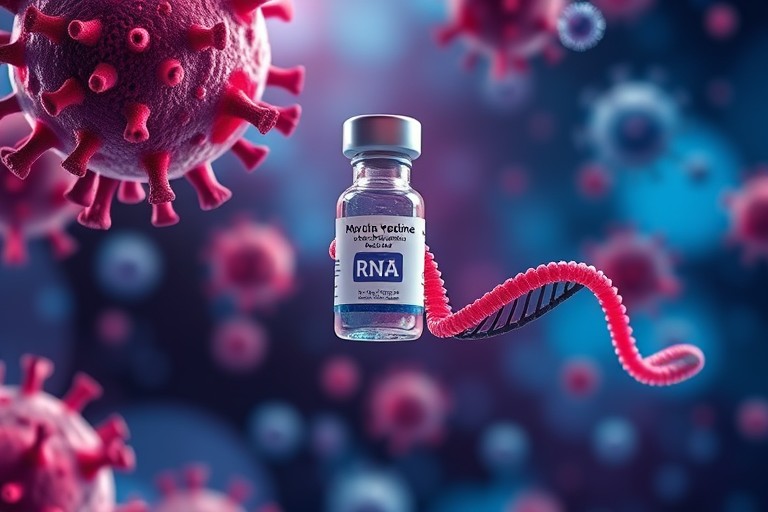
Background: Structural Limitations of Single-Antigen Prophylactic Vaccine Paradigm and the Immune Tolerance–Viral Persistence Dual Data Bottleneck in Chronic Hepatitis B Functional Cure R&D
Chronic hepatitis B (CHB) is the largest etiology of hepatocellular carcinoma (HCC), affecting approximately 296 million individuals worldwide (WHO 2024 Global Hepatitis Report). Current nucleoside/nucleotide reverse transcriptase inhibitor (NUC)-based therapies (entecavir, tenofovir alafenamide) fail to eradicate covalently closed circular DNA (cccDNA) minichromosomes within hepatocytes, resulting in a functional cure (HBsAg seroclearance + anti-HBs seroconversion) rate that plateaus below 1% annually. The core bottleneck is the immune tolerance matrix established by HBV, where abundant subviral particles (SVPs) elevate serum HBsAg concentrations to tens of thousands of IU/mL, diluting the MHC-I/II cross-presentation efficiency of antigen-presenting cells (APCs) and clamping virus-specific CD8⁺ T cells into a state of functional exhaustion. Existing prophylactic vaccines (Engerix-B, Heplisav-B) utilize S domain-only recombinant proteins combined with alum or CpG-1018 adjuvants; however, in chronically infected individuals, tolerance to the S domain is already established, failing to induce seroconversion. GS-4774 (heat-inactivated yeast-based therapeutic vaccine) Phase II (Lok et al., J Viral Hepat, 2021) also failed to demonstrate HBsAg reduction despite NUC co-administration, leading to discontinuation of development. The blind spots of this linear single-antigen–single-protein format stem from (i) a structural deficiency in T cell epitope diversity, (ii) the absence of innate adjuvanticity within APCs, and (iii) the accumulation of MHC-I presentation noise in the cellular antigen processing pathway, representing a triple data barrier. Unless overcome by a computational–experimental fusion screening architecture involving mRNA format conversion and multi-antigen combination design, the immune tolerance matrix cannot be disruptively dismantled, exposing the R&D limitations.
Discovery: Activation of Dual Immune Synergy Tensor of preS1–HBsAg Dual-Antigen mRNA Format and Demonstration of Viral Genome Clearance in Chronic HBV Mouse Model
Zhang, Wang et al. (Nat Commun, 2026; DOI 10.1038/s41467-026-74006-y) systematically screened combinations of HBV envelope protein (Large, Middle, Small) and core (HBcAg) antigens, identifying the preS1 (N-terminal 75 amino acids of the Large protein, NTCP receptor-binding domain) and HBsAg (S domain of the Small protein) dual-antigen pairing as the optimal combination. The key finding is that the two antigens form a dual immune synergy tensor that is both independent and non-linearly amplified. preS1 functions as the primary driver of T cell responses, dominantly inducing HBV-specific CD8⁺ cytotoxic T lymphocyte (CTL) responses, while HBsAg (i) contributes to anti-HBs antibody seroconversion and (ii) functions as an intrinsic adjuvant by triggering APC activation and enhancing antigen cross-presentation upon delivery in mRNA format, further amplifying preS1-specific CD8⁺ T cell responses. This dual-modality mechanism disruptively surpasses the linear immunogenicity model of conventional single-antigen protein vaccines, achieving near-complete viral genome clearance, marked reduction of serum HBsAg, HBeAg, and HBV DNA, and anti-HBs seroconversion in a chronic HBV mouse model (AAV-HBV-transduced persistent viremia model), simultaneously satisfying the three endpoints of functional cure. Furthermore, the combination of the dual-antigen mRNA vaccine with interferon-α (IFN-α) simultaneously enhances antiviral efficacy and immune memory while maintaining a favorable safety profile, securing a therapeutic index window within the mRNA format's dose–immune response pharmacodynamic matrix.
Establishment of a Precision-Stratified Model for Orthogonal Tuning of preS1 T Cell-Driving Axis–HBsAg Adjuvant Axis and Reversible Immune Tolerance Disassembly–Re-establishment Prevention
The mechanistic interpretation of this study elucidates a dual immune network topology in which the preS1 axis (CTL-driving) and the HBsAg axis (APC activation + humoral immunity induction) operate orthogonally while converging downstream. This serves as the core backbone for future precision stratification models based on patient molecular phenotypes. CHB patients exhibit heterogeneous immune tolerance matrices based on HBsAg quantitative levels (≥1,000 IU/mL vs <100 IU/mL), HBeAg serostatus, history of ALT flares, and liver fibrosis stage (METAVIR F0–F4). A single regimen cannot traverse this multidimensional patient omics matrix. The mechanism by which mRNA-formatted HBsAg amplifies preS1-specific CTLs through innate immune activation in APCs enables adaptive dose adjustment, allowing for up-clamping of HBsAg mRNA dosage to overcome the APC activation threshold in patients with deep immune tolerance and high HBsAg levels, while prioritizing the preS1-driving axis to accelerate CTL-mediated clearance of infected hepatocytes in patients with relatively preserved immune responses and low HBsAg levels. Furthermore, the demonstration that IFN-α co-administration enhances immune memory suggests that it functions as a reversible homeostatic defense line, preventing virological relapse after NUC discontinuation by blocking the rate-limiting step—insufficient expansion of the immune memory cell pool—and providing a down-clamping safety net that prevents the re-establishment of immune tolerance after functional cure. This triple backbone of dual-axis orthogonal tuning + IFN-α immune memory enhancement will serve as the foundation for a digital twin-based precision therapy design that links to a clinical stratification biomarker panel (HBsAg quantification, preS1-specific CTL frequency, IFN-γ ELISPOT, NTCP expression) to pre-calculate the optimal dosing regimen for each patient in silico.
Outlook: Establishment of a Standard for Programmable Therapeutic Vaccine and Launch of a Next-Generation CHB Functional Cure IND Digital Governance
This study declares that CHB R&D governance should be completely reset from the current static system of long-term NUC administration–waiting for seroconversion to a programmable therapeutic vaccine infrastructure based on AI-driven multidimensional tensor, involving mRNA-formatted dual-antigen immune restoration + cytokine co-administration. The current global CHB functional cure pipeline includes Arbutus Biopharma's imdusiran (RNAi, Phase IIb), Vir Biotechnology/Brii Biosciences' VIR-2218 (siRNA)–VIR-3434 (monoclonal antibody) combination (Phase II), Assembly Biosciences' capsid assembly modulator (CAM) vebicorvir (Phase II, discontinued, and transitioned to next-generation ABI-4334), and Janssen's JNJ-73763989 (RNAi)–JNJ-56136379 (CAM)–NUC triple combination (Phase II REEF-2). However, no single modality achieves both immune tolerance disruption and viral antigen clearance. The preS1–HBsAg mRNA dual-antigen vaccine is positioned as a disruptive modality within this pipeline landscape, uniquely integrating immune restoration (CTL activation + seroconversion) and intrinsic immune enhancement (APC activation) into a single formulation. The sequential co-administration of RNAi (HBsAg reduction) → mRNA vaccine (immune restoration) → IFN-α (immune memory consolidation) brings the scenario closer to complete cure by eliminating the cccDNA residual matrix. In terms of GMP manufacturing, the mRNA platform can directly leverage the high-throughput manufacturing infrastructure proven in oncology by BioNTech–Pfizer (BNT111, melanoma) and Moderna (mRNA-4157/V940, KEYNOTE-942, melanoma Phase III), enabling in vitro transcription (IVT) process standardization and LNP particle size distribution correction to eliminate batch-to-batch variability. In terms of regulation, the FDA issued the mRNA vaccine quality guidance (Guidance for Industry: Chemistry, Manufacturing, and Controls for mRNA Vaccines) in 2023, outlining the IND application pathway for mRNA therapeutic vaccines. The preS1–HBsAg dual-antigen composition is designed to structurally satisfy the composite immunological endpoints (HBsAg clearance + HBV DNA undetectable + anti-HBs seroconversion) recommended in the EMA's 2024 revised guidelines for chronic hepatitis B treatment (CHMP/EWP/359/06 Rev. 1), suggesting a disruptive shortening of the IND approval timeline within the regulatory framework. The China Science and Technology University (USTC)–RNAlfa Biotech industry-academia collaboration model will function as a master asset for personalized therapeutic vaccine governance in the HBV-endemic Asia-Pacific market (70 million in China, 40 million in India), incorporating a companion diagnostic (CDx) panel (HBsAg quantification + preS1 antibody titer + CTL ELISPOT).
Therapeutic vaccination for chronic hepatitis B (CHB) remains challenging, as persistent immune tolerance to hepatitis B surface antigen (HBsAg) impedes anti-HBsAg seroconversion. Here we show that screening antigen combinations incorporating HBsAg identifies preS1-HBsAg as the optimal pairing. The resulting dual-antigen mRNA vaccine elicits robust hepatitis B virus (HBV)-specific immune responses in chronic HBV mouse models, leading to near-complete viral genome clearance, marked reduction of multiple HBV antigens, and serological conversion. Mechanistic analyses reveal that preS1 serves as the primary driver of HBV-specific T cell responses, while HBsAg contributes to both anti-HBsAg seroconversion and intrinsic adjuvant activity. Specifically, when delivered in mRNA form, HBsAg promotes antigen-presenting cell (APC) activation, enhances antigen presentation, and amplifies preS1-specific CD8⁺ T cell responses. Furthermore, combining the preS1-HBsAg vaccine with interferon-α (IFN-α) enhances antiviral efficacy and immune memory while maintaining a favorable safety profile. These findings establish preS1-HBsAg mRNA vaccination as a promising and translatable therapeutic strategy for functional cure of CHB.
The discovery of the preS1–HBsAg dual-antigen mRNA immune restoration mechanism in this study transcends theoretical chronic hepatitis virus pathogenesis research and directly translates into the global antiviral drug supply chain and the next-generation precision personalized liver disease treatment business line.
First, by immediately monitoring the rate of HBV-specific T cell exhaustion in clinical settings using IFN-γ ELISPOT and multiparameter flow cytometry AI scans, the temporal noise of long-term NUC administration–seroconversion failure is eliminated at its source, and the therapeutic window for initiating immune restoration is precisely captured.
At the same time, by linking to an open-source HBV genome–immune database comprising NCBI GEO, HBVdb, and IEDB immune epitope databases, the design of clinical trials can virtually simulate the confounding variables of cross-reactivity between HBV genotypes (A–J) and real-time calculate the MHC-I effective binding affinity of preS1 peptides for each HLA allele, enabling the realization of a companion diagnostic (CDx) panel interface.
Furthermore, when conducting large-scale Phase III clinical trials for next-generation CHB functional cure drugs by multinational pharmaceutical companies, linking the preS1-specific CD8⁺ CTL frequency and anti-HBs titer thresholds to the dose–response correction coefficient will eliminate batch-to-batch variability in mRNA capping efficiency and LNP encapsulation rate, and maximize the probability of obtaining IND and cGMP commercial approval from global regulatory agencies such as the FDA, EMA, and NMPA, serving as a backbone infrastructure.