Genome analysis reveals 90-year domestication history of pathogenic bacteria; Botulinum bacteria discard 80 genes to become Botox factories
Background
Clostridium botulinum, which thrives in wild soil and decaying canned goods, has long been considered one of the most lethal bacteria in human history. The botulinum neurotoxin (BoNT) secreted by this anaerobic bacterium exhibits potent neurotoxic paralysis, capable of killing an adult with just a few dozen nanograms. Since being identified as the primary cause of canned food poisoning in the 19th century, this bacterium has long been an object of fear for humanity.
The reversal occurred in the mid-20th century when the neuromuscular blocking mechanism was applied to the treatment of muscle spasms and cosmetic procedures. Once its ability to block neurotransmitter secretion at micro-doses was proven, botulinum toxin was transformed into a wrinkle reducer and a treatment for intractable neurological diseases. Today, the production base for Botox, which is consumed on a multi-billion-dollar scale worldwide, is this very bacterium.
However, it remains unclear how wild, highly pathogenic strains have come to be established as high-efficiency production tools in strict pharmaceutical manufacturing facilities. Bacteria in their natural habitats produce spores with robust outer walls and maintain complex metabolic genes for survival. In contrast, strains used in pharmaceutical facilities should rapidly grow in culture media and uniformly secrete large quantities of toxins. The researchers aimed to trace the lineage from early strains isolated at U.S. military research facilities in the 1940s to modern pharmaceutical strains, thereby identifying the trajectory of adaptations imprinted on the genome by human culture environments.
Key Findings
The researchers conducted a comparative analysis of the whole genomes of the Army Hall A (AHA) lineage, which was isolated by the U.S. Army in 1942, and the Hall A-hyper strain used for modern pharmaceutical production. The strain, which had been serially cultured in the laboratory for decades, had accumulated nearly 100 genetic variations compared to the wild type. This is data that clearly shows the strain followed its own evolutionary trajectory in a controlled environment.
The trigger for this evolution was pulled by the mutS gene, which is responsible for the DNA mismatch repair system. A nonsense mutation occurred in this gene, resulting in the complete loss of DNA repair function. Consequently, a hypermutator phenotype was induced, where the mutation rate soared explosively compared to typical strains. While this defect would have led to elimination in nature, in nutrient-rich culture media, it acted as an engine to rapidly increase genetic diversity.
Amid accelerated mutations, the strain boldly shed the genetic burdens necessary for wild survival. More than 80 genes possessed by the wild-type strain were lost or inactivated. A representative lost trait is the ability to form spores, which is essential for surviving harsh environments. The HA lineage was modified such that its spore regulation pathway collapsed, preventing the formation of dormant spores.
The strain, with reduced spore formation and metabolic waste, was rewired to channel surplus resources into BoNT synthesis. In cultivation competition experiments, the domesticated strain exhibited growth fitness that significantly surpassed that of the wild type under standard laboratory conditions. It has essentially transformed into a pharmaceutical-exclusive microbe that has abandoned its wild adaptability as an independent organism, focusing solely on producing the target toxin in an environment provided by humans.
Significance and Outlook
Just as wolves evolved into dogs over thousands of years, genomic evidence proves that lethal pathogens have been domesticated under human influence. In particular, the loss of spore-forming ability—a key factor for wild survival and transmission—means that natural reproduction would be extremely difficult in the event of an accidental environmental release, earning positive evaluation from a biosafety perspective.
The challenges are also clear. A strain maintaining a hypermutator state due to mutS deficiency is highly likely to accumulate unwanted mutations with repeated subculturing. This acts as a factor that increases variability in manufacturing process quality, such as batch-to-batch yield differences or the occurrence of impurity proteins.
Therefore, future research will focus on synthetic biology-based precision control to maintain high productivity while stabilizing mutation rates. By elucidating the principles of pathogen domestication, humanity has set a scientific milestone for handling toxins with greater precision and safety.
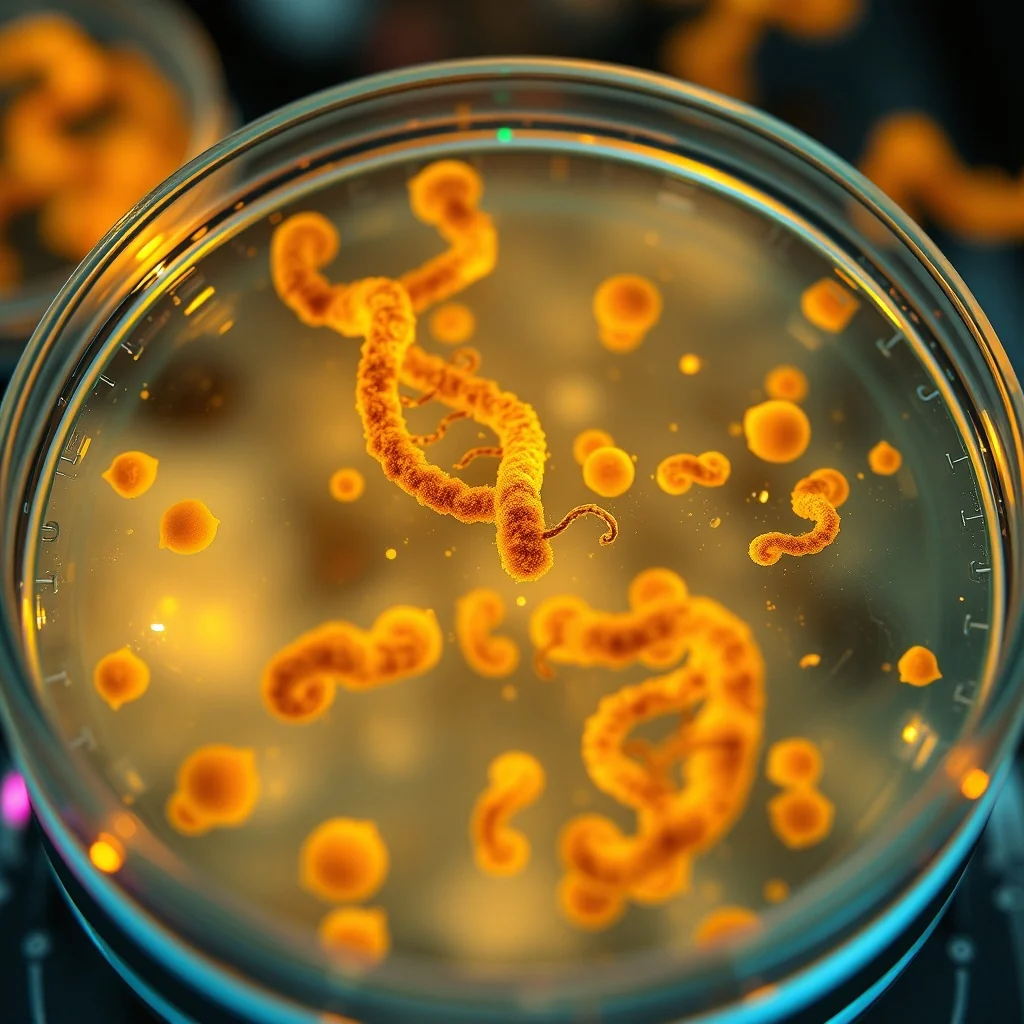
Genome analysis shows how decades of lab cultivation turned C. botulinum, the canned-food killer, into a potent tool for medicine and the beauty industry
This discovery provides practical grounds for fundamentally reforming the Quality Control (CMC) system in botulinum toxin product manufacturing processes. In existing biopharmaceutical processes, strain stability was attempted to be ensured solely by managing the number of passages in the Master Cell Bank (MCB) and Working Cell Bank (WCB). However, since the production strain possesses hypermutator characteristics, it is necessary to constantly verify the presence or absence of mutations in toxin gene clusters and metabolic regulatory sites by periodically applying Next-Generation Sequencing (NGS) to every production batch. Furthermore, in the production of therapeutic agents requiring high-purity neurotoxins for conditions such as facial spasms, strabismus, and migraines, the risk of titer non-uniformity between batches can be minimized by preemptively preventing genetic variations induced by culture conditions. This is expected to be directly utilized in advancing the legal regulatory standards and production authorization guidelines for botulinum toxin-producing strains based on data.