Periodontal bacteria toxin gingipain penetrates the blood-brain barrier and induces a degenerative cascade in Alzheimer's and Parkinson's diseases
Background
Alzheimer's disease (AD) and Parkinson's disease (PD), which cause dementia, are neurodegenerative diseases that place the greatest socioeconomic burden on patients and their families in modern aging societies. The academic community has focused on identifying modifiable risk factors that can prevent or slow the progression of these diseases. Recently, chronic inflammatory oral disease, periodontitis, has emerged as a potential risk factor.
However, the specific molecular mechanisms by which periodontitis induces degenerative changes in distant brain tissue have not been clearly elucidated. Previous studies have generally shown epidemiological associations or only indirect effects of systemic inflammation. In this study, the researchers focused on gingipain, a specific protein-degrading enzyme secreted by Porphyromonas gingivalis, a key bacterium that causes periodontitis, and revealed the direct pathway by which it induces neurodegeneration.
Key Findings
A large-scale meta-analysis revealed that patients with periodontitis had a 1.2- to 3.5-fold higher risk of developing AD and PD compared to the general population. In fact, gingipain toxin was detected in more than 85-90% of postmortem AD and PD brain tissues, which was associated with abnormal accumulation of tau protein and alpha-synuclein, brain inflammation, and neuronal cell death.
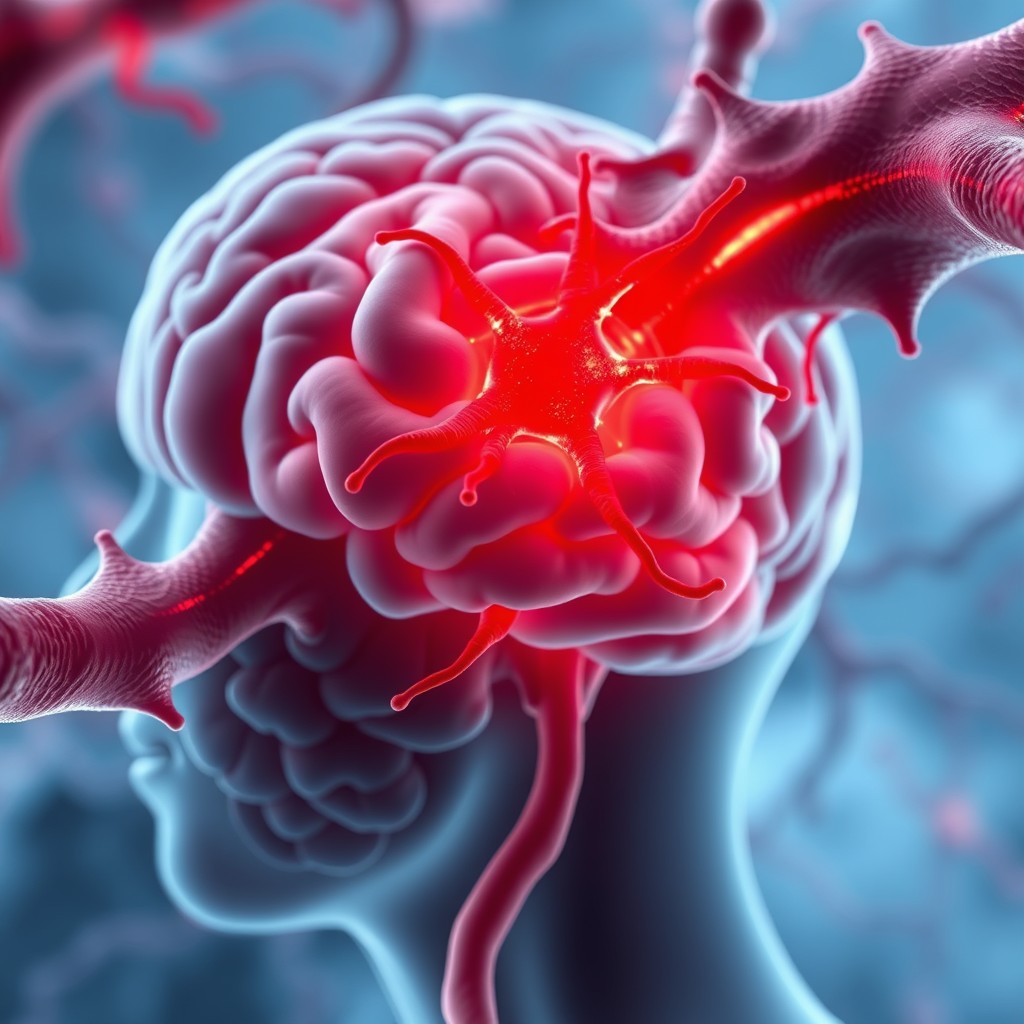
Cellular and animal model studies clearly demonstrated the specific molecular mechanisms by which gingipain penetrates the brain and promotes neurodegeneration. First, gingipain was found to degrade tight junction proteins, which are intercellular adhesion proteins, thereby disrupting the integrity of the blood-brain barrier (BBB). As the barrier breaks down, gingipain entering the brain stimulates microglia and astrocytes, activating the NF-κB and NLRP3 inflammatory signaling pathways, leading to chronic brain inflammation.
The destructive power of the toxin does not stop there. Gingipain was found to act as a catalyst, promoting the aggregation of amyloid-beta (Aβ) and alpha-synuclein. In addition, it induces abnormal cleavage and hyperphosphorylation of tau protein and causes oxidative damage to mitochondria, thereby triggering a vicious cycle of neurotoxicity.
Notable progress has also been made in the field of diagnostic technology. A test that measures the activity of gingipain in saliva is considered a promising next-generation biomarker candidate because it is both simple and highly sensitive. The researchers expect that this test will show better early risk prediction ability than conventional blood or cerebrospinal fluid-based analyses in patients at the early stages of symptom onset.
Significance and Prospects
This elucidation of the mechanism goes beyond simple disease prevention and leads to the development of new drug strategies that delay neurodegeneration by treating oral diseases. In clinical practice, the development of small-molecule inhibitors that inhibit gingipain is already underway. The primary drug, atuzaginstat (development name COR388), did not meet the primary endpoint in the Phase 2/3 GAIN study, but it showed significant efficacy in slowing cognitive decline in patients with P. gingivalis-positive results. Currently, the next-generation inhibitor LHP588 is in Phase 2 SPRING study to verify its efficacy, and efforts are also being made to combine it with advanced technologies to improve drug delivery efficiency.
Notably, nanotechnology is being used to maximize the permeability of the blood-brain barrier, and CRISPR technology is being used to eliminate the toxic genes of P. gingivalis. However, to demonstrate actual therapeutic efficacy in clinical trials, there remains the challenge of establishing the precise timing between toxin secretion blockade and neuronal cell protection. The fact that the oral environment of elderly patients varies and that systemic inflammation is complex is also an important clinical hurdle to overcome.
Chronic periodontitis, driven by Porphyromonas gingivalis, has emerged as a modifiable risk factor for Alzheimer's disease (AD) and Parkinson's disease (PD) the two most prevalent and socioeconomically burdensome neurodegenerative disorders through systemic dissemination of its signature cysteine proteases, gingipains (RgpA, RgpB, Kgp). This narrative critical review is explicitly scoped to AD and PD, the only neurodegenerative conditions for which postmortem detection of gingipains in affected brain regions, mechanistic evidence from cellular and animal models, and clinical epidemiological data currently exist in sufficient depth to support an integrated synthesis. Robust meta-analyses confirm that periodontitis is associated with elevated AD/PD risk (OR/HR 1.2-3.5), while gingipains have been detected in a high proportion (>85-90%) of postmortem AD/PD brains, correlating with tau/α-synuclein pathology, neuroinflammation, and neuronal loss. Mechanistic studies in cellular and animal models demonstrate that gingipains can disrupt blood-brain barrier integrity via tight-junction cleavage, trigger NF-κB/NLRP3-driven glial activation, catalyse amyloid-β/α-synuclein seeding, induce tau truncation/hyperphosphorylation, and precipitate mitochondrial oxidative damage, thereby generating self-amplifying neurotoxic cascades. Salivary gingipain activity offers a non-invasive, high-sensitivity biomarker candidate for early risk stratification that may outperform conventional fluid markers in prodromal cohorts. Therapeutically, small-molecule gingipain inhibitors have shown neuroprotective effects in preclinical models (e.g., atuzaginstat/COR388 failed primary endpoints in the Phase 2/3 GAIN trial but demonstrated subgroup benefits in P. gingivalis-positive participants; the next-generation inhibitor LHP588 is advancing in the Phase 2 SPRING trial). Emerging approaches including nanotechnology, CRISPR-based virulence gene disruption, and targeted delivery platforms aim to improve
This study has laid the foundation for precision medicine in which individuals at risk of dementia and Parkinson's disease can be screened and intervened early through dental examinations. For example, it is possible to collect a patient's saliva during scaling or implant treatment at a general dental clinic and test the activity of gingipain using a rapid diagnostic kit. In patients with high toxin levels in the diagnostic results, a customized gum treatment and preemptive administration of small-molecule compounds that target gingipain can be used to inhibit brain dysfunction from the early stages. This means that neurodegenerative diseases can be conveniently managed on a daily basis without expensive positron emission tomography (PET) or painful cerebrospinal fluid collection tests. As a result, it is expected that the quality of life in old age can be protected and social care costs can be significantly reduced.