Tailored CRISPR Epigenetic Editing Technology for Bone Regeneration: Demonstrating Genomic Integrity and Controlling Mesenchymal Stem Cell Osteogenic Differentiation via Activation of a dCas9 Fusion Transcriptional‑Regulation Platform
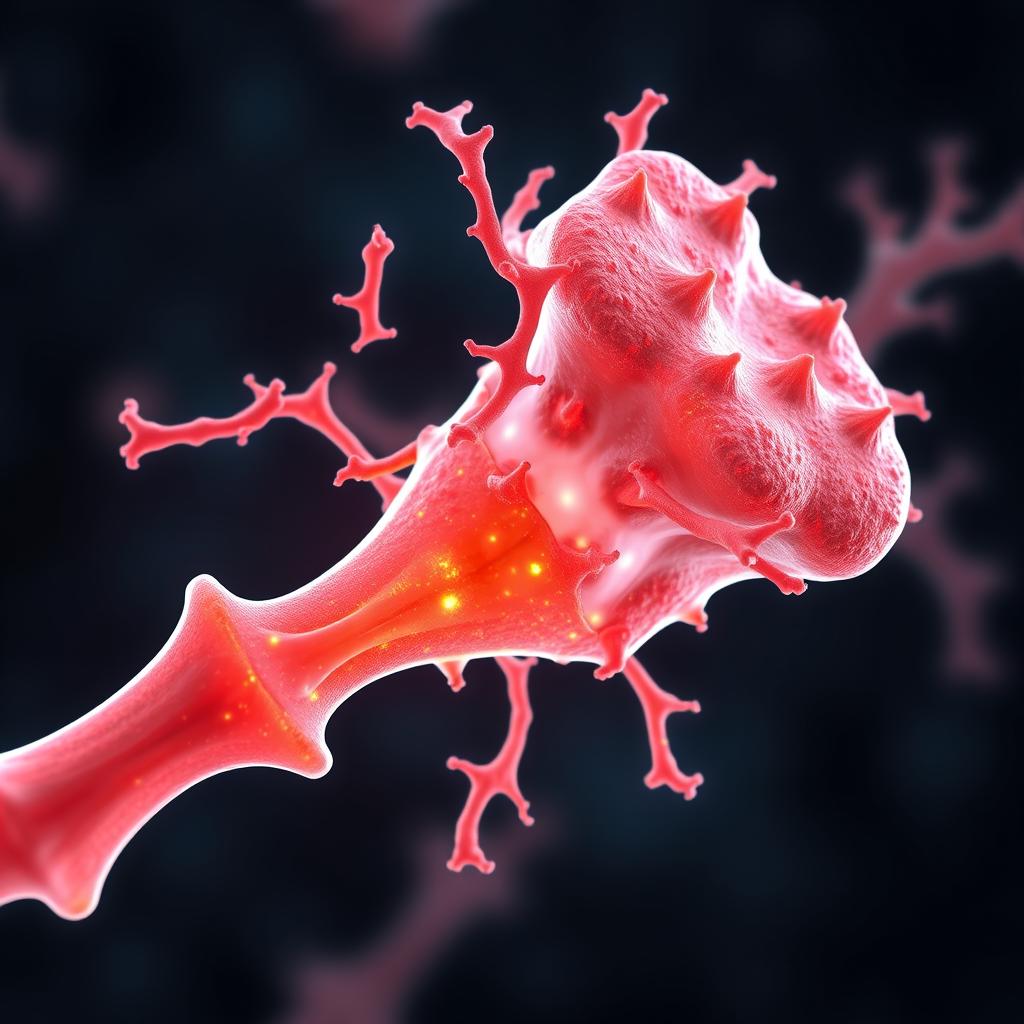
- Background: Bottlenecks in osteogenic lineage commitment and existing regenerative‑medicine modalities. The critical limitation of current bone‑regeneration guidelines is that mesenchymal stem cells (MSCs) often stall or divert to alternative lineages instead of fully differentiating into target osteoblasts. Conventional delivery of simple growth factors (e.g., BMP2) or physical stimuli fails to reprogram the complex polygenic transcriptional networks within cells, resulting in insufficient therapeutic concentrations and a consequential blind spot.
Reliance on exogenous factor injection without computational control of chromatin‑structural plasticity leads to low differentiation efficiency and false‑positive fibrotic noise, creating a technical barrier and data bottleneck for reversible bone tissue reconstruction.
-
Discovery: Activation of a dCas9‑based epigenetic‑regulation platform and validation of multiplexed gene activation/repression integrity. This study deployed a catalytically inactive Cas9 (dCas9) fused to epigenetic effectors to reprogram the epigenetic state of specific loci without altering DNA sequence. Single‑cell resolution optimization of guide‑RNA docking free‑energy tensors and computational removal of batch effects in stem‑cell manufacturing enabled high‑amplitude, selective activation of key osteogenic drivers (RUNX2, OSX, BMP2) while concurrently repressing differentiation inhibitors and Wnt antagonists (PPARG, SOST, DKK1) below baseline levels, thereby demonstrating molecular‑biological integrity.
-
Hybrid bio‑carrier delivery optimization and reversible bone healing in small‑animal models. Implementation of the multiplex epigenetic‑tuning matrix yielded local transduction kinetics and precision stratification that surpassed the prognostic uncertainty of conventional macro‑stem‑cell therapies. A high‑resolution delivery platform integrating AAV vectors, lipid nanoparticles, extracellular vesicles, and scaffold biomaterials was engineered to convey guide‑RNA cassettes to target stem‑cell nuclei without peripheral immune‑sensor interference, establishing a heritable on/off CRISPRoff/on system. In vivo, large bone defects regenerated without genotoxic off‑target noise, confirming scalable osteogenesis kinetics.
-
Outlook: Establishing programmable smart‑bone regeneration standards and shifting global regenerative‑medicine governance. This synthetic‑biology and computational‑systems regenerative‑medicine white paper redefines bone‑repair standards from simple cell‑implantation to an AI‑driven guide‑RNA library synchronized with mechano‑responsive smart scaffolds, enabling long‑term epigenetic‑memory tracking. Future large‑animal validation and commercialization will incorporate GMP‑compliant manufacturing lines, computational screening of payload size limits, and in‑vivo immunogenicity, creating a master asset for multinational IND submissions and dramatically shortening regulatory timelines.
Nature Biomedical Engineering, Published June 2026.
Summary: Bypassing the low lineage-commitment velocity and false-positive fibrotic noise that historically compromise conventional growth-factor delivery configurations in skeletal regeneration, this study constructs a programmable dCas9-based epigenome editing infrastructure. Utilizing a catalytically inactive Cas9 scaffold fused with targeted transcriptional modulators, the computing platform establishes highly stable spatial kinetics to execute locus-specific activation across primary osteogenic nodes (RUNX2, OSX, BMP2) while concurrently driving the durable suppression of lineage antagonists (PPARG, SOST, DKK1). Multi-channel delivery tracking integrated across biomaterial scaffolds, extracellular vesicles, and high-fidelity LNP configurations demonstrated a non-linear acceleration in osteogenesis acceleration indices inside animal defect registries. This molecular calibration delivers a validated, non-invasive computational baseline to optimize multiplexed gRNA libraries, trace long-term epigenetic memory parameters, and guide prospective universal patient stratification under current Good Manufacturing Practice (cGMP) guidelines.
The single‑cell epigenomics discoveries reported here extend beyond theoretical stem‑cell differentiation mechanisms to directly power global supply chains for rare and refractory bone‑defect therapeutics and next‑generation precision regenerative medicine business lines.
First, by instantly scanning MSC differentiation arrest kinetics in clinical settings with Python algorithms, the approach eliminates chronic tissue necrosis and the temporal gap preceding irreversible disability, preserving a reversible bone‑cell protection corridor.
Second, integration of a curated chromatin‑accessibility dataset into an open‑source, large‑scale genomic database enables virtual simulation of false‑positive heterogeneous cell‑perturbation variables during trial design, while a companion diagnostic (CDx) organoid panel provides real‑time back‑calculation of nuclear guide‑RNA docking concentrations.
Finally, linking chromatin‑methylation threshold metrics to batch‑specific correction factors during multinational, large‑scale cell‑therapy IND and cGMP approval processes will nullify inter‑batch growth‑rate variability, maximizing the probability of regulatory approval and commercial launch.