The Unexpected Turn of Supposedly Hidden DNA: “Distorted Nucleosomes” Activate Genes
1. Silence of Chromatin, the Underlying Mystery
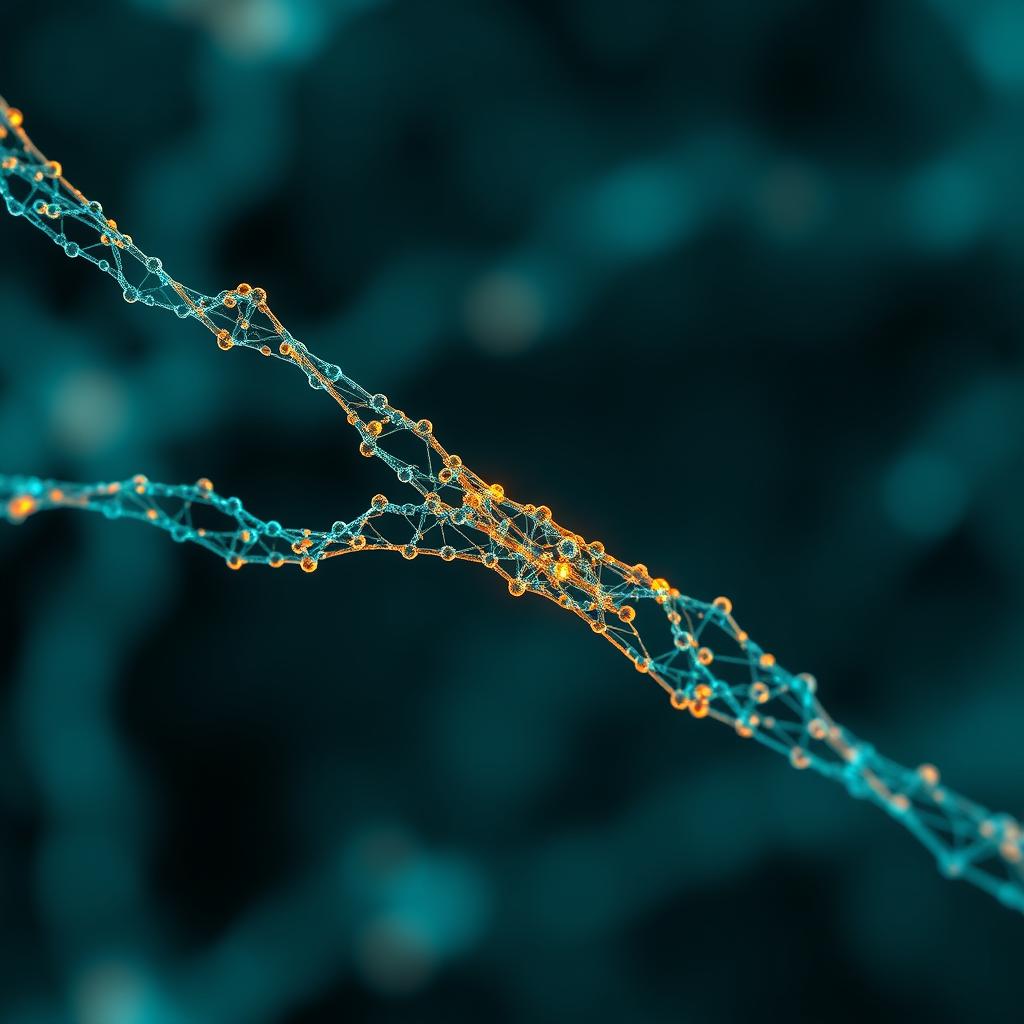
Our body's vast DNA is wound around protein spools called nucleosomes, forming chromatin fibers. To date, the scientific community has believed that when nucleosomes completely encircle DNA, the genetic information is in a “locked” state and inaccessible. However, the mechanism that allows cells to respond so rapidly to external cues has remained an unresolved challenge.
2. IDLI Pipeline: Decoding Genome Accessibility
The research team developed an innovative analytical algorithm called IDLI (Iteratively Defined Lengths of Inaccessibility). Using this, they performed precise genome‑wide mapping of how tightly or loosely nucleosomes wrap DNA at the level of individual chromatin fibers.
The results were surprising. The majority of nucleosomes were not perfectly circular but existed in a “programmed distortion” state.
3. “Partially Accessible” Model: A Paradoxically Closed Yet Open State
Because of intentional nucleosome distortion, DNA remains not fully exposed but retains a “partially accessible” condition that permits external proteins to bind.
- Flexibility: Cells can turn genes on and off without completely removing nucleosomes, exploiting distorted gaps for rapid response.
- Precision: Specific gene loci are pre‑programmed regarding when and how much they open, which is central to the mechanism.
4. Future Implications and Outlook: New Precision Targets for Disease Therapy
This work will reshape paradigms of disease diagnosis and treatment. If the “distortion pattern” of particular nucleosomes changes in cancer or genetic disorders, it could enable much earlier detection. Moreover, when employing gene‑editing tools such as CRISPR, targeting the optimally “slightly opened” DNA sites could maximize therapeutic efficiency.
Nature, Published online: 29 April 2026; doi:10.1038/s41586-026-10418-6 An analytical pipeline called Iteratively Defined Lengths of Inaccessibility (IDLI) maps the genome-wide occupancy of a range of nucleosome types and shows that most nucleosomes exhibit programmed ‘distortion’, in which the DNA exists mainly in a partially accessible state.
"We now have the most precise map answering the question, ‘Which regions of my DNA blueprint are open?’ Using this map, gene‑therapy agents can be directed to act only at the intended sites, avoiding off‑target effects, reducing side effects, and moving us closer to truly precise medicine with higher cure rates."