Discovery of an Atypical Protein Barrier that Prevents Chromatin Penetration, Maintaining Genome Stability and Increasing Crop Yield
Background
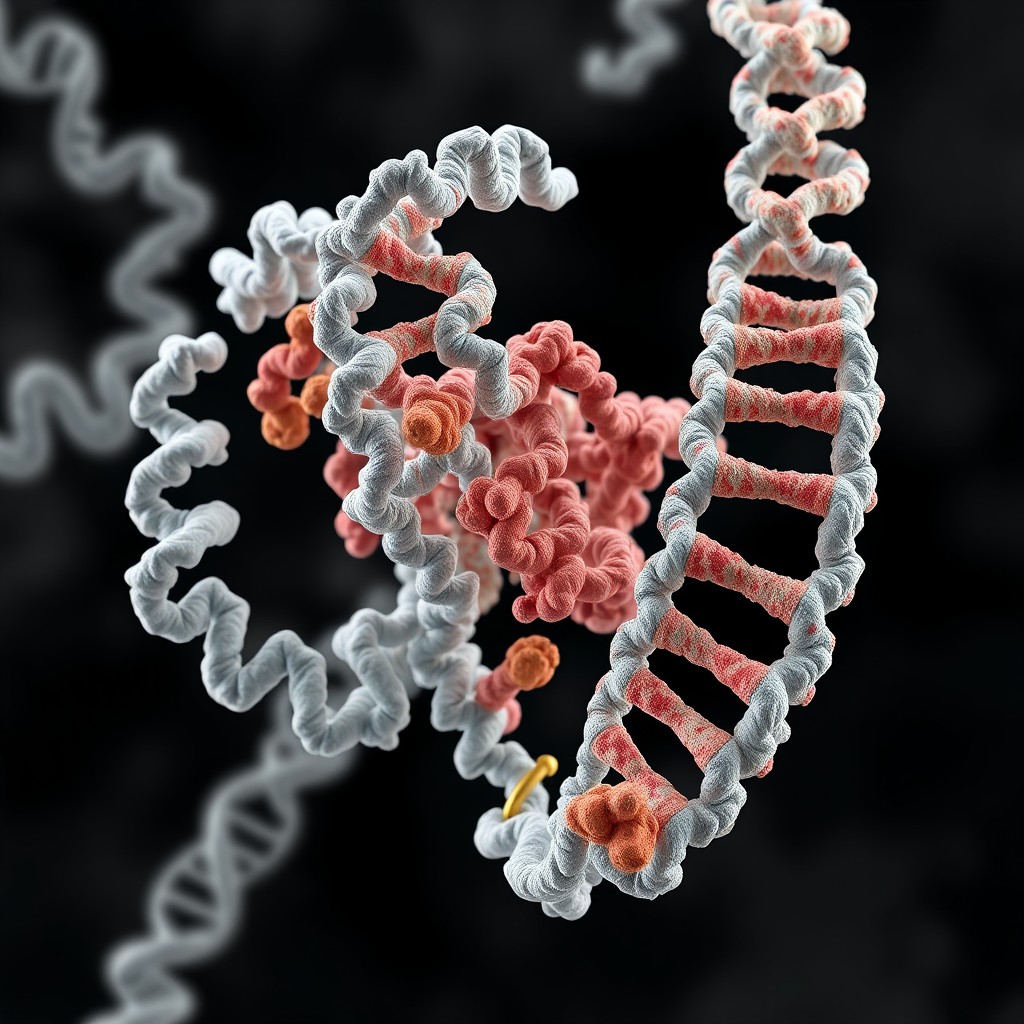
The chromosomes of living organisms, which contain genetic information, are controlled by a highly precise regulatory system. Demethylases, enzymes that remove methyl groups (Methyl group) attached to DNA or RNA, are key molecules that regulate gene activation. If these enzymes lose control and indiscriminately activate any region of the genome, it can lead to fatal diseases such as cancer, and genomic instability will also increase significantly. Previously, the biological community believed that intrinsically disordered regions (IDRs), which are proteins with no fixed three-dimensional structure, mainly induce phase separation and act as promoters to help gene expression. However, it has not been revealed that this flexible structure actually plays a role as a brake that limits the excessive access of enzymes to chromatin.
Key Findings
The research team led by Professor Chuan He at the University of Chicago questioned why FTO and ALKBH5, representative RNA demethylases, have similar active sites but different mechanisms of action. The research team precisely observed the molecular behavior of the two enzymes using protein binding analysis and gene sequencing techniques. The analysis revealed that the IDR located at the C-terminus of ALKBH5 acts as a physical anchor that binds the enzyme to messenger RNA (mRNA). The researchers explained that this device physically limits the binding of the enzyme to chromatin, thereby preserving the stability of the genome inside the cell.
The research team designed an experiment to remove the C-terminal IDR of ALKBH5 using a mammalian cell model. The enzyme, which lost its inhibitory device, showed a pattern of immediately moving from mRNA to chromatin-associated RNA (caRNA). The removal of this barrier resulted in opening the chromatin structure and stimulating gene transcription activation.
Furthermore, the research team turned their attention to plant research. They induced mutants by transplanting a nuclear localization signal (NLS) into ALKBH5 homologs of Arabidopsis and Rice and removing specific IDR regions. As a result, it was observed that the expression of genes that regulate photosynthesis and growth was accelerated in the mutant plants, and the root development was accelerated, resulting in a significant increase in yield and biomass compared to the control group. The researchers added that this inhibitory mechanism is conserved in various chromatin-modifying proteins, such as histone demethylase, and prevents the abnormal activation of transposable elements.
Significance and Prospects
This research overturned the long-held belief in the academic community that flexible, intrinsically disordered structures only promote protein activity. It proved that IDRs can actually function as molecular brakes that control the spatial arrangement of enzymes and regulate chromatin binding. This is considered to be a strategy that living organisms have evolutionarily selected to prevent indiscriminate activation of the entire genome and maintain stability.
The academic community expects that this research will open a new path for crop improvement. By finely adjusting the genetic brakes that plants use to inhibit their own growth, it will be possible to develop new varieties that can respond to climate change and food crises. However, the long-term impact of artificially removing IDRs on the overall stability of the genome has not yet been verified. Rapid gene activation may cause unexpected side effects on the plant's lifespan or resistance to diseases and pests, so comprehensive safety verification is required.
Nature Genetics, Published online: 23 July 2026; doi:10.1038/s41588-026-02685-wIntrinsically disordered regions impose regulatory restraints on gene-activating demethylases, limiting chromatin engagement and preserving genomic stability. This function is a key determinant of the distinct substrate preferences and regulatory activities of FTO and ALKBH5 in mammals and plants.
This research has the potential to contribute directly to the agricultural sector and increase the income of farmers. A representative application scenario is to precisely correct the IDR sequence of the ALKBH5 gene in crops using the CRISPR gene editing technique without introducing external genes. This technology is classified as a gene-edited crop and is expected to significantly shorten the safety assessment period compared to existing genetically modified crops (GMOs). By applying this to areas facing food crises and distributing rice or wheat varieties that can grow roots widely and quickly even in poor soil, it can greatly contribute to solving the food shortage.
The inhibitory mechanism revealed in animal cells is also a useful target in the medical and pharmaceutical industries. By targeting cancer cells in which cancer genes are indiscriminately activated due to the overactivation of FTO or ALKBH5, and administering small molecule compounds that mimic the IDR brake, it is predicted that a new drug development pathway will be opened to inhibit tumor growth.