Activating Polystyrene Particles with Reactor Irradiation: A New Approach to Gastrointestinal Motility Diagnostics
Background
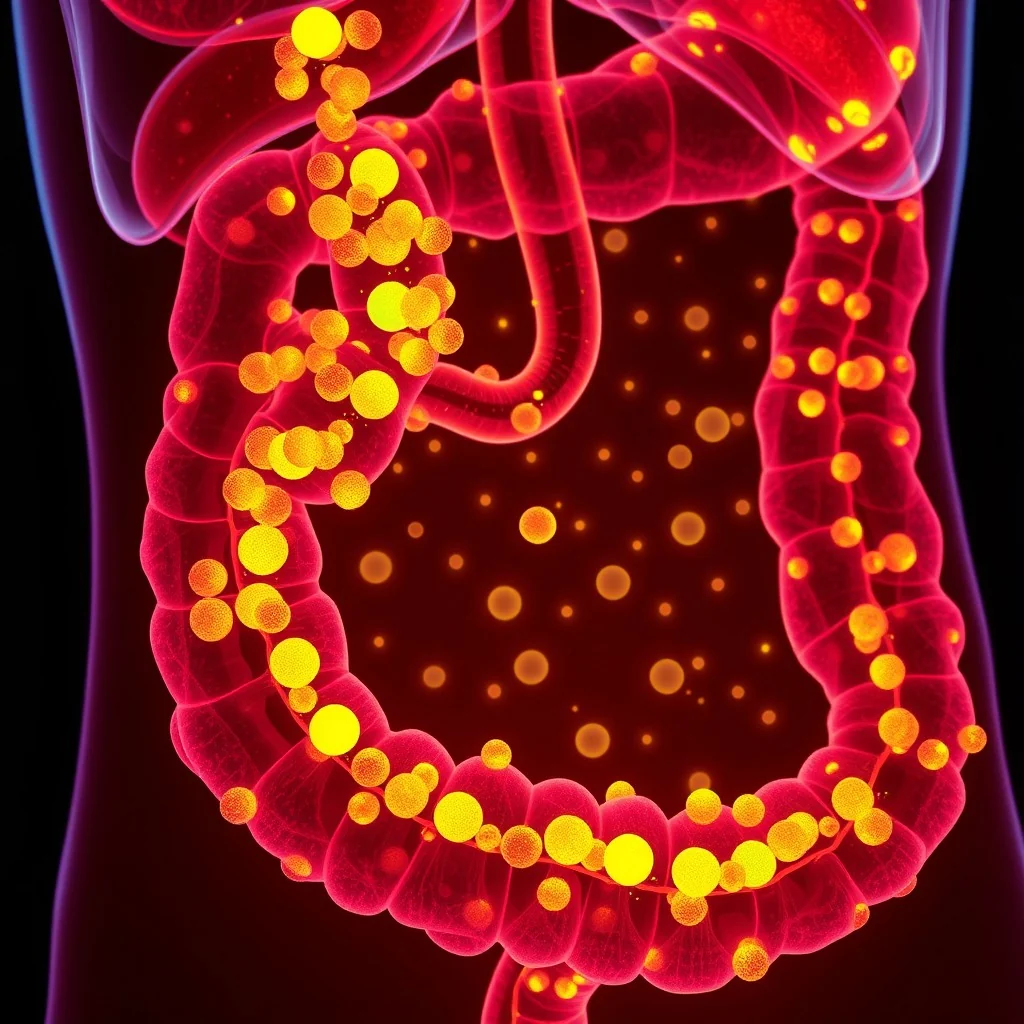
Motility disorders, such as chronic constipation or gastric stasis, which involve slowed movement of the digestive system, significantly reduce patients' quality of life. Accurate diagnosis of the overall transit capacity of the gastrointestinal tract requires real-time tracking of food passage. In clinical practice, gamma scintigraphy, which involves administering a radiotracer and imaging the gastrointestinal tract, is used as the standard diagnostic technique.
However, existing radiotracers are not widely used in clinical settings due to their high cost and short half-life. Indium-111 (111In), which was widely used, has a half-life suitable for tracking the long transit process to the colon, but its high cost and unstable supply are major factors increasing the cost of the examination. Technetium-99m (99mTc), an alternative, has a short half-life of only 6 hours, which limits its ability to fully observe gastrointestinal transit over several days. Therefore, clinicians and scientists have focused on developing new radiotracers that are inexpensive, can remain in the body safely for a long time, and emit signals.
Key Findings
A joint research team from Taylor's University in Malaysia and the Malaysian Nuclear Agency developed polystyrene (PS) particles loaded with samarium-152 oxide (152Sm2O3) and proposed a new radiotracer manufacturing process that activates them by irradiating them with neutrons in a reactor. The researchers synthesized the basic marker by uniformly embedding non-radioactive samarium-152 oxide into 600 to 800 micrometer-sized polystyrene particles. At the time of diagnosis, this marker is placed in a reactor and irradiated with neutrons, which converts it into a radioactive isotope, samarium-153 (153Sm), that emits a signal.
Samarium-153 has a half-life of approximately 46.3 hours, making it suitable for gastrointestinal transit studies that take 2 to 3 days. The gamma ray emission energy is also at a level of 103 kiloelectron volts (keV), allowing high-resolution images to be obtained with existing gamma cameras in hospitals.
The researchers conducted a series of experiments to comprehensively verify the safety and physical properties of the manufactured particles. Using scanning electron microscopy (SEM) and laser diffraction techniques, they analyzed that the shape and size distribution of the polystyrene particles were maintained even after strong neutron irradiation from the reactor. Measurements using a high-purity germanium (HPGe) gamma spectrometer revealed no long-lived impurity nuclides, and only the characteristic energy peak of samarium-153 was detected, demonstrating excellent radiochemical purity.
The researchers prepared simulated gastric fluid (SGF) and simulated intestinal fluid (SIF) similar to digestive fluids and observed the state of the particles for 120 hours. The results showed that the radioactive material was not released from the particles in either environment, and more than 99% remained inside. This means that there is a low risk of the radioactive isotope being absorbed into the body and causing exposure during transit through the gastrointestinal tract. The specific activity of the particles measured 48 hours after irradiation was an average of 57.2 ± 2.0 MBq/g, achieving a radioactivity of approximately 5.7 MBq per 100 milligrams (mg) of particles, which is sufficient signal strength for diagnostic imaging.
Significance and Prospects
This study is significant in that it provides a low-cost alternative to the gastrointestinal disease diagnosis market, which has relied on expensive imported radiopharmaceuticals. Samarium-153 has a relatively simple manufacturing process, and neutron irradiation can be quickly performed in a reactor, which can significantly reduce the cost of producing diagnostic markers. Because it can be stored in a non-radioactive state and activated in the required amount according to the examination schedule, it also reduces the burden of storage and radioactive waste for medical institutions.
However, additional verification steps are still needed before it can be applied in actual clinical practice. Although high safety was demonstrated in in vitro experiments using artificial digestive fluids, in vivo evaluation using living animal models is necessary. A representative study is to track whether the particles maintain their shape and are excreted even under mechanical friction and changes in acidity in the gastrointestinal tract. Furthermore, quality control standards should be established to control the amount of residual monomers and endotoxins that may occur during the manufacturing process to prevent human harm.
Nature Genetics, Published online: 12 August 2026; doi:10.1038/s41598-026-66901-7Development of samarium-153 oxide loaded polystyrene radiotracer particles for gamma scintigraphy of whole gastrointestinal transit study
In clinical settings, these radiolabeled particles can be used to develop personalized treatment plans for patients with chronic, difficult-to-treat gastrointestinal disorders. For example, consider a scenario where a patient suffering from unexplained constipation consumes a standard test meal containing samarium-153 polystyrene particles. Gamma camera imaging is performed on the day of the examination, as well as at 24, 48, and 72 hours. The transit time of the radiolabeled particles from the stomach to the small intestine and colon is recorded in detail. Clinicians can identify specific areas where the particles are delayed, accurately diagnosing the patient's delayed colonic transit. Based on this, they can provide personalized medical services, such as precisely adjusting the dose of medication or minimizing the surgical site. It is expected that this will also be an opportunity for medical institutions with poor diagnostic infrastructure to easily introduce gamma scintigraphy diagnostic tests because of its low cost.