CRISPR Technology to Disrupt Pancreatic Cancer Stromal Barrier and Accelerate Targeting of Genetic Vulnerabilities
Background
Pancreatic cancer, particularly pancreatic ductal adenocarcinoma (PDAC), is a highly aggressive malignancy with a dismal five-year survival rate of just over 12%. This is largely due to late-stage diagnosis and significant resistance to chemotherapy. A key factor contributing to this poor prognosis is the dense, fibrotic stromal barrier surrounding the tumor. This barrier protects the tumor by inhibiting immune cell infiltration and preventing anti-cancer drugs from reaching the tumor cells. Consequently, conventional chemotherapies and even newer immunotherapies often fail to effectively treat PDAC. To improve treatment outcomes, it is essential to develop strategies that not only target the tumor cells directly but also disrupt the physical barrier within the tumor microenvironment and alter cell-to-cell signaling pathways.
Key Findings
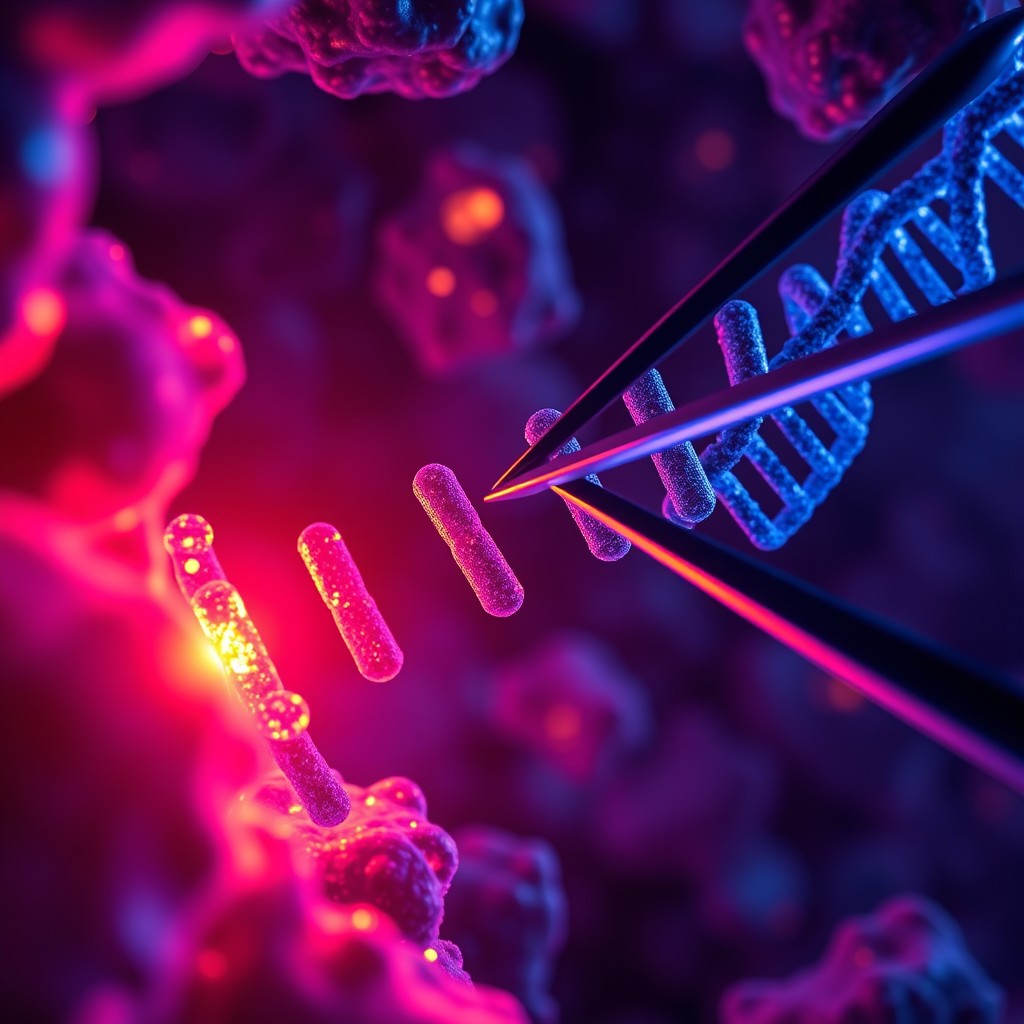
Recent research has focused on using CRISPR-Cas9 gene editing technology to overcome the physical and biological barriers in PDAC. CRISPR-Cas9-mediated gene knockout is a strategy that aims to remove specific genes within the tumor microenvironment that maintain fibrotic signaling and promote abnormal communication between the stroma and immune cells.
Functional screening using gene editing has provided a detailed exploration of the PDAC genome. This analysis has identified key genes that drive tumor growth and metastasis, including the frequently mutated KRAS, as well as TP53, SMAD4, and CDKN2A. Importantly, this technology has successfully revealed synthetic lethality interactions that were previously inaccessible through conventional drug treatments. This approach identifies and simultaneously targets another gene that is essential for the survival of cancer cells that have lost a specific tumor suppressor gene, while sparing normal cells. This provides a highly precise therapeutic approach that selectively targets and eliminates cancer cells.
Furthermore, the development of delivery vehicles to safely deliver therapeutic genes to the tumor is progressing rapidly. To overcome the dense barrier surrounding pancreatic cancer cells, researchers are optimizing the structural properties of lipid nanoparticles (LNPs), viral vectors, and extracellular vesicles (EVs). The actual therapeutic efficacy of these delivery vehicles is being evaluated in patient-derived organoids and mouse xenograft models, bringing them closer to clinical application.
Significance and Outlook
This analysis and the accumulated technology are expected to revolutionize the treatment of PDAC. Gene editing platforms can restore the sensitivity of drug-resistant cancer cells to conventional chemotherapies, maximizing their effectiveness. Furthermore, they can also enhance the activation of immune cells by reversing immune suppression, leading to synergistic effects.
However, there are still challenges to overcome before this technology can be applied to patients. It is necessary to develop highly efficient delivery platforms that can reach deep into the tumor tissue and to control off-target toxicity, where non-target genes are unintentionally edited. Future efforts will focus on improving the targeting ability of therapeutic agents in vivo and closely linking preclinical data with human clinical trials.
Pancreatic ductal adenocarcinoma (PDAC) remains one of the most lethal malignancies worldwide, characterized by late-stage diagnosis, profound chemoresistance, and a five-year survival rate that barely exceeds 12%. The fibrotic stromal barrier surrounding the tumor actively suppresses immune infiltration and blocks drug delivery, rendering conventional treatment options largely ineffective. CRISPR-Cas9-mediated gene knockout represents a promising strategy to overcome this stromal barrier-associated therapeutic resistance by enabling precise disruption of genes that sustain desmoplastic signaling, stromal-immune crosstalk, and drug efflux pathways within the tumor microenvironment. In this context, CRISPR-Cas9-guided gene knockout has opened a new chapter in PDAC research by enabling precise, scalable analysis of the cancer genome. Functional screens using this technology have mapped critical oncogenic dependencies, identifying mutant KRAS, TP53, SMAD4, and CDKN2A as high-value targets, while simultaneously revealing synthetic lethal interactions that were previously inaccessible through pharmacological approaches. These discoveries are now being translated into therapeutic strategies aimed at silencing driver mutations, restoring chemosensitivity, and reprogramming the immunosuppressive tumor microenvironment. Delivery platforms, including lipid nanoparticles, viral vectors, and extracellular vesicles, are being refined to navigate the physical barriers unique to PDAC. Patient-derived organoids and xenograft models are providing the translational framework needed to evaluate these interventions under clinically relevant conditions. This review examines the molecular mechanisms of CRISPR-guided knockout, the genetic vulnerabilities it has uncovered in PDAC, the therapeutic strategies emerging from this work, and the delivery systems supporting clinical translation. The remaining barriers and the steps needed to bring this technology to patients are also discussed.
This research has significant industrial potential because it can be broadly applied to the development of treatments for other solid tumors where drug penetration is difficult. For example, in the treatment of cholangiocarcinoma, which is characterized by excessive development of stromal tissue, a combination therapy could be designed in which the stromal barrier is first disrupted using gene editing technology, followed by sequential administration of standard chemotherapeutic agents. Furthermore, organoid-based genomic screening platforms are expected to be widely adopted by pharmaceutical companies as tools for rapidly validating the efficacy of new drug candidates in preclinical studies. In the future, it is anticipated that personalized tumor precision medicine models will emerge, in which the genetic variations of individual patients' tumor tissues are analyzed in advance to select the optimal gene knockout targets and deliver them precisely using LNPs.