Merck (MRK) Secures FDA Approval for Subcutaneous Keytruda QLEX Formulation Leveraging Alteogen Technology
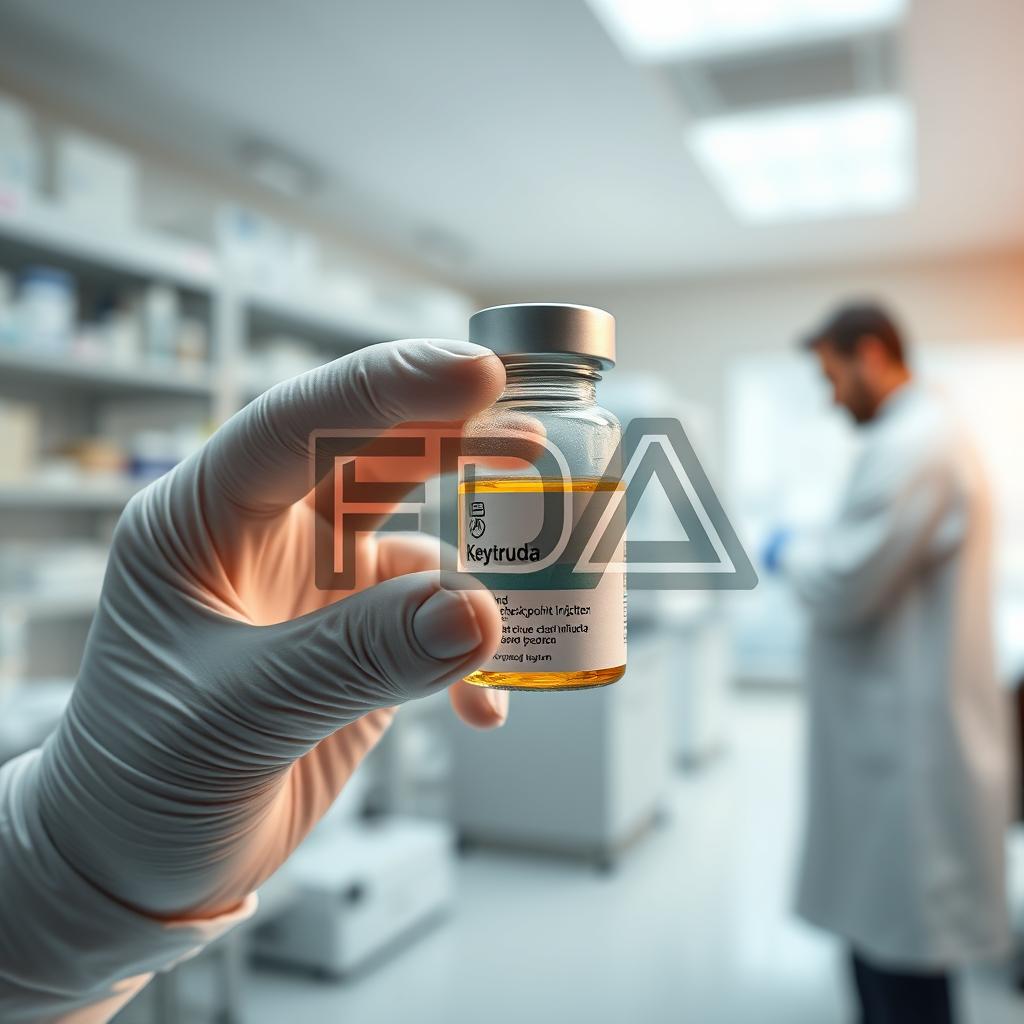
Background of FDA Approval and Product Characteristics
The U.S. Food and Drug Administration (FDA) has approved Merck & Co.’s flagship immune‑oncology product, Keytruda, in a subcutaneous (SC) formulation known as Keytruda QLEX (pembrolizumab and berahyaluronidase alfa‑pmph). This approval covers the majority of solid‑tumor indications for which the intravenous (IV) formulation is already approved, as well as tumor mutational burden‑high (TMB‑H) solid tumors. The SC formulation reduces the infusion time from the typical 30–60 minutes for IV administration to just 1–2 minutes, markedly enhancing patient convenience and dramatically improving operational efficiency in clinical settings. This formulation shift represents a critical milestone for preserving Keytruda’s market dominance.
Introduction of Proprietary Subcutaneous Technology and Litigation Landscape
Keytruda QLEX was developed using Alteogen’s human hyaluronidase platform, ALT‑B4. Instead of Halozyme’s technology, Merck entered an exclusive licensing agreement with Alteogen to commercialize the SC formulation, which triggered an intense patent‑infringement lawsuit with Halozyme. Recently, the U.S. Patent Trial and Appeal Board (PTAB) invalidated Halozyme’s core patents, substantially reducing Merck’s legal exposure. This outcome cleared the way for Merck to fend off competitor challenges and secure a stable supply of the SC formulation in the United States.
Clinical Positioning Relative to Competing Therapies
In the Phase 3 trial (MK‑3475A‑D77), Keytruda QLEX demonstrated non‑inferiority to the IV formulation in terms of area under the concentration‑time curve (AUC) and trough concentration at steady state (C_trough). The secondary endpoint, objective response rate (ORR), was 45 % in the SC arm versus 42 % in the IV arm, confirming comparable efficacy and safety. These data position the product as a strong clinical counter‑measure against Roche’s Tecentriq Hybreza and Bristol‑Myers Squibb’s Opdivo SC formulations, both of which are already on the market. Importantly, clinicians can achieve the same therapeutic effect as IV administration while benefiting from a faster dosing process.
Strengthening Patent Barriers and Market Entry Strategy
The primary driver for Merck’s accelerated pursuit of SC approval is the impending expiration of the Keytruda IV formulation’s composition patent in 2028. By switching patients to the SC version before low‑cost biosimilars enter the market, Merck is employing an “ever‑greening” strategy. In the United States, FDA clearance is expected to facilitate rapid reimbursement negotiations with private insurers. Although the SC product’s higher launch price may initially limit access, strong demand driven by administration convenience is likely to offset this barrier.
Future Market Outlook and Financial Impact
Under the Merck‑Alteogen agreement, Merck will provide a non‑refundable upfront payment of USD 20 million and may incur up to USD 432 million in regulatory and sales milestones. The FDA approval triggers an additional USD 25 million milestone payment to Alteogen, marking the transition to the commercialization phase. Given that Keytruda generates more than USD 25 billion in annual revenue, a successful generational shift to the SC formulation will be pivotal for Merck’s mid‑ to long‑term sales protection and shareholder value enhancement.
The FDA approval of Merck’s (MRK) Keytruda QLEX (pembrolizumab/berahyaluronidase alfa‑pmph) provides a critical defensive tool that enables the roughly USD 250 billion Keytruda franchise to protect its revenue stream beyond the 2028 patent expiry. The SC formulation’s demonstrated non‑inferiority to IV in the Phase 3 trial (MK‑3475A‑D77) is expected to effectively block market entry by competitors such as Roche’s Tecentriq Hybreza. The approval also triggers a USD 25 million milestone payment to co‑developer Alteogen, with the potential for up to USD 432 million in remaining milestones and royalty revenue from commercial sales, substantially boosting pipeline valuation. Over the mid‑ to long‑term, converting the original product to an SC format raises the barrier for biosimilar entrants and is poised to reshape the broader immune‑oncology market landscape.
Source: openFDA (api_fda)
https://www.accessdata.fda.gov/scripts/cder/daf/index.cfm?event=overview.process&ApplNo=BLA761467